Location
Mount Vernon, WA 98274

Location
Mount Vernon, WA 98274
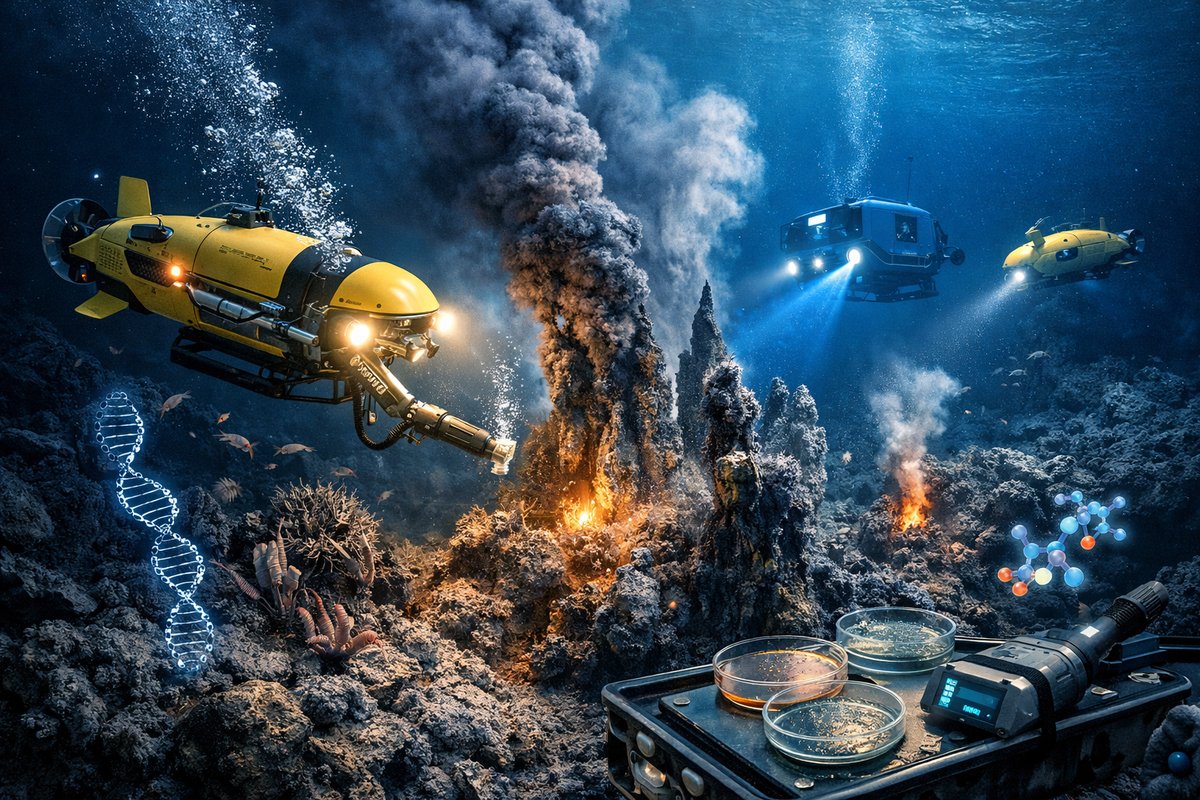
A fleet of underwater robots has mapped hydrothermal vents in unprecedented detail, combining environmental DNA sampling and in situ chemical sensing to reveal novel microbial communities. Early findings hint at new antibiotic compounds and deepen our understanding of life's resilience in extreme environments.
A recent deep-sea expedition deployed a swarm of modular underwater drones to explore hydrothermal vent fields along a remote section of the Mid-Atlantic Ridge. Over six weeks, the remotely operated vehicles (ROVs) navigated rugged chimneys oozing superheated fluids, transmitting high-resolution imagery while collecting water and sediment samples. This operation marks one of the most sophisticated integrations of autonomous robotics, environmental DNA (eDNA) analysis, and real-time chemical sensing ever undertaken in abyssal research.
Hydrothermal vents have long fascinated scientists because they host unique ecosystems that thrive without sunlight, fueled instead by chemosynthesis. Microbes living in these extreme conditions tolerate high temperatures and pressures, metabolizing chemicals like hydrogen sulfide and methane. Many of these organisms remain unknown to science, and their metabolic pathways could inspire new pharmaceuticals or industrial processes. However, traditional ship-based surveys and manned submersible dives are expensive, time-consuming, and limited by human endurance.
The new approach leverages a networked swarm of six compact ROVs, each equipped with interchangeable sensor modules. Swarms coordinate via acoustic modems, sharing navigation data and scanning results to avoid redundancy and maximize coverage. One drone maps geological structures with multibeam sonar, another monitors fluid chemistry in real time, and a third collects water from vent plumes into sterile reservoirs. The modular design allows scientists to reconfigure payloads at sea, responding to unexpected discoveries by swapping in a new sampler or spectrometer within hours.
A key innovation is the integration of eDNA sampling into the AUV network. As the drones glide through vent plumes, they filter microscopic particles containing DNA traces of organisms present in the water column. These filters are preserved in sealed canisters for lab-based sequencing. Preliminary lab analyses have already detected genetic signatures from previously unknown bacterial clades and unusual archaea. Some segments of recovered DNA suggest metabolic genes linked to natural antibiotic production, sparking excitement about novel drug leads from the deep.
In parallel, two ROVs carry miniaturized spectrometers and ion-selective electrodes that measure concentrations of dissolved metals and gases at micrometer scales. This in situ chemical profiling reveals how vent fluids interact with basaltic rock, creating mineral-rich deposits that in turn influence microbial colonization patterns. Mapping these fine-scale gradients helps researchers predict where key microbial processes occur, guiding future sample collection and enabling targeted bioprospecting without overharvesting fragile vent ecosystems.
Initial microbiological assays in the shipboard lab have uncovered strains producing potent antimicrobial compounds effective against standard test pathogens. While further purification and toxicity testing are needed, these results affirm the deep sea’s pharmaceutical potential. Several research groups are already planning follow-up experiments to culture the most promising microbes under controlled conditions, explore their biosynthetic gene clusters, and assess scalability for drug development pipelines.
Beyond bioprospecting, the mission offers insights into conservation. Hydrothermal vents are oases of biodiversity on the abyssal plain, but they face growing threats from deep-sea mining interests targeting metal-rich sulfide deposits. By providing fine-resolution maps of biological hotspots, the robotic census can inform policymakers debating protected areas and mining regulations. The data underscore the importance of precautionary management for environments still largely unexplored.
Back on shore, data streams from the expedition feed into a cloud-based AI platform that stitches together sonar maps, chemical readings, and eDNA profiles. Machine learning algorithms detect patterns linking environmental variables to microbial diversity, generating predictive models of vent ecosystem structure. These models will guide future missions, focusing on areas likeliest to harbor unique life forms or critical geochemical processes, thus optimizing time and resources for research vessels.
Collaboration extends beyond research institutions. Citizen science initiatives invited enthusiasts to help classify video footage of vent fauna from surface labs. Volunteers identified distinctive shrimp swarms and tube worm colonies, training image-recognition software to automate future surveys. This blend of professional robotics and public engagement builds broader awareness of deep-sea science while accelerating data processing pipelines.
Despite successes, the operation faced challenges. Acoustic communication proved unreliable at times, forcing human pilots to step in for manual control. Biofouling of sampling ports required frequent cleaning, and battery performance dipped unexpectedly in cold water. Engineers are now designing more robust connectors and low-temperature battery chemistries to extend mission durations. Ensuring minimal ecological disturbance remains a priority, with protocols refined to limit propeller wash near sensitive organisms.
Looking ahead, researchers envision integrating more sophisticated instruments, such as microfluidic laboratories on board ROVs for immediate biochemical assays, or small submersible gene sequencers providing preliminary taxonomic identifications at depth. Combined with autonomous sampling and AI analysis, these innovations could transform deep-sea research into a continuous, adaptive operation rather than a series of discrete expeditions.
The recent campaign underscores how technology can unlock nature’s most elusive frontiers. As autonomous underwater swarms probe ever deeper, they not only catalog Earth’s hidden biodiversity but also spark new questions about life’s boundaries and resilience. From the quest for novel antibiotics to the stewardship of uncharted habitats, the marriage of robotics, genetics, and chemistry offers a powerful toolkit for exploring and protecting the deep sea. Future discoveries may redefine our understanding of biology, inspire novel materials, and remind us of the interconnectedness of all life-even in the planet’s darkest depths.