Location
Mount Vernon, WA 98274

Location
Mount Vernon, WA 98274
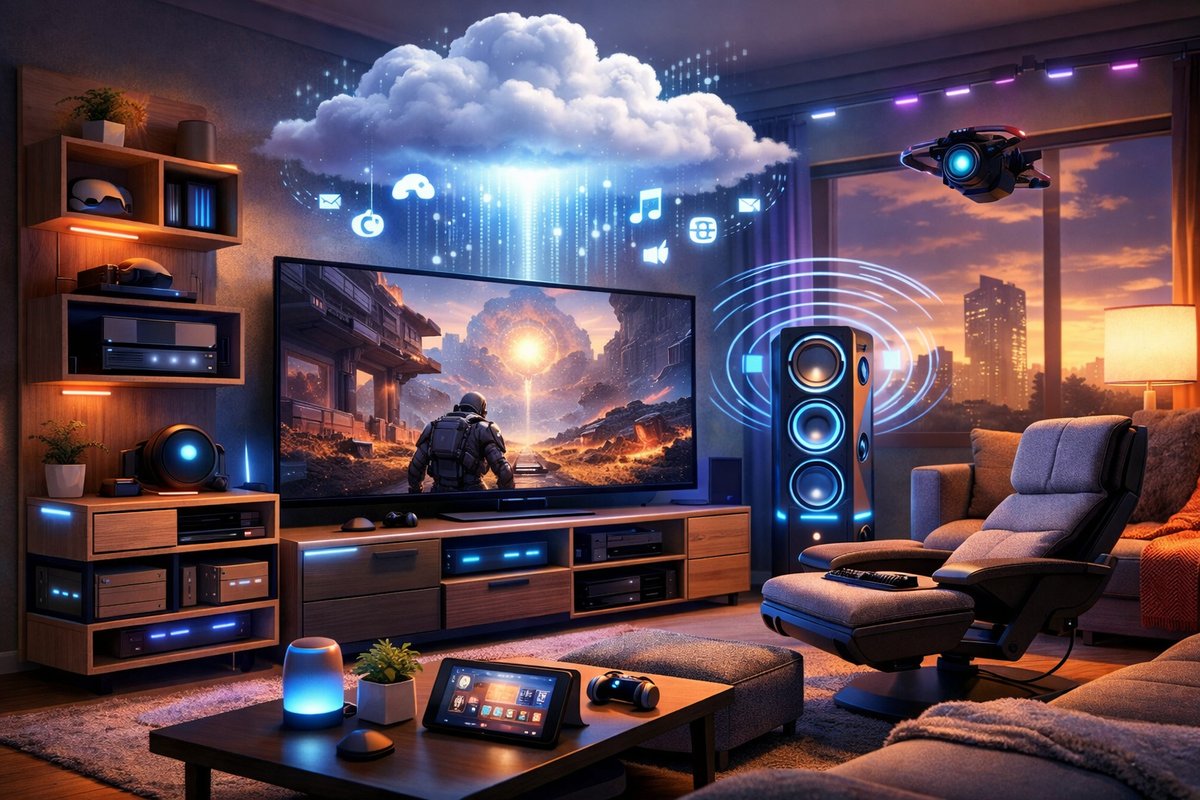
A wave of cloud-powered services and adaptive hardware is redefining how we experience games and entertainment at home. From modular furniture that doubles as a console rack to ambient audio rigs that track your in-game surroundings, living rooms are evolving into dynamic digital playgrounds.
Game nights have always been about more than just controllers and screens. This season, a surge of cloud-based platforms and innovative hardware announcements is reshaping the boundaries between virtual and physical play. At the heart of this movement is a push toward adaptable living-room ecosystems-modular consoles, ambient audio systems, and lighting rigs that respond in real time to gameplay. Tech audiences and casual players alike are finding new ways to customize their environments without sacrificing style or space.
In recent weeks, several home-entertainment brands unveiled lineup expansions designed to slot into modern décor while delivering premium performance. One standout is a compact cloud gaming hub that connects seamlessly to any HDTV over high-speed Wi-Fi. Instead of carrying multiple consoles, gamers can switch between streaming services and local multiplayer sessions with a single dongle. The concept echoes the rise of music streaming years ago: a near-universal gateway to a massive library, eliminating the need for bulky hardware stacks.
Equally intriguing are advances in modular furniture. A new “play console shelf” concept features interchangeable panels that hold controllers, headsets, and even decorative items, while concealing cable tangles. Each panel can be swapped in seconds, letting hosts tailor a shelf for VR accessories one day and board games the next. Designers say the secret is using vacuum-formed resin and magnetic connectors, which keep the modules lightweight yet sturdy enough to support multiple devices.
Lighting has also taken a front-row seat in home setups. Dynamic LED strips and smart bulbs that sync with on-screen action aren’t new, but the latest chains adopt an “area scan” approach. Tiny sensors along the strip pick up dominant colors from the edge of your TV and adjust hues across the entire length. A fiery explosion in a racing game could bathe a room in warm orange glow, while a stealth mission brings on muted blues. The effect tricks your brain into feeling more immersed in the game world.
Sound design is undergoing a revolution too. Traditional soundbars have given way to compact surround setups that can be mounted on walls or placed on shelves. These units use beamforming technology to bounce audio off walls and ceilings, creating a virtualized three-dimensional soundstage. When combined with low-latency wireless transmitters, players report pinpointing enemy footsteps with greater accuracy and feeling enveloped by ambient noise from games and movies alike.
Portable handheld devices are riding this wave as well. A new breed of pocket-sized streaming companions promises console-quality visuals on an AMOLED screen, complete with haptic triggers and hall sensors in analog sticks. Users can pair the unit with a TV dock at home or carry it on the go, switching seamlessly between big-screen play and handheld mode. Cloud saves and universal friend lists keep progress consistent, allowing impromptu multiplayer sessions whether you’re commuting or couch-surfing at a friend’s house.
Software innovations are keeping pace with hardware. Cross-platform chat apps now offer 3D positional audio, so when friends join the same virtual room, voices shift naturally as you move an avatar around. Built-in event tools let you schedule community tournaments and drop in commentary overlays without third-party plugins. Content creators appreciate that they can broadcast high-quality streams directly from their console hubs without routing through a PC.
There’s also a sustainability angle. Several hardware makers are pledging to use recycled plastics and carbon-neutral shipping for gaming accessories. One accessory line uses ocean-recovered materials to craft controller grips and headphone earcups, exchanging throwaway packaging for reusable fabric pouches. As gamers become more eco-conscious, these initiatives seek to reduce the carbon footprint of frequent upgrades and seasonal console launches.
Community spaces are jumping on board too. Local game cafés are installing modular racks and ambient audio rigs to host hybrid events, blending LAN-style tournaments with cloud-based matchmaking. Players can gather in person, but their buddies who live hours away can plug into the same match via streaming. Organizers say this model helps small venues draw bigger crowds without investing tens of thousands of dollars in traditional console farms.
Educators are experimenting with the new hardware, too. A recent pilot program paired VR headsets with modular desks designed for collaboration, letting students explore historical reconstructions or walk through molecular structures in real time. The desks’ wireless charging pads ensure gadgets remain powered throughout lessons, while LED tone-mapping subtly shifts colors to keep attention focused on key learning objectives.
Of course, no ecosystem is complete without customization software. Open-source communities have released apps that let users program complex lighting and audio behaviors triggered by game events or time of day. Amateur modders are sharing profiles for hundreds of popular titles, while hobbyist coders develop companion apps that translate game memory data into dynamic light shows. The result? A level of personalization that extends well beyond backplates and themed skins.
Price points for these devices vary widely, but industry analysts say the trend is affordable entry tiers followed by premium add-ons. A starter kit might include a basic streaming stick and LED strip bundle for under a hundred dollars, while a full modular suite with ambient audio and precision lighting could stretch into the high hundreds. Subscription services for cloud libraries can be added or removed at will, so players can ramp up or scale back based on gaming habits and budget.
Looking ahead, insiders expect further convergence with smart-home and wellness tech. Early prototypes demonstrate biometric sensors embedded in seating that track posture and heart rate, then adjust ambient lighting or trigger stretching reminders. Room-scanning cameras could auto-calibrate audio and light placement, creating an optimized play environment with minimal user intervention.
For now, the most exciting developments live at the intersection of hardware and software. True immersion isn’t just about pixel counts or framerates-it’s about creating a living space that reacts and adapts around the player. As these modular systems grow more intelligent, and streaming platforms continue to proliferate, living rooms everywhere may transform into adaptive arenas where every flicker of color and pulse of sound heightens the thrill of play.
Whether you’re a casual couch co-op fan or a competitive esports veteran, the evolving landscape promises new ways to connect, personalize, and immerse yourself in digital entertainment. The era of one-size-fits-all setups is fading. In its place, a modular future is emerging-one that invites you to build the perfect playground for every kind of fun.