Location
Mount Vernon, WA 98274

Location
Mount Vernon, WA 98274
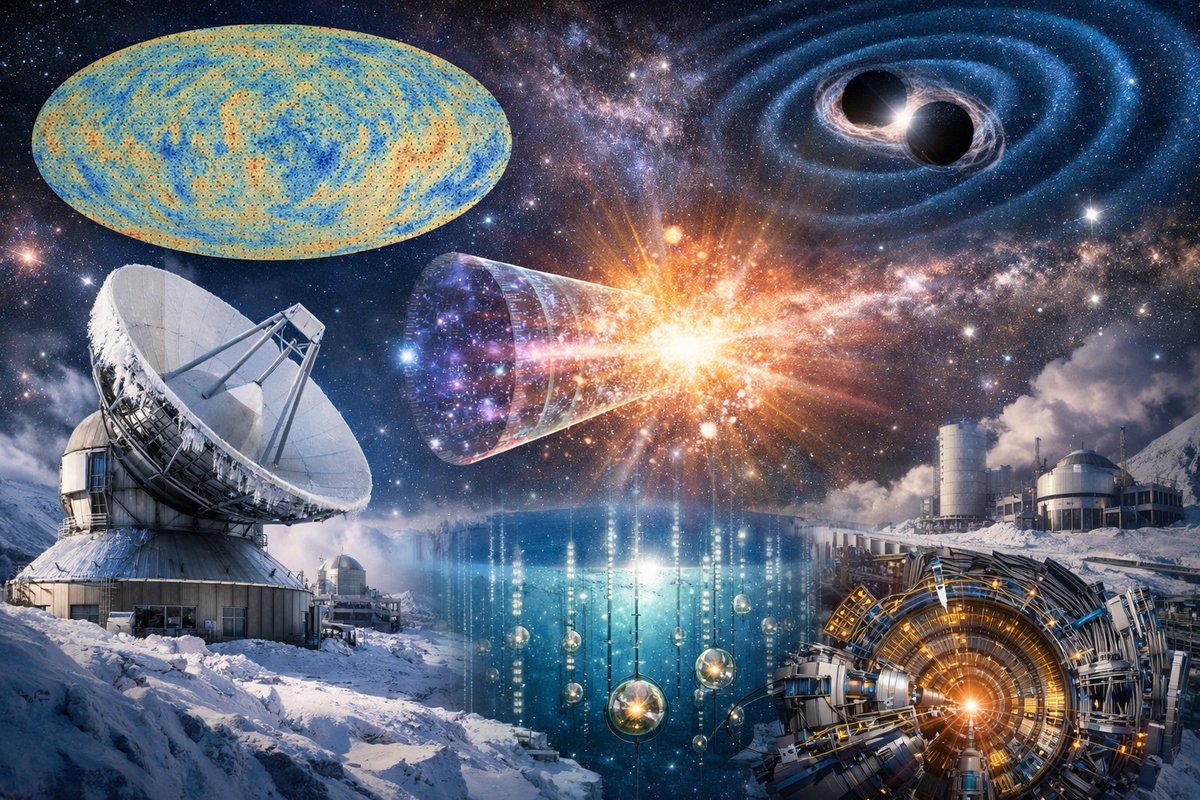
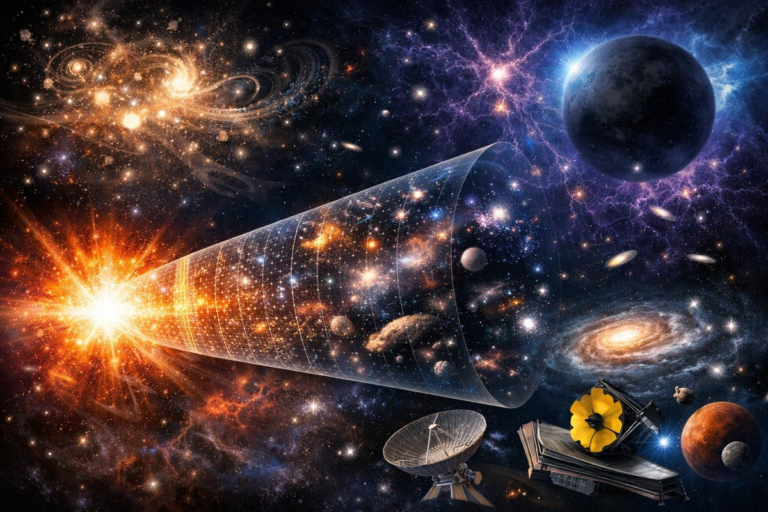
Researchers are harnessing a fleet of observational platforms-from cryogenic microwave telescopes to upgraded neutrino observatories-to unlock the Universe's first trillionths of a second. A fresh synthesis of cosmic microwave background maps, gravitational wave constraints, and particle surveys is rewriting the narrative of cosmic origin.
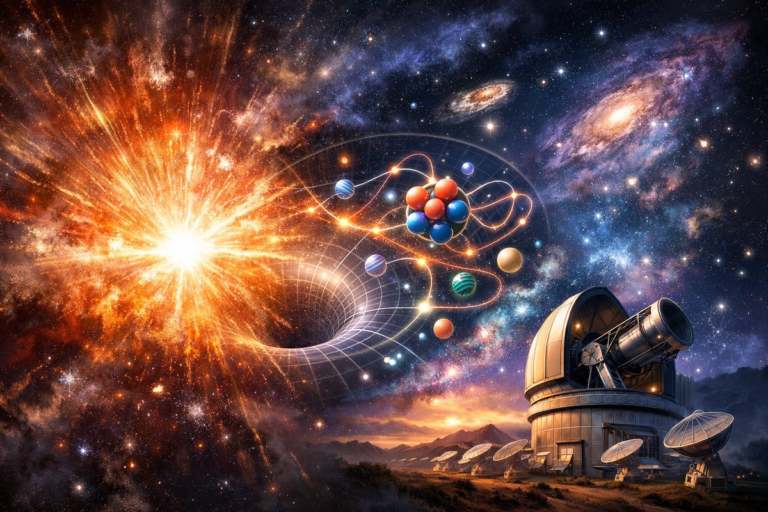
In laboratories perched on Antarctic ice, atop high-altitude deserts, and embedded in mountain ranges, scientists are closing in on one of the most profound mysteries of all: what happened in the sliver of time before the first atoms formed? Recent advances in multi-messenger cosmology are forging a new path into the Universe’s infancy, probing the interplay of quantum spacetime, seething particle fields, and nascent gravity waves that defined the earliest cosmic blueprint.
Data released from an array of cryogenically cooled microwave telescopes has sharpened our view of the cosmic microwave background’s faint polarization pattern. That primordial afterglow, a static snapshot of the Universe 380,000 years after the Big Bang, carries subtle imprints from far earlier epochs. Tiny twists detectable only by instrument sensitivities reaching millionths of a degree can betray the passage of gravitational waves birthed by rapid inflation. Teams analyzing combined data from multiple ground-based facilities have reported tentative hints of these polarization B-modes, though firm detection remains just out of reach.
Away from the polar arrays, deep beneath the crust in an ice-buried observatory, a different challenge unfolds: capturing a whisper from the cosmic neutrino background. Unlike the electromagnetic relic that set in when photons decoupled, neutrinos streamed free far earlier-within the first second of cosmic history. A proposed upgrade to the kilometer-scale optical sensor grid promises to lower energy thresholds, improving prospects for glimpsing these relic particles. While direct detection may still lie years ahead, upper limits on neutrino fluxes are already constraining competing models of early-Universe reheating.
At the same time, a cadre of researchers is sifting through public outputs of gravitational wave interferometers. The first generation of interferometers detected mergers of black holes and neutron stars, but theorists predict that a background hum of weaker, unresolved signals carries echoes of primordial inflation. By cross-correlating long-duration data streams with precision models, analysts have placed new upper bounds on the energy scale of inflation-effectively ruling out certain runaway scenarios in which spacetime expanded with unbridled intensity.
These observational campaigns are underpinned by massive computing efforts. National supercomputing centers are dedicating thousands of GPU nodes to simulate quantum field behavior in curved spacetime. The simulations explore scenarios in which a primordial scalar field rolls through a meta-stable potential, triggering a bounce rather than a singularity. One speculative outcome of such “quantum bounce” models would be subtle oscillatory features in the power spectrum of large-scale cosmic structure. Future galaxy surveys, combined with improved microwave mapping, may detect or exclude those oscillations.
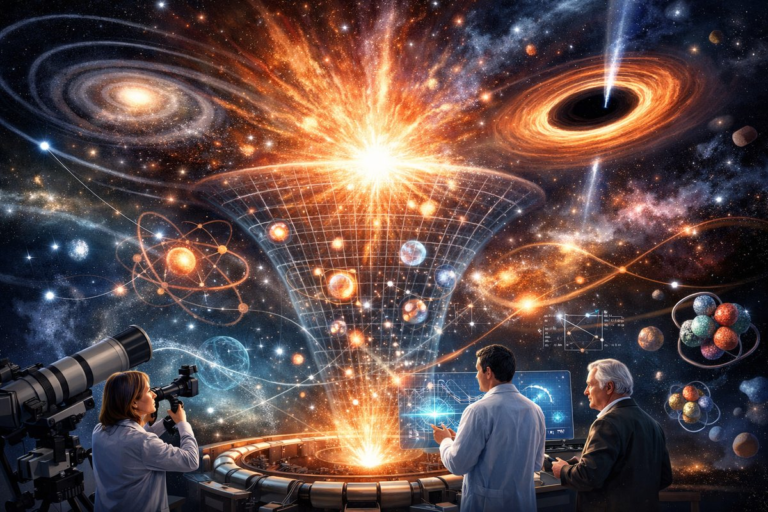
While the professional observatories play out their cosmic game, a parallel surge of interest from citizen scientists and amateur enthusiasts is emerging. Backyard astronomers armed with high-resolution telescopes and digital cameras are participating in sky surveys that help identify faint foreground objects. Those observations assist in cleaning microwave and infrared maps of galactic dust. By cataloging dim interstellar clouds and mapping polarized starlight, these volunteers bolster the hunt for primordial signals.
Behind each dataset, theory groups grapple with paradoxes that challenge longstanding assumptions. The discrepancy between local measurements of cosmic expansion and early-Universe predictions has widened-a tension that could point either to unknown systematic errors or to novel physics beyond the standard cosmological model. Some theorists propose a brief phase of exotic particle production that injected extra radiation energy, while others invoke interactions within the dark sector to slow down early expansion. Resolving this Hubble tension may require fresh observational channels, such as spectral distortions in the microwave background caused by decaying relic particles.
To capture those spectral ripples, a next-generation space telescope concept-envisioned to carry far-infrared bolometers cooled to a fraction of a degree above absolute zero-is under feasibility study. By measuring deviations from the perfect blackbody curve with unprecedented accuracy, it could reveal the fingerprint of early cosmic heating events. Such an instrument would complement ground-based polarization arrays and bring the cosmic dawn fully into focus.
Even as proposals for new probes swirl through review panels, designs for the third generation of gravitational wave detectors are taking shape. Planned facilities-featuring arms tens of kilometers long, cryogenic mirrors, and underground vacuum tunnels-aim to push strain sensitivities down by orders of magnitude. That leap would transform the gravitational wave background from a background-bound limit into a detection regime, finally opening a window onto the very fabric of spacetime at its birth.
The surging diversity of observational modalities has fostered a spring-loaded synergy: data fusion across modalities and wavelengths is becoming the norm rather than the exception. Joint analysis pipelines ingest microwave maps alongside large-scale galaxy catalogs, neutrino event streams, and interferometer residuals. Machine-learning frameworks sift through noise features to flag candidate signals that might otherwise slip through isolated pipelines.
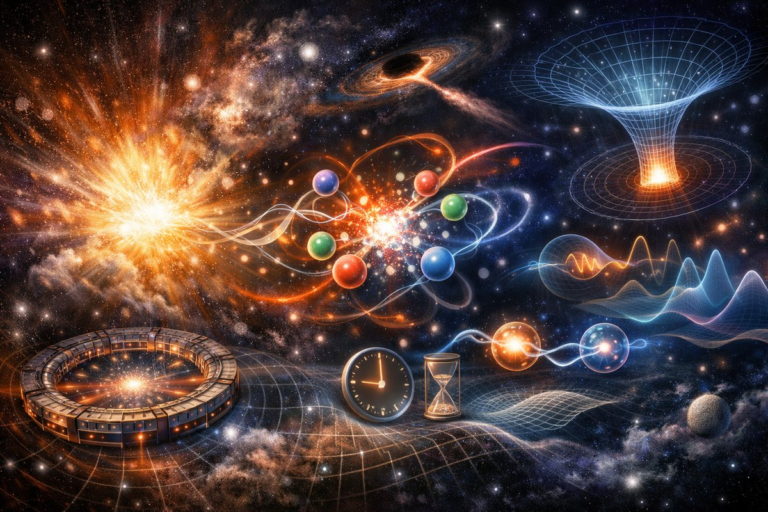
Amid the technical tour de force, a philosophical question endures: can we truly reconstruct a singular genesis event, or is our cosmic origin a statistical convergence of quantum possibilities? If the primordial state was a superposition of geometries, the concept of a single “beginning” may be fundamentally ill-posed. Some researchers embrace a multiverse interpretation, wherein our observable patch is just one of many fluctuation bubbles in a larger quantum foam. Others remain cautious, arguing that current data can only constrain our patch, not attest to what lies beyond.
Regardless of where the philosophical debate lands, the empirical quest continues at full tilt. New data releases on the horizon-from enhanced neutrino arrays, space-based bolometer proposals, and third-generation interferometer prototypes-promise richer, sharper glimpses of cosmic prehistory. In tandem, the global community of professional and amateur observers is forging a collaborative mosaic, piece by piece erasing the fog that shrouds the dawn of time.
If past decades have taught us anything, it’s that each technical advance brings surprises. An unanticipated spectral feature here, an anomalous correlation there, could tip the theoretical scales and send models weaving in new directions. The search for the Universe’s first instants is not just a matter of filling in a blank page; it is a dynamic conversation between raw data and creative theory. And as instruments grow ever more sensitive, that conversation is poised to become a clarion call from the very moment of creation.
Observers in remote deserts are gearing up for the next observation season, calibration runs are underway on mountain cabins, and theoretical teams are busy cross-checking model predictions. Meanwhile, millions of stargazers worldwide are sharpening eyepieces and lining up astrophotography rigs, hoping to catch a glimpse of nebulae and distant galaxies that serve as both backdrop and probe of the deep past. What started as a trickle of curious minds gazing skyward has blossomed into a full-blown cosmic orchestra, instruments tuned to the faintest notes of the primordial symphony.
As we stand on the cusp of potentially detecting the Universe’s inaugural tremors, the boundary between cosmic archaeology and quantum gravity research blurs. The coming years may well deliver the first unambiguous signals of processes that unfolded before time itself could be said to exist. Should that day arrive, it will mark not the end of inquiry but a thrilling new chapter, as we strive to grasp not only where we began, but why.