Location
Mount Vernon, WA 98274

Location
Mount Vernon, WA 98274
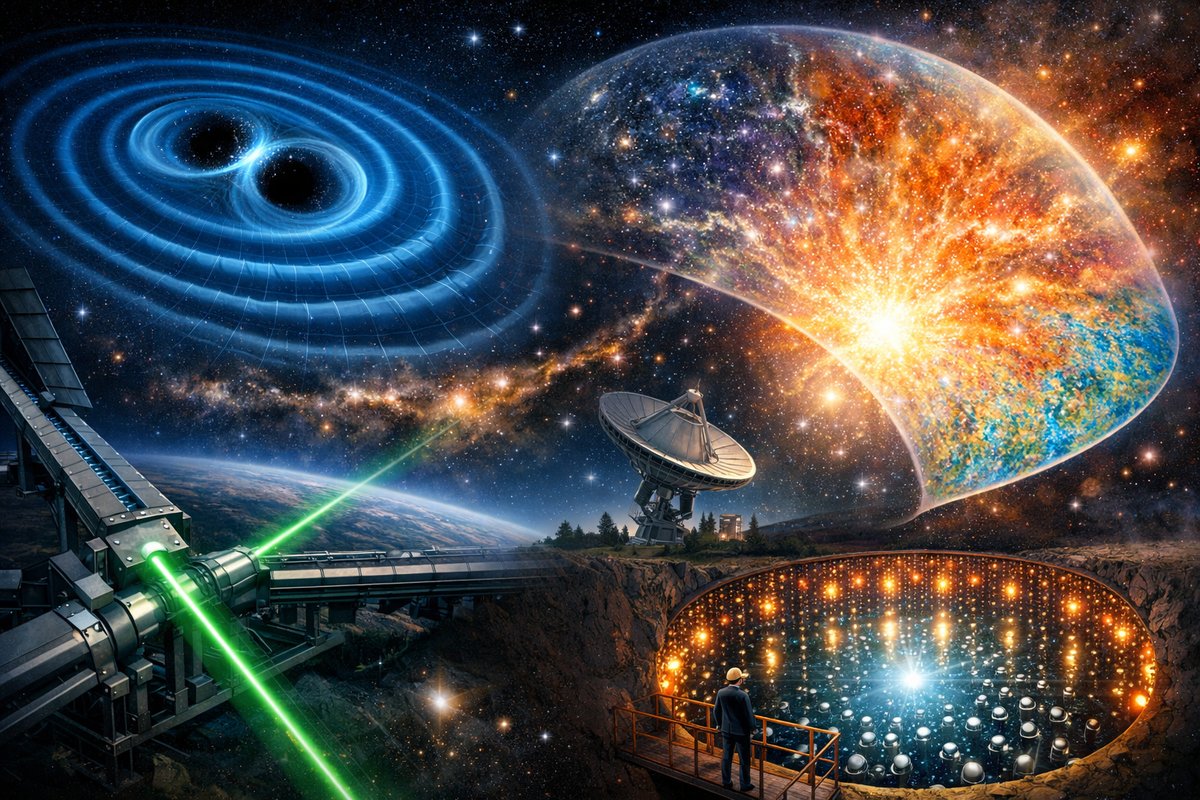
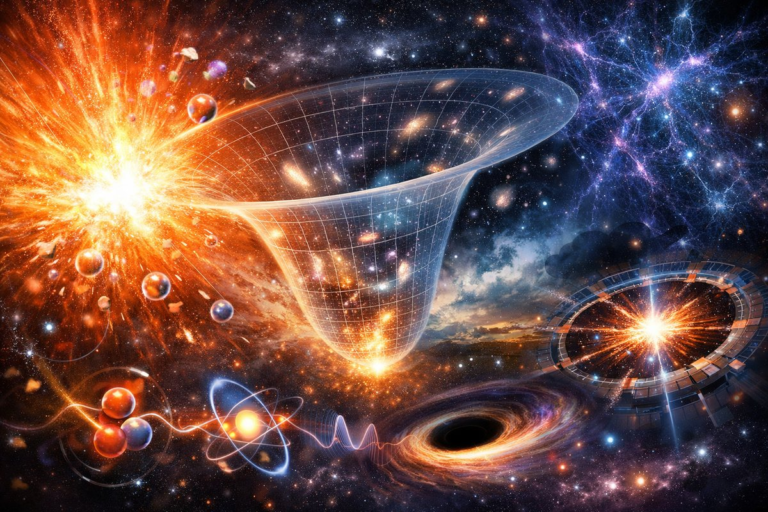
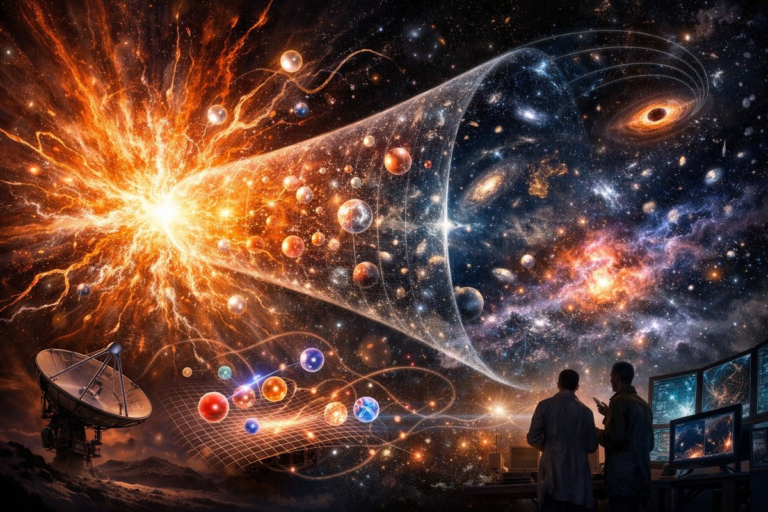
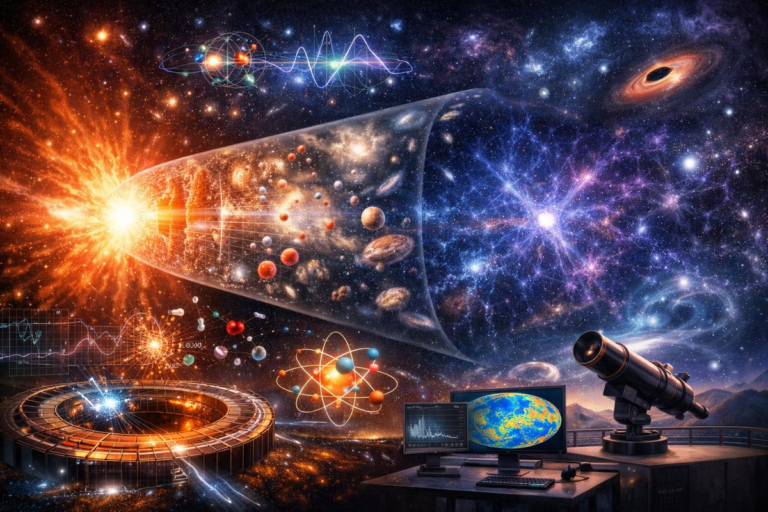
New advances in gravitational wave detection, neutrino observation, and microwave background mapping are converging on the universe's hidden first instants. By merging next-generation instruments with innovative analysis, scientists are unraveling the quantum fluctuations and paradoxes that seeded all cosmic structure.
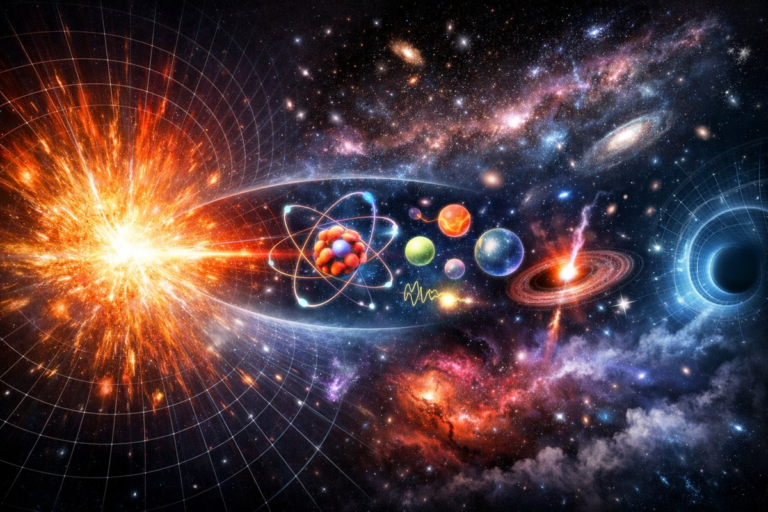
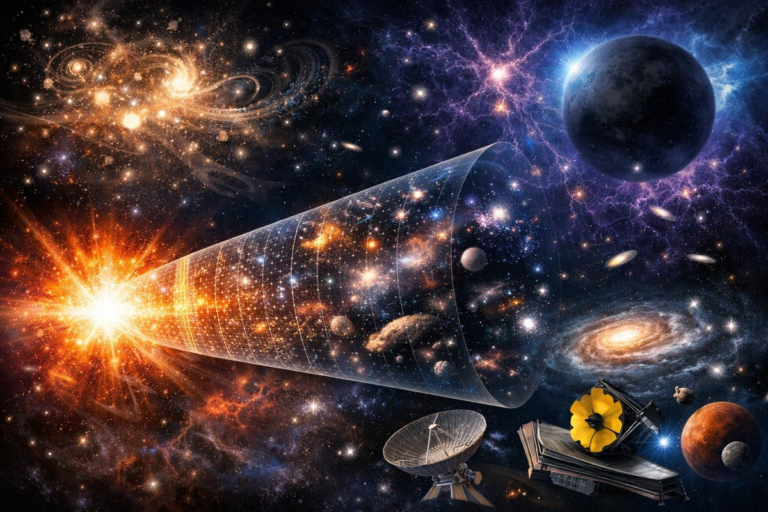
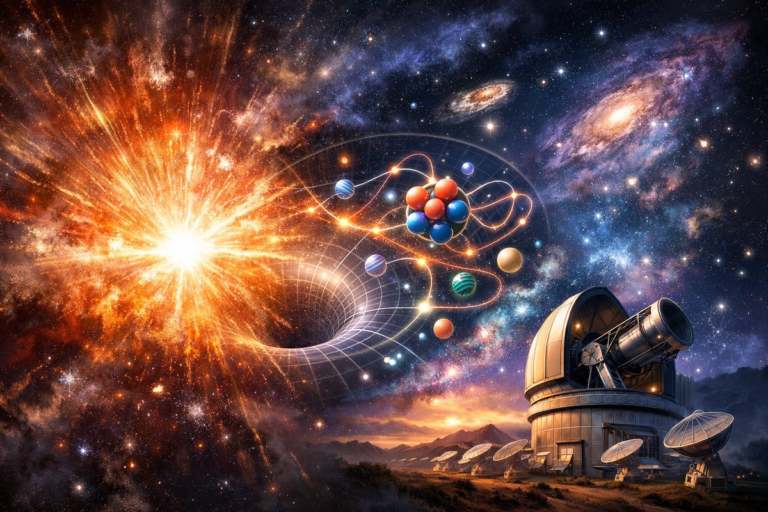
For decades, cosmologists have pieced together a narrative of our universe that begins with an almost inconceivably hot, dense state and unfurls into the vast cosmic web of galaxies, stars, and planets we observe today. Yet the events preceding the release of the cosmic microwave background-our oldest direct snapshot-remain shrouded in mystery. Now, a wave of cutting-edge detectors and collaborative ventures is pushing observational cosmology into a new era. From ground-breaking gravitational wave observatories to precision neutrino telescopes and balloon-borne microwave receivers, the primordial tapestry is finally coming into focus.
At the forefront are upgraded interferometers capable of detecting primordial gravitational waves. These ripples in space-time, generated by quantum jitter in the universe’s first tiny fraction of a second, carry a pristine record of the inflationary epoch. While present detectors like the Advanced Interferometer Network have achieved remarkable sensitivity, next-generation facilities promise to reach frequencies once thought unreachable. By targeting the nanohertz to microhertz band-where the signature of cosmic inflation is strongest-physicists hope to isolate the distinct “B-mode” polarization pattern imprinted on the gravitational wave background.
Meanwhile, a spate of neutrino observatories is gearing up to catch the elusive bath of relic neutrinos predicted to permeate the cosmos. These ghostly particles decoupled from matter mere seconds after the Big Bang and have cooled to just a fraction of an electronvolt. Detecting them would confirm fundamental predictions of the Standard Model and offer a direct probe of the universe’s earliest thermodynamic conditions. Proposals range from massive tritium-based capture experiments buried deep underground to ultra-cold atomic traps designed to enhance interaction cross-sections. Each approach brings unique technical challenges, but the potential scientific payoff is enormous.
Not to be outdone, microwave astronomy has seen a renaissance in balloon-borne and satellite missions that refine measurements of the cosmic microwave background (CMB). The latest balloon campaigns are mapping temperature and polarization anisotropies with three times the resolution of previous flights. Sub-orbital platforms equipped with superconducting detectors survey sky patches in the southern hemisphere with unprecedented depth. These precise maps help distinguish between competing inflationary models by measuring the spectral index and potential running of fluctuations, narrowing the parameter space for early-universe physics.
A crucial crosscheck comes from deep surveys of large-scale structure, where galaxies and clusters trace the growth of primordial fluctuations over billions of years. New wide-field instruments on mid-size telescopes are cataloging tens of millions of galaxies, allowing cosmologists to reconstruct the matter distribution with exquisite precision. When correlated with CMB lensing maps and gravitational wave data, these surveys can test the consistency of the cosmological model and potentially uncover new physics, such as exotic dark matter interactions or modifications to general relativity at cosmic scales.
Yet for all these cutting-edge tools, vexing paradoxes persist. The observed dominance of matter over antimatter remains unexplained. Leptogenesis scenarios propose that minute asymmetries in neutrino interactions tipped the balance, but direct evidence for the required CP violation is still out of reach. Similarly, the nature of dark matter-whether weakly interacting massive particles, axion-like particles, or something more exotic-has eluded direct detection. Novel detection concepts, including resonant cavities tuned to dark matter masses and networked superconducting sensors, are now under development to close these gaps.
Adding to the intrigue is the tension between local measurements of the universe’s expansion rate and values inferred from the CMB. Known as the Hubble tension, this discrepancy could be a hint of new physics in the early universe-perhaps an extra relativistic species or a transient phase of early dark energy. Upcoming gravitational wave siren observations, which use merging neutron star binaries as standard candles, offer an independent way to pin down the Hubble constant. With a handful of well-localized events and redshifts, this method could arbitrate the debate within a few years.
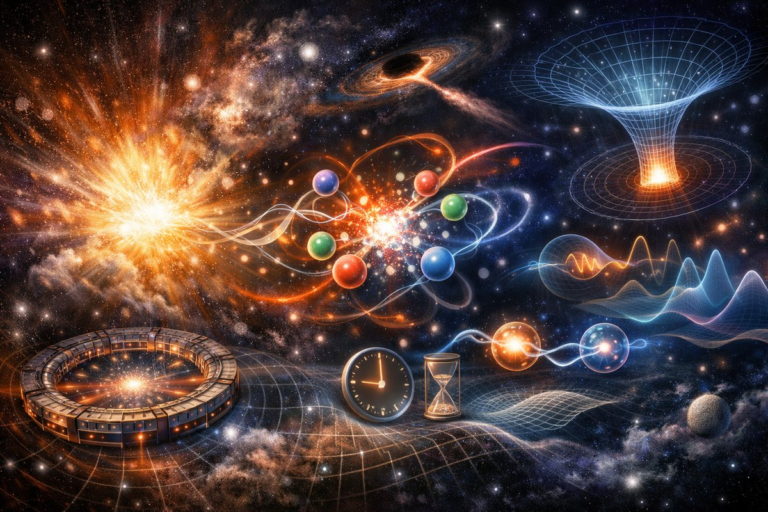
Beyond observations, theoretical advances are bridging quantum field theory, string theory, and quantum gravity to refine our picture of the universe’s opening act. Holographic dualities hint at deep connections between gravitational dynamics and lower-dimensional field theories. Loop quantum gravity and other non-perturbative approaches aim to resolve the singularity that standard cosmology cannot address. While these ideas remain speculative, they provide a vital framework for interpreting the flood of new data and guiding the next generation of experiments.
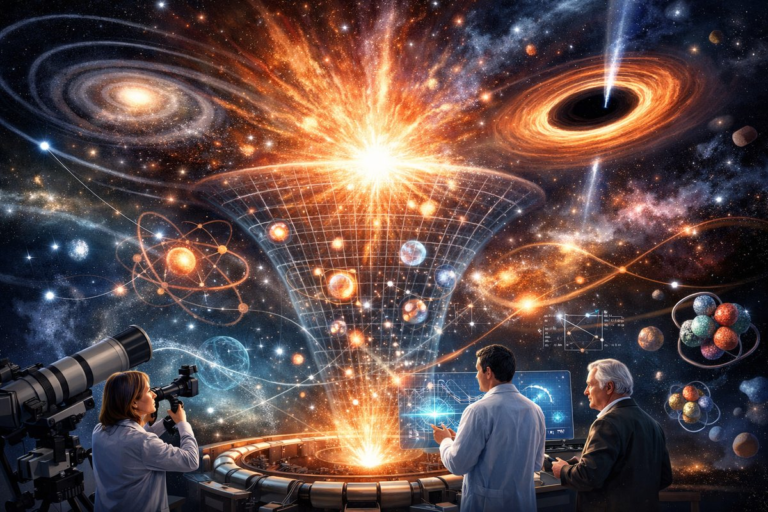
The synergy among these diverse probes is what makes the current moment so exhilarating. Each dataset-whether from gravitational wave observatories, neutrino detectors, microwave telescopes, or galaxy surveys-offers an independent slice of the same grand origin story. By weaving them together, scientists can perform cross-consistency checks on fundamental parameters and identify subtle anomalies that escape any single method. This holistic strategy mirrors how astronomers once combined optical and X-ray observations to understand galaxy clusters; now it is cosmology’s turn.
Public engagement in these endeavors is also growing. Citizen science projects allow enthusiasts to sift through telescope data, identifying transient events that might herald new astrophysical phenomena or gravitational wave counterparts. Outreach teams are creating immersive planetarium shows and VR simulations of the inflationary epoch, making abstract quantum processes tangible. This wider involvement not only fuels excitement but also broadens the knowledge base and inspires the next generation of researchers.
In practical terms, the march toward understanding cosmic origins demands sustained investments in infrastructure, computing power, and international collaboration. Large-scale facilities-whether underground neutrino labs or desert-based CMB telescopes-require decades of commitment. Equally important is the development of open-source analysis tools and high-performance computing clusters to process the petabytes of data streaming in. Cross-disciplinary workshops are breaking down silos between astronomers, particle physicists, and theorists, forging the integrated teams needed to tackle the deepest questions.
As the observational frontier advances and theoretical frameworks evolve, we stand on the cusp of deciphering the universe’s most profound riddles. What triggered inflation? Why is the cosmos so uniform on large scales yet seeded with tiny fluctuations that gave rise to galaxies? How did fundamental forces emerge from a unified state? Each answer promises to reshape our understanding of physics and our place in the cosmic story.
The journey to the beginning is far from over, but the tools at hand have never been more powerful. By synchronizing gravitational wave detectors, neutrino observatories, CMB surveys, and galaxy maps, humanity is poised to witness the echoes of creation. In doing so, we honor a tradition of curiosity and exploration that stretches back to our earliest stargazers. The primordial tapestry is finally within reach-waiting to reveal the threads that connect us to the very origin of everything.
At a time when unanswered questions outnumber settled facts, the quest for cosmic origins exemplifies scientific optimism. Each new detector deployed, each photon counted, and each neutrino caught brings us closer to unveiling the universe’s first act. And as we gaze into the depths of space and time, we are reminded that the story of the cosmos is also a story of ourselves-an ever-expanding narrative still unfolding in the minds and machines of those who dare to look back to the beginning.