Location
Mount Vernon, WA 98274

Location
Mount Vernon, WA 98274
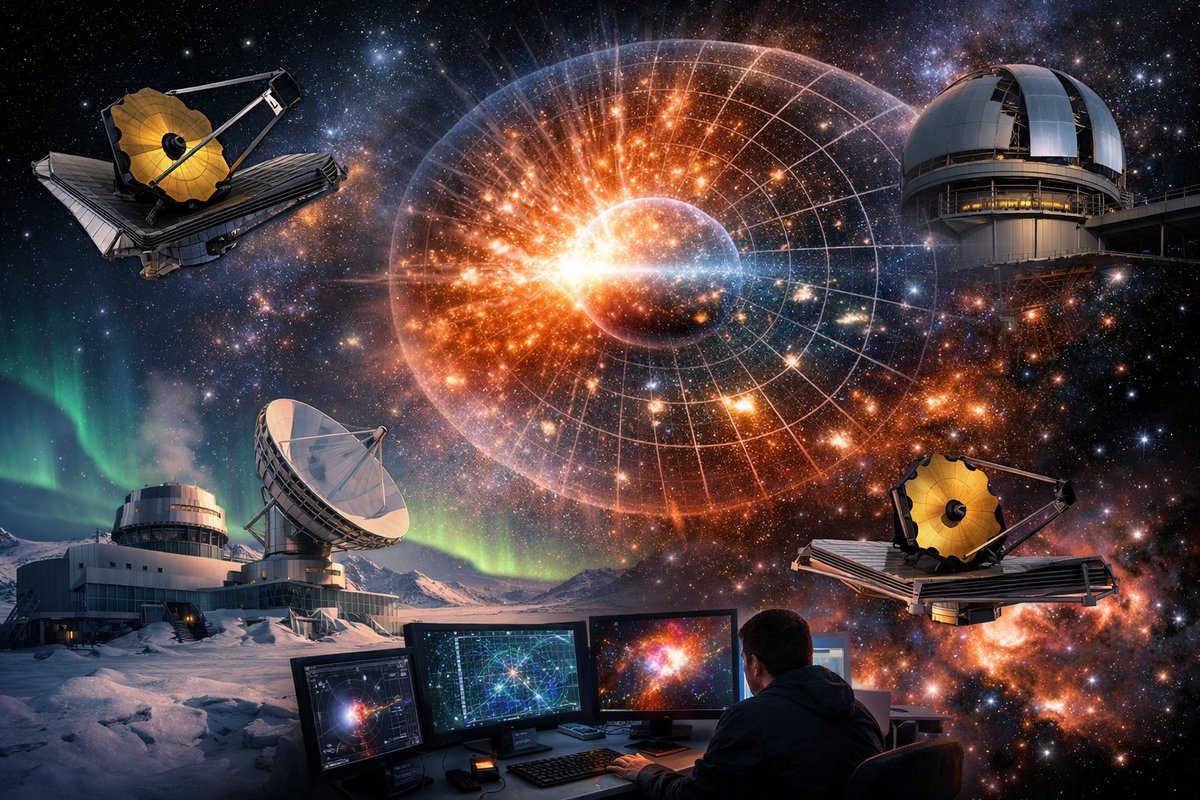
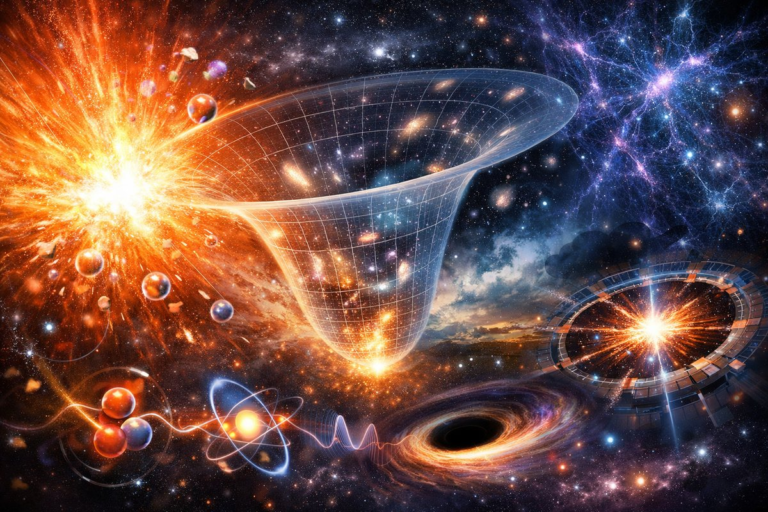
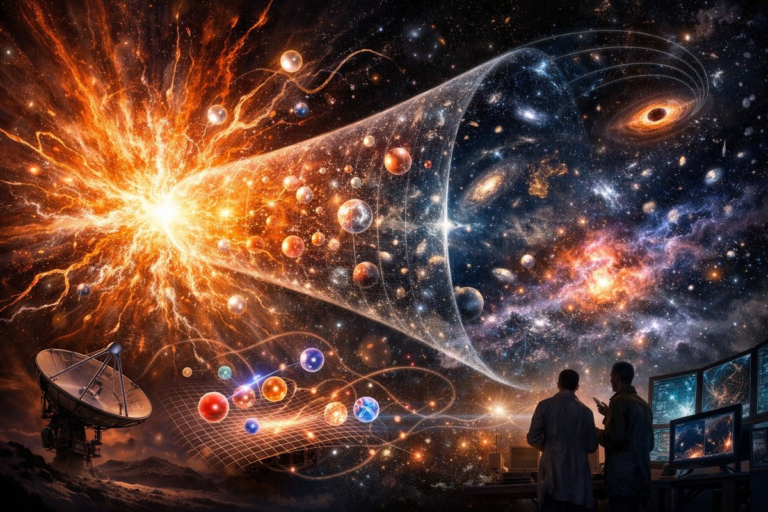
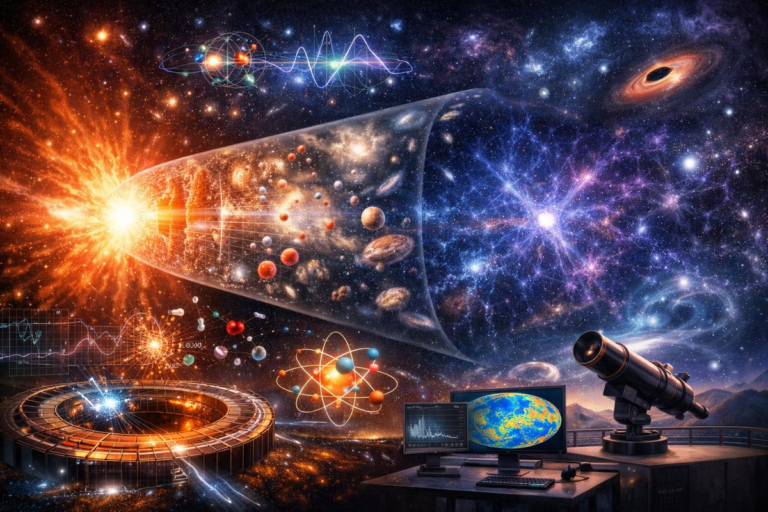
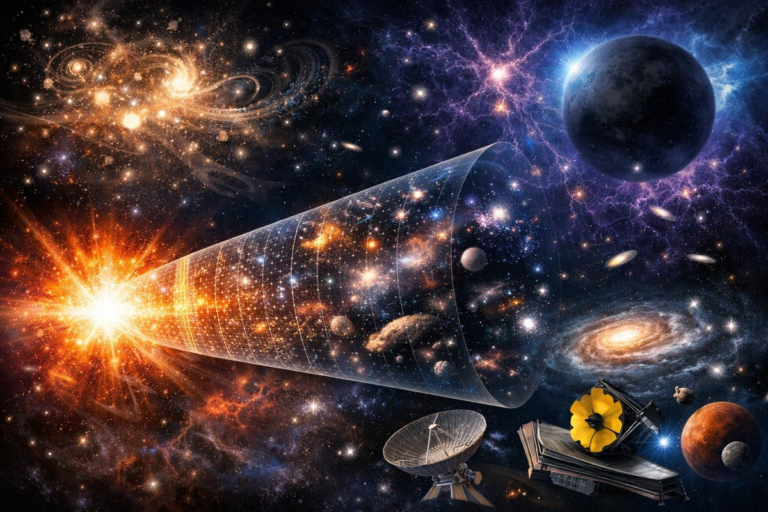
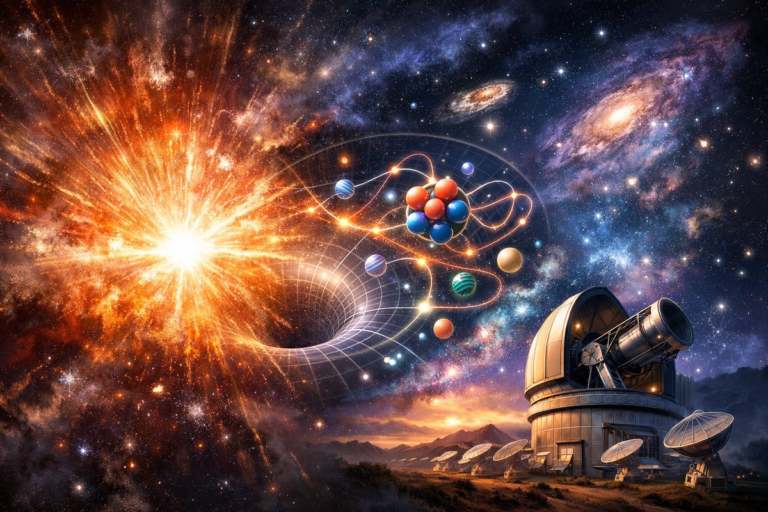
Scientists are harnessing an array of telescopes, detectors, and simulations to peel back the universe's earliest moments. From Antarctic observatories hunting primordial gravitational waves to deep-space infrared surveys mapping nascent galaxies, recent advances are reshaping our portrait of cosmic birth.
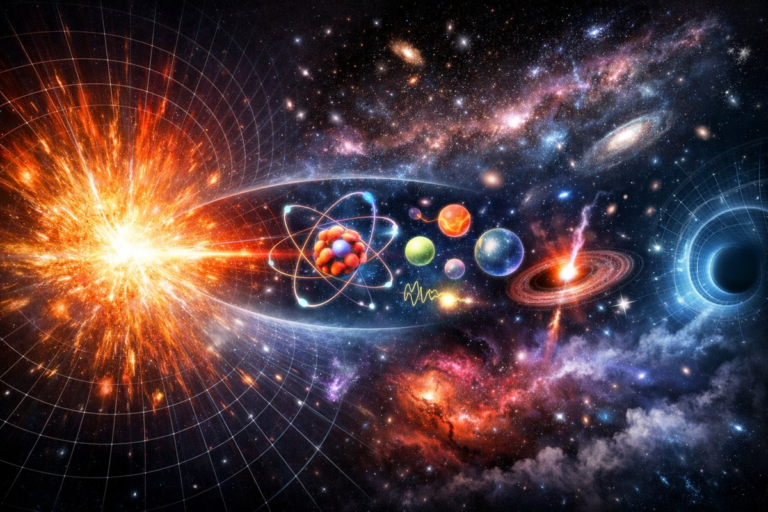
Humanity’s quest to understand our cosmic beginnings is entering an era of unprecedented clarity and complexity. In laboratories buried beneath the Antarctic ice sheet and atop remote desert plateaus, researchers are hunting faint whispers from the dawn of time. Meanwhile, spacecraft orbiting far beyond Earth’s atmosphere peer across billions of light-years, collecting the faint glow of hydrogen atoms and newborn galaxies. Together, these efforts are threading together a narrative that spans quarks and galaxies, inflationary fields and dark energy.
The new frontier of research draws on complementary approaches. Ground-based instruments like the BICEP Array and the Simons Observatory are scanning the polarized light of the cosmic microwave background (CMB) for the elusive B-mode patterns predicted by inflationary theory. Detecting these tiny swirls would confirm that space itself expanded exponentially at a trillion-trillion-trillionth of a second after the Big Bang. Meanwhile, balloon-borne experiments such as SPIDER float high above most of Earth’s atmosphere, where cryogenic detectors cooled nearly to absolute zero can measure minute temperature variations in the CMB with extreme sensitivity.
Beyond the relic glow of the primordial fireball, radio telescopes tuned to the 21-centimeter hydrogen line are mapping how the first clouds of neutral hydrogen clumped under gravity. Projects like the Hydrogen Epoch of Reionization Array (HERA) in South Africa and the Experiment to Detect the Global Epoch of Reionization Signature (EDGES) in Western Australia are searching for the faint absorption and emission signals that trace the transition from the cosmic dark ages to the era of first starlight. Early data hints at an absorption profile deeper than expected, prompting theorists to revisit assumptions about the radiation backgrounds and the nature of dark matter.
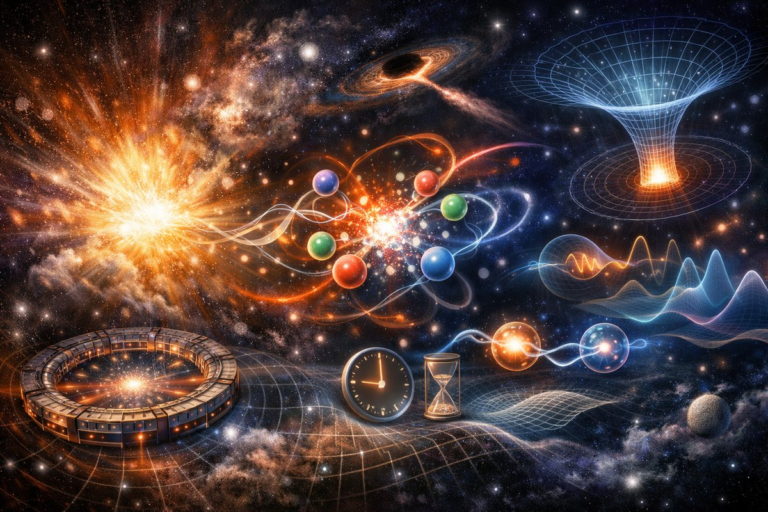
At the same time, advanced particle-physics experiments aim to resolve paradoxes at nature’s smallest scales. Facilities such as the Large Hadron Collider (LHC) and next-generation neutrino detectors like the Deep Underground Neutrino Experiment (DUNE) are probing the properties of fundamental particles that dominated the infant cosmos. How do neutrinos influence the formation of large-scale structures? Why is our universe dominated by matter when matter and antimatter should have been created in equal quantities? Precision measurements of neutrino oscillations and rare decays may hold clues to this imbalance, a phenomenon known as baryogenesis.
Complementing physical experiments are ever-more powerful simulations. Petascale supercomputers and emerging quantum processors are being harnessed to model everything from the quantum fluctuations that seeded galaxy clusters to the violent collisions of primordial particles. These digital universes allow researchers to test competing theories of cosmic inflation, dark matter interactions, and even speculative modifications to gravity. Some teams are exploring how hypothetical particles-axions, sterile neutrinos, or ultralight fields-could leave subtle imprints on the CMB or alter the cosmic expansion rate at early times.
Space-based observatories add another dimension. The James Webb Space Telescope (JWST) has now delivered its first glimpse at galaxies forming just a few hundred million years after the Big Bang, revealing unexpectedly massive structures that challenge existing models of star formation and galaxy assembly. Meanwhile, the Euclid mission and the Nancy-Grace Roman Space Telescope will survey vast swaths of the sky in infrared light, creating three-dimensional maps of hundreds of millions of galaxies. By charting how these structures grow over cosmic time, astronomers hope to trace the history of dark energy back to its infancy.
Yet for all this progress, critical puzzles remain. The true nature of dark matter and dark energy continues to elude direct detection. The inflationary mechanism that drove the universe’s first expansion may involve fields and particles far beyond the reach of current colliders. And at the quantum gravity frontier, theories such as string theory and loop quantum gravity strive to reconcile general relativity with quantum mechanics-but none has yet achieved consensus.
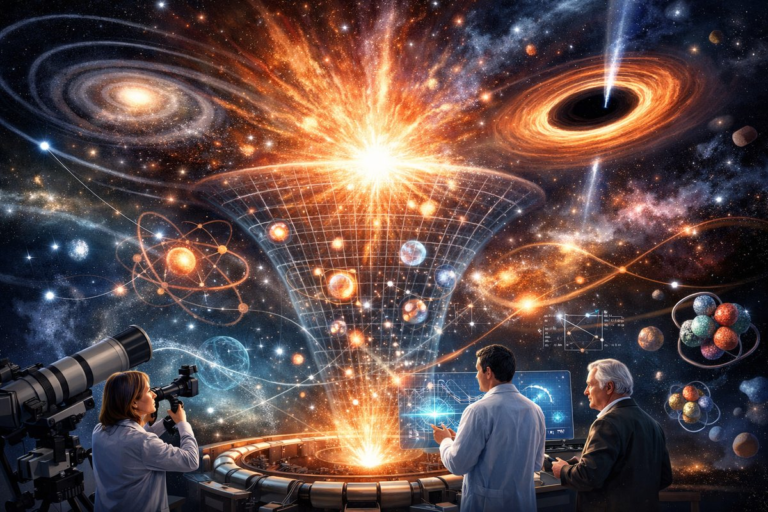
These challenges have accelerated collaboration between disciplines. Astrophysicists now work side-by-side with condensed-matter physicists designing superconducting detectors, computer scientists writing machine-learning algorithms for pattern recognition, and even philosophers exploring the implications of a multiverse. International consortia pool funding and expertise to build larger, more sensitive instruments, while open-data initiatives allow students and citizen scientists around the world to sift through petabytes of observations for hidden signals.
On the horizon are next-generation projects that promise to push back even further. The Cosmic Microwave Background Stage-4 (CMB-S4) experiment will link dozens of telescopes on both hemispheres, providing the most precise CMB measurements to date. The SKA (Square Kilometre Array) radio telescope will survey the sky in unprecedented detail, charting hydrogen across cosmic history and perhaps even detecting unexpected physics in radio transients. Underground laboratories are planning to detect neutrinos from the first supernovae and trace the cosmic neutrino background-the faint echo of neutrinos freed shortly after the Big Bang.
As immersive technologies mature, enthusiasts and educators are recreating the early universe in virtual reality. Interactive simulations allow users to “fly” through the expanding space-time fabric, visualizing how quantum ripples evolved into galaxy superclusters. These experiences convey both the scale and beauty of cosmic evolution, inspiring new generations to join the search for our origins.
The stakes extend well beyond academic curiosity. Understanding the deep mechanisms of cosmic birth could reveal new physics that transforms energy production or materials science. Insights into quantum gravity might inform encryption methods or lead to breakthroughs in quantum computing. Even the philosophical implications-our place in an evolving multiverse, the emergence of complexity from chaos-reshape how we think about life, consciousness, and the future of exploration.
In labs and observatories, in high-performance computing centers and amateur stargazing clubs, people everywhere share in the excitement of discovery. Each new data point, each nuanced simulation, adds a brushstroke to the vast canvas of cosmic history. Though the first instants of the universe are gone, their echoes are written in every photon, every particle, and every gravitational wave we detect today.
Looking outward and inward, we stand at the threshold of a grand synthesis. By weaving together theory, observation, and experiment, humanity may soon illuminate the full tapestry of cosmic origin-from the quantum vacuum that sprang into being, to the galaxies and planets that gave rise to our own stardust minds.