Location
Mount Vernon, WA 98274

Location
Mount Vernon, WA 98274
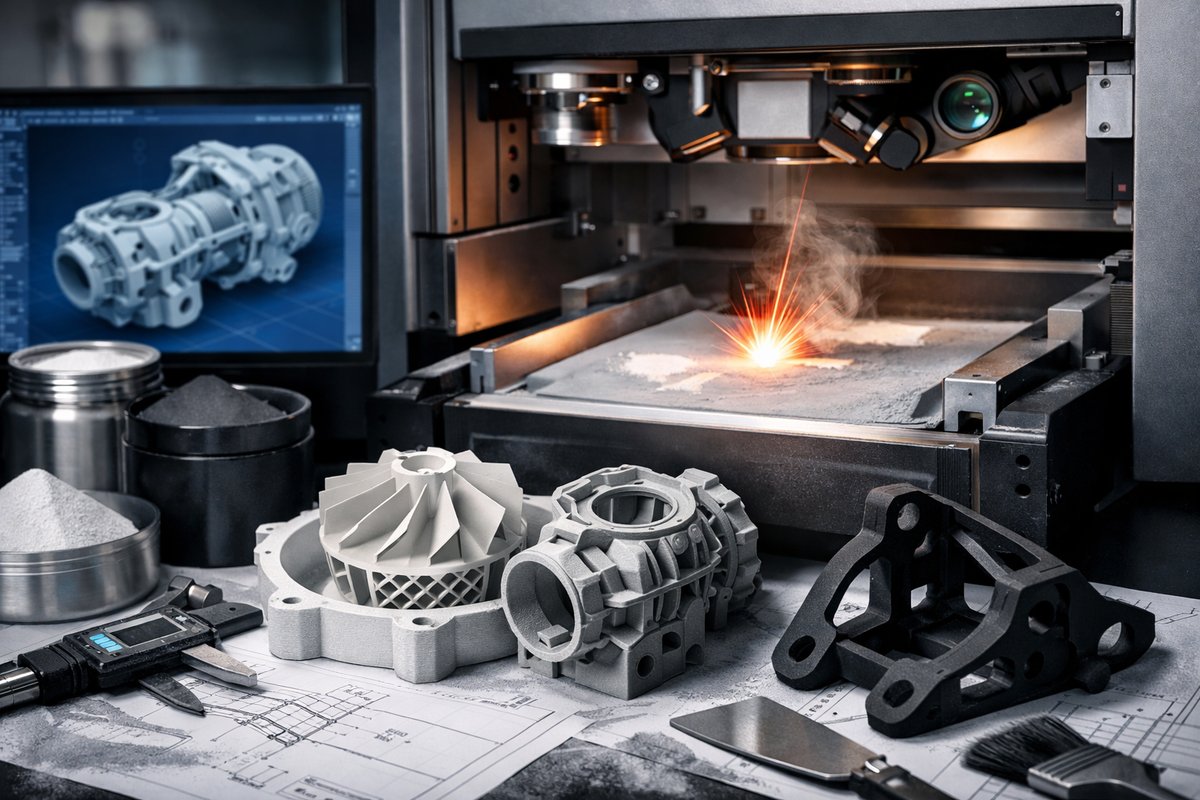
Selective Laser Sintering (SLS) stands out as a powerful additive manufacturing technique capable of producing complex, durable parts without the need for support structures. This guide delves into the essentials of SLS technology, exploring its process, key materials, and tools to help you confidently bring intricate designs to life with precision and strength.
Additive manufacturing has revolutionized how we transform digital concepts into physical objects, and among its many techniques, Selective Laser Sintering (SLS) offers a unique combination of versatility, strength, and detail. Unlike other 3D printing methods that rely on extruding filament or curing resin, SLS uses a high-powered laser to sinter powdered materials layer by layer, creating robust parts with complex geometries that are often impossible to achieve with traditional manufacturing.
This article provides a detailed overview of the SLS process, highlighting essential components and tools, and offers practical advice for those interested in exploring this advanced technique. Whether you are a hobbyist looking to upgrade your prototyping capabilities or an engineer aiming to produce functional end-use parts, understanding the nuances of SLS can open new creative and technical possibilities.
Understanding the SLS Process
At its core, Selective Laser Sintering involves spreading a thin layer of powdered material-commonly nylon, polyamide, or specialized composites-across a build platform. A laser then selectively fuses particles together according to the digital design’s cross-sectional data. After one layer is sintered, the platform lowers slightly, and a new layer of powder is spread on top. This cycle repeats until the entire object is formed.
One of SLS’s key advantages is that the unsintered powder surrounding the part acts as a natural support structure, allowing for intricate overhangs, internal channels, and complex assemblies without the need for additional scaffolding. This capability is particularly beneficial for producing lightweight yet strong components in aerospace, automotive, medical, and consumer product sectors.
Choosing the Right Materials
Material selection in SLS is critical to achieving desired mechanical properties and surface finishes. The most commonly used material is polyamide (nylon) powder, prized for its toughness, flexibility, and chemical resistance. Variants include glass-filled or carbon-filled nylon powders, which enhance stiffness and thermal stability for demanding applications.
Recent advances have expanded SLS materials to include elastomers for flexible parts, metal powders for industrial-grade components, and even biocompatible polymers suitable for medical devices. When starting out, it’s advisable to begin with standard nylon powders due to their ease of processing and broad application range.
Essential Equipment and Tools
Investing in the right equipment and accessories can significantly improve your SLS printing experience. Here are some key components to consider:
Step-by-Step Guide to Starting with SLS
1. Design Your Model: Use CAD software to create a 3D model optimized for SLS. Consider wall thickness, internal structures, and tolerances specific to powder-based printing.
2. Prepare the Print File: Export your design in an appropriate format (usually STL) and slice it using software compatible with your SLS printer. Adjust parameters such as layer thickness and laser power based on material specifications.
3. Load the Powder: Fill the printer’s powder reservoir with the selected material, ensuring it is dry and well-mixed to prevent clumping.
4. Start the Print: Initiate the print job. The laser will sinter the powder layer by layer, while the build chamber maintains optimal temperature to reduce warping.
5. Cool and Remove: Once printing completes, allow the build chamber to cool gradually. Carefully remove the build platform and extract your part from the surrounding powder.
6. Post-Process: Clean the part using compressed air or ultrasonic cleaning to remove residual powder. Additional finishing like sanding or dyeing can be applied as needed.
Why Try SLS Yourself?
Exploring SLS printing offers several compelling benefits. The technique enables the creation of functional prototypes and end-use parts with mechanical properties close to injection molding. Its ability to produce complex geometries without support structures opens doors to innovative design solutions, such as lightweight lattice structures and integrated assemblies.
Moreover, the growing availability of desktop SLS machines and materials lowers the entry barrier for small businesses, educators, and makerspaces. Engaging with SLS printing can deepen your understanding of material science, digital fabrication, and product development workflows, empowering you to push creative and engineering boundaries.
Considerations for Sustainable and Safe Practice
Working with fine powders requires attention to safety and environmental impact. Use appropriate personal protective equipment such as masks and gloves to avoid inhalation or skin contact. Ensure your workspace has proper ventilation and powder containment systems.
From a sustainability perspective, SLS can reduce waste by using only the material necessary for the part plus a small margin of reusable powder. Recycled powders can often be mixed with fresh material to extend usability, minimizing environmental footprint.
As the technology evolves, new bio-based and recyclable powders are emerging, promising greener additive manufacturing solutions.
Embarking on your SLS journey can be both a technical challenge and a creative adventure. With the right knowledge, materials, and tools, you can unlock a world of possibilities where your digital designs take tangible, durable form-layer by layer, powder by powder.