Location
Mount Vernon, WA 98274

Location
Mount Vernon, WA 98274
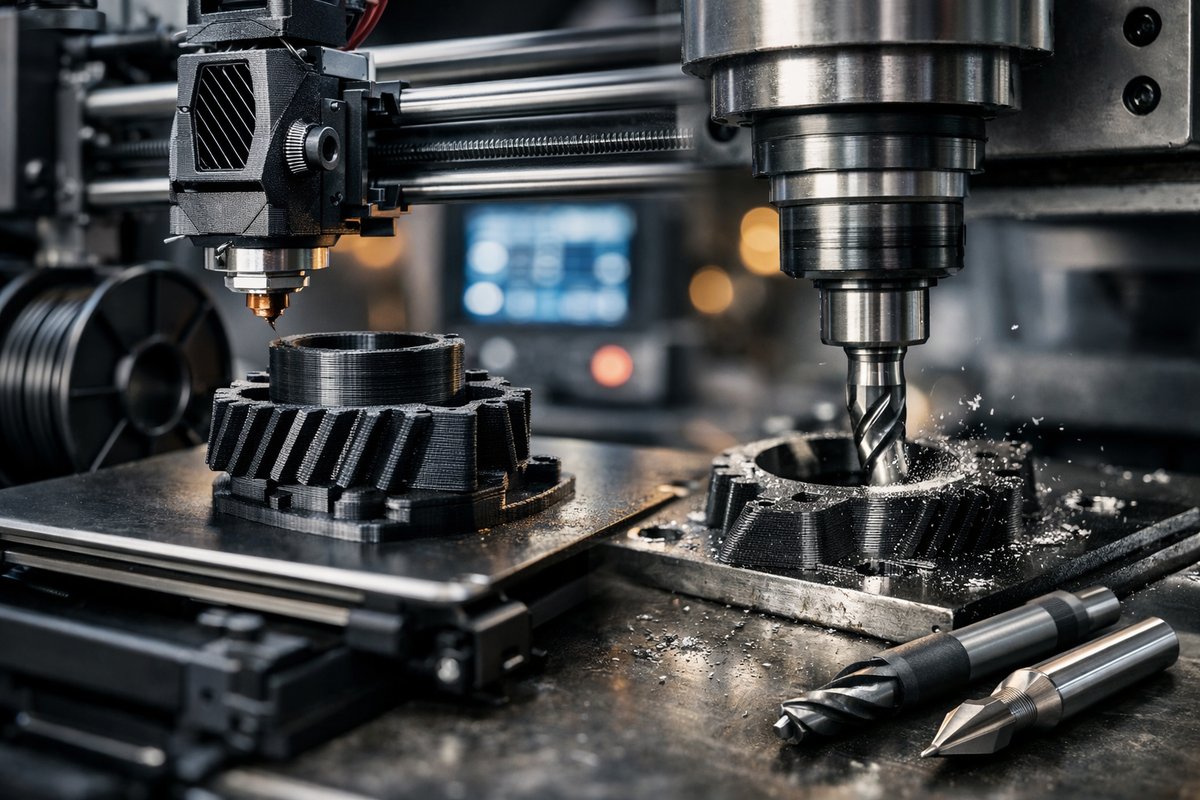
Additive manufacturing, particularly Fused Filament Fabrication (FFF), offers an accessible and versatile approach to creating complex parts layer by layer. This guide explores the technique in detail, highlighting how combining FFF with CNC machining tools like end mills and routers can elevate precision and surface quality. Whether you're a curious maker or an aspiring professional, discover how to harness these complementary technologies to transform raw filament into refined, functional objects.
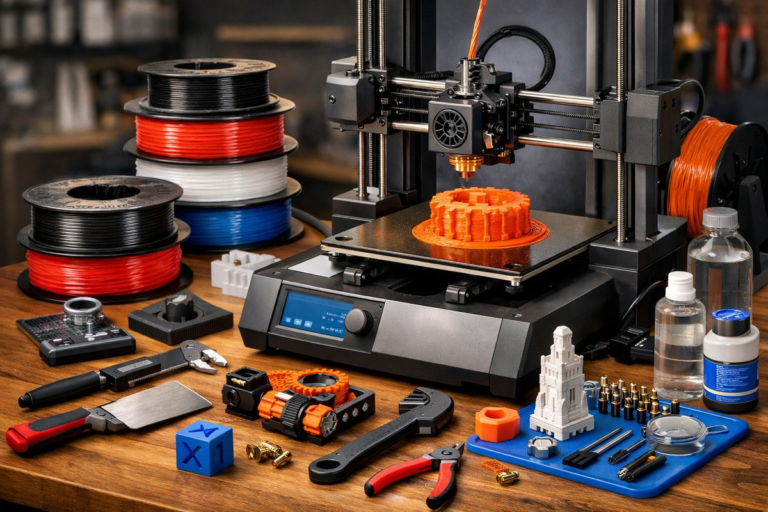
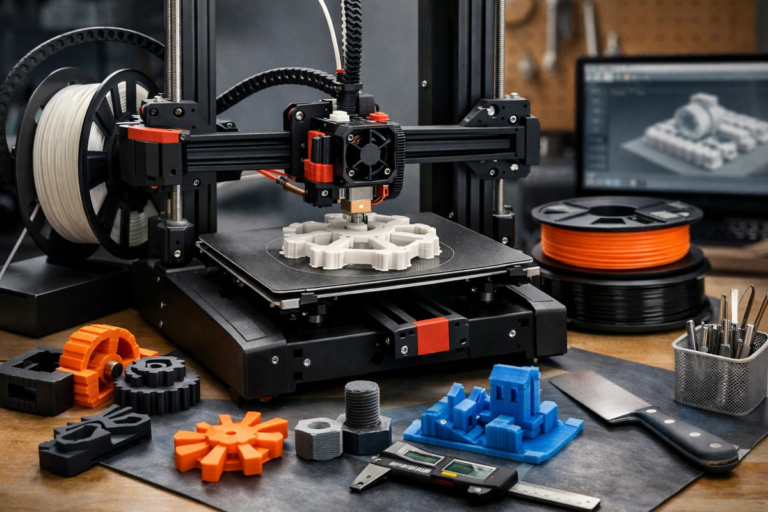
Additive manufacturing (AM) has revolutionized how we approach fabrication, shifting the paradigm from subtractive removal of material to the careful layering of material to build objects from the ground up. Among the various AM methods, Fused Filament Fabrication (FFF) stands out for its accessibility, versatility, and growing capabilities. This technique involves extruding thermoplastic filament through a heated nozzle, depositing it layer by layer to create a three-dimensional part. While FFF alone can produce impressive prototypes and functional components, integrating CNC finishing techniques such as milling or routing can dramatically enhance the precision, surface finish, and mechanical properties of the final product.
Understanding Fused Filament Fabrication begins with the basics of the process. The printer’s nozzle heats the filament-commonly PLA, ABS, PETG, or specialty blends-to a semi-liquid state, extruding it onto a build platform following a digitally sliced model. Each layer fuses to the previous one, gradually forming the shape. The advantages include relatively low cost, wide material availability, and the ability to create complex geometries, including internal channels and lattice structures, that would be difficult or impossible with traditional machining.
However, FFF parts often exhibit visible layer lines and may have dimensional inaccuracies due to factors like thermal contraction or nozzle precision. This is where the synergy with subtractive manufacturing techniques shines. After printing, parts can be mounted on a CNC machine equipped with appropriate tools-such as end mills or routers-to remove excess material, smooth surfaces, and achieve tight tolerances. This hybrid approach leverages the design freedom of additive manufacturing while embracing the refinement capabilities of subtractive methods.
Selecting the right CNC tools is critical for successful finishing. End mills with sharp cutting edges and appropriate flute counts can delicately remove thin layers without damaging the part. For plastics commonly used in FFF, single-flute or two-flute end mills made from carbide are preferred to minimize heat buildup and prevent melting. Router bits designed for plastics can also be employed for contouring and surface smoothing. The choice depends on the part geometry and desired finish.
Before machining, proper fixturing is essential. Securely clamping the printed part prevents vibration and movement that could lead to inaccuracies or damage. Vacuum tables, custom jigs, or adhesive fixtures can be used depending on the part size and shape. Additionally, understanding the toolpaths and programming the CNC machine with care ensures that cuts are shallow and gradual, preserving the integrity of the printed layers.
The benefits of combining FFF with CNC finishing extend beyond aesthetics. Mechanical properties can be enhanced by removing surface defects and stress concentrators, which often initiate cracks or failures. Dimensional accuracy is improved, enabling parts to fit precisely in assemblies or function reliably in mechanical systems. This approach is especially valuable for functional prototypes, end-use parts, or tooling components where performance matters.
Getting started with this hybrid workflow requires some investment in equipment and learning. A reliable FFF 3D printer with a stable build platform and consistent extrusion is foundational. For CNC finishing, a desktop CNC router or milling machine capable of fine resolution and repeatability is recommended. Software tools for slicing the 3D model and generating CNC toolpaths must be mastered, with attention to parameters like feed rates, spindle speeds, and step-over distances.
Experimentation is key. Begin with simple geometries to understand how the printed material responds to machining. Test different tool types and cutting parameters to find the sweet spot that balances material removal rate with surface quality. Over time, you’ll develop an intuitive sense for how additive and subtractive processes complement each other, unlocking new possibilities in design and fabrication.
Moreover, this hybrid approach aligns well with sustainable manufacturing principles. By adding only the material needed and then selectively removing minimal excess, waste is reduced compared to traditional subtractive-only methods. Using biodegradable or recyclable filaments further enhances environmental responsibility.
In summary, Fused Filament Fabrication combined with CNC finishing represents a powerful, accessible, and innovative approach to manufacturing. It invites creators to imagine freely in three dimensions and then refine meticulously with precision tools. Whether crafting prototypes, custom tools, or artistic objects, this synergy of additive and subtractive techniques offers a rewarding pathway to mastery and discovery. Embrace the patience of layering and the discipline of cutting to reveal the full potential of your designs.