Location
Mount Vernon, WA 98274

Location
Mount Vernon, WA 98274
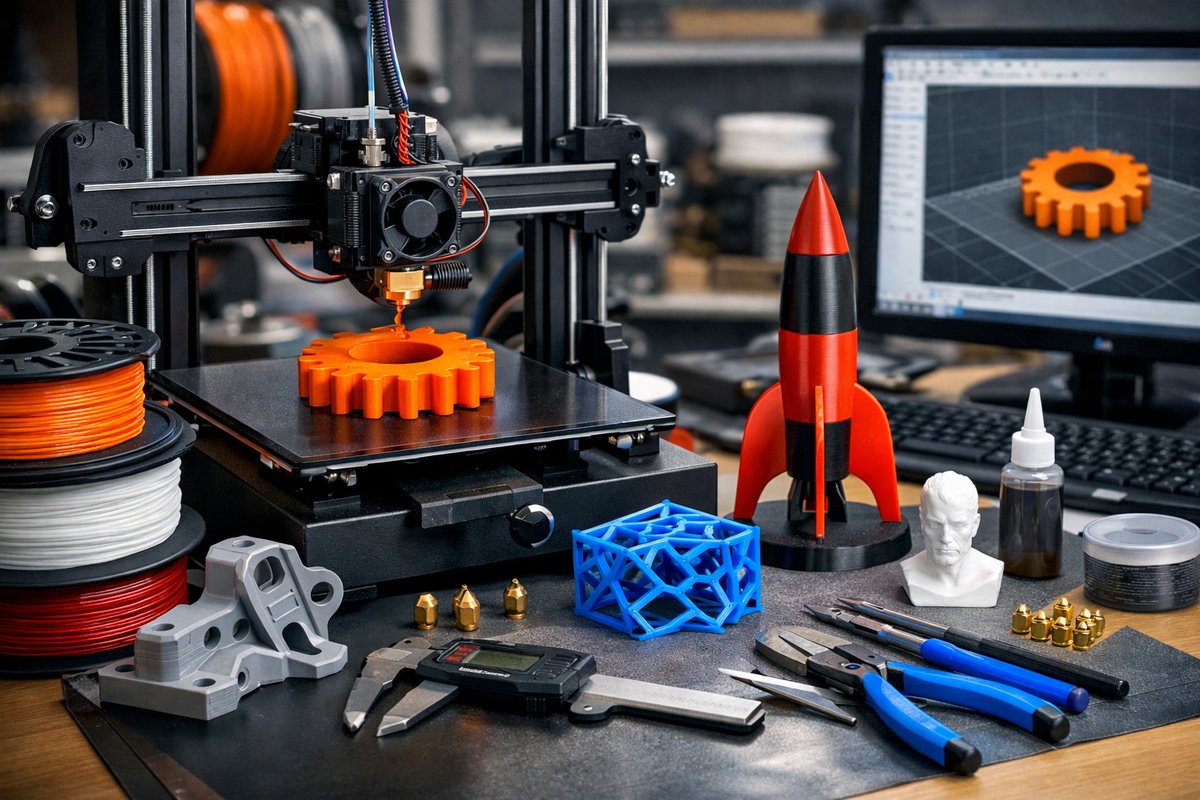
Fused Filament Fabrication (FFF) is one of the most accessible and versatile additive manufacturing techniques, perfect for hobbyists and professionals alike. This guide dives deep into the essentials of FFF, exploring the key components, materials, and tools needed to unlock its full potential and bring your digital designs to life.
Additive manufacturing has revolutionized how we create objects, and among its many techniques, Fused Filament Fabrication (FFF) stands out for its accessibility, affordability, and adaptability. Also known as Fused Deposition Modeling (FDM), this process builds parts layer by layer by extruding thermoplastic filament through a heated nozzle. Whether you’re a curious beginner or an experienced maker, understanding the nuances of FFF can empower you to produce functional prototypes, artistic models, and even end-use parts with relative ease.
At its core, FFF involves feeding a continuous filament of plastic into a hot end, where it melts and is deposited onto a build platform following a digital 3D model sliced into layers. The material cools and solidifies, bonding with the layer beneath to form a solid object. This straightforward principle belies the complexity and potential of FFF, which depends heavily on the choice of printer, filament, and auxiliary tools to achieve optimal results.
One of the first decisions in mastering FFF is selecting a reliable 3D printer. Desktop FFF printers vary widely in build volume, precision, and features such as heated beds, dual extrusion, and enclosed chambers. A quality printer with a stable frame and precise motion system forms the foundation for consistent prints. Look for printers with well-reviewed components like all-metal hot ends, robust extruders, and quality linear rails or rods to minimize vibrations and inaccuracies.
Filament choice is equally critical. The most common filaments are PLA (polylactic acid) and ABS (acrylonitrile butadiene styrene), each with distinct properties. PLA is biodegradable, easy to print, and produces sharp details, making it ideal for beginners and decorative items. ABS offers greater strength and heat resistance but requires a heated bed and controlled environment to prevent warping. Beyond these, specialty filaments such as PETG, TPU (flexible), and composites infused with wood, metal, or carbon fiber extend the creative and functional possibilities.
When selecting filament, consider diameter consistency, moisture content, and color options. Filaments absorb moisture from the air, which can cause bubbles and poor layer adhesion during printing. Proper storage in airtight containers with desiccants or using filament dryers can mitigate these issues and improve print quality.
Another indispensable tool in the FFF workflow is slicing software. This program translates your 3D model into instructions the printer can follow, controlling parameters like layer height, print speed, infill density, and support structures. Popular slicers offer extensive customization and preview features to optimize your print for strength, surface finish, and material use. Experimenting with settings like nozzle temperature and cooling fan speed can dramatically affect the final output.
Calibration and maintenance are vital for successful FFF printing. Leveling the build plate ensures the first layer adheres uniformly, which is crucial for print stability. Regular cleaning of the nozzle and lubrication of moving parts prevent clogs and mechanical wear. Monitoring filament feed and checking for signs of wear or damage help avoid mid-print failures.
Beyond the printer and filament, accessories can enhance your FFF experience. A heated build plate improves adhesion and reduces warping, especially with ABS and PETG. Adhesive aids like glue sticks, painter’s tape, or specialized build surfaces help prints stick firmly without damaging the bed. Post-processing tools such as sanding blocks, files, and solvents enable smoothing and finishing, elevating the appearance and function of your prints.
Safety should not be overlooked. Printing emits ultrafine particles and volatile organic compounds, particularly with materials like ABS. Adequate ventilation, filtration systems, or printing in well-ventilated spaces protect your health. Additionally, handling heated components with care and keeping the workspace organized reduce risks of burns or accidents.
Getting started with FFF is an exciting journey that blends creativity, engineering, and problem-solving. By selecting a capable printer, choosing the right filament, mastering slicing software, and maintaining your equipment, you can unlock the full potential of desktop additive manufacturing. Whether crafting intricate models, functional parts, or artistic creations, FFF offers an accessible gateway to turning digital ideas into tangible realities.
Embrace the iterative nature of 3D printing-each print is a learning opportunity. As you refine your technique and experiment with materials and settings, you’ll discover new possibilities and applications. From educational projects to rapid prototyping and bespoke manufacturing, FFF empowers makers to innovate sustainably and thoughtfully.