Location
Mount Vernon, WA 98274

Location
Mount Vernon, WA 98274
Binder Jetting is an additive manufacturing technique that offers unique advantages for creating complex metal and ceramic parts with high speed and scalability. This guide explores the essentials of Binder Jetting, detailing the process, key components, and practical tips to help makers and professionals harness this innovative technology for precision and efficiency.
Additive manufacturing has revolutionized the way we approach fabrication, shifting from traditional subtractive methods to building objects layer by layer. Among the various additive manufacturing techniques, Binder Jetting stands out for its ability to produce complex metal and ceramic parts rapidly and cost-effectively. Unlike laser-based methods that rely on melting powders, Binder Jetting uses a liquid binding agent to fuse powder particles, enabling new possibilities in design and production. This article provides a comprehensive overview of Binder Jetting, focusing on the process, essential components, and practical advice for those eager to explore this technique.
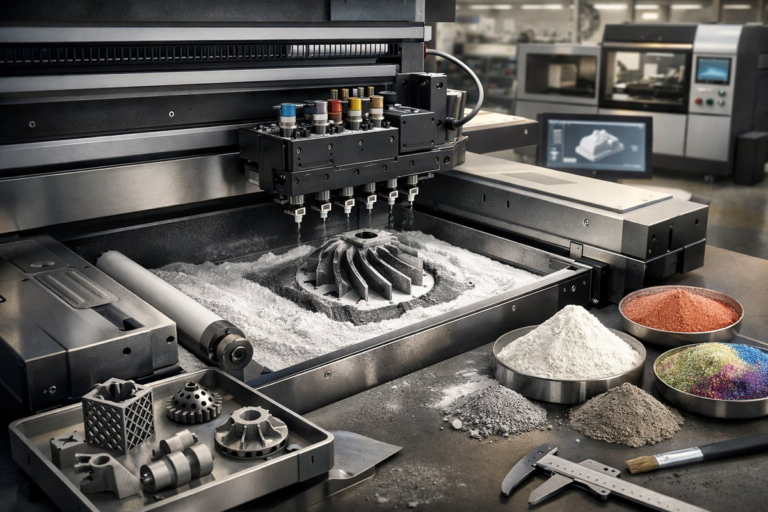
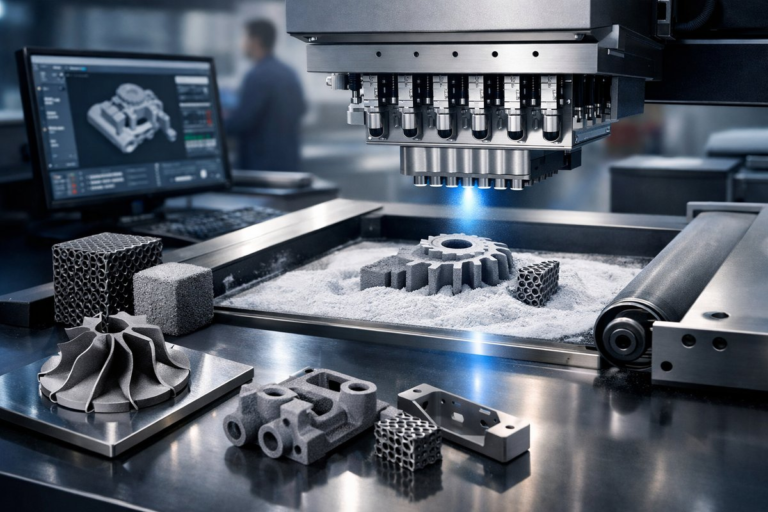
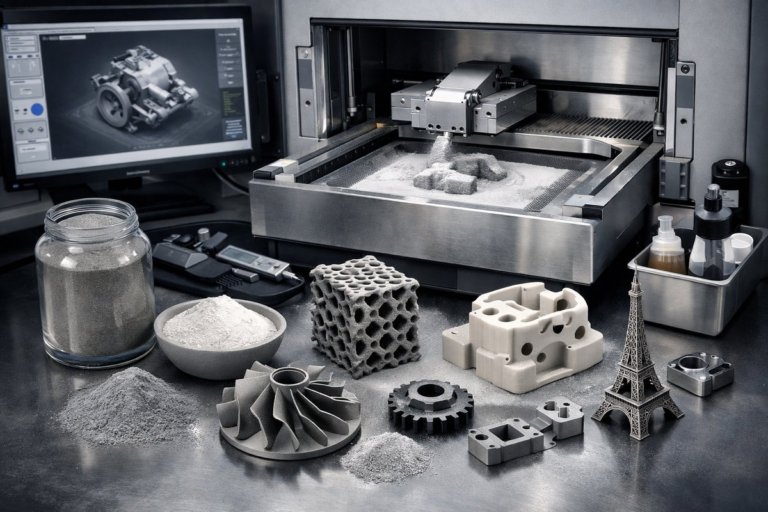
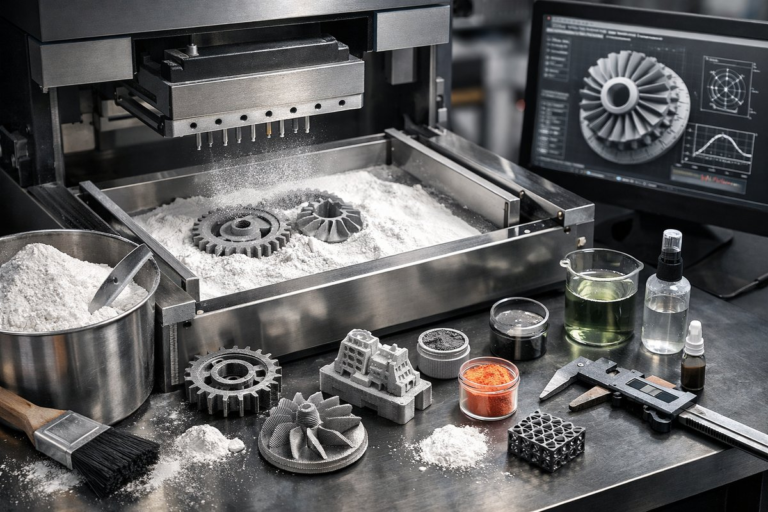
Binder Jetting begins with a thin layer of powder material spread across a build platform. A print head selectively deposits a liquid binder onto the powder bed, binding particles together in the desired pattern. After one layer is completed, the platform lowers, and a new powder layer is spread on top. This cycle repeats until the entire object is formed as a “green” part, which is fragile and porous. To achieve full strength and density, the part typically undergoes post-processing steps such as curing, sintering, or infiltration.
One of the remarkable advantages of Binder Jetting is its ability to work with a wide range of materials, including metals like stainless steel, bronze, and tool steel, as well as ceramics and composites. This versatility makes it highly attractive for industries ranging from aerospace to medical devices, where intricate geometries and functional properties are essential. Moreover, Binder Jetting can produce parts faster and with less energy consumption than many laser-based additive manufacturing processes, aligning with sustainability goals.
Central to the success of Binder Jetting is the precision of the print head and the quality of the powder material. The print head must accurately deposit binder droplets in the exact locations to ensure dimensional fidelity and surface finish. Advances in inkjet technology have improved droplet control, enabling finer details and smoother surfaces. The powder’s particle size distribution and flowability are equally critical; powders must spread evenly to create consistent layers and avoid defects.
For those interested in experimenting with Binder Jetting, access to a suitable machine is the first step. While industrial-scale Binder Jetting systems can be costly, desktop and benchtop models have begun to emerge, making the technology more accessible to small businesses and educational institutions. When selecting a machine, consider factors such as build volume, resolution, material compatibility, and ease of maintenance.
Beyond the hardware, software plays a vital role in preparing models for Binder Jetting. CAD files must be converted into slice data, and parameters like layer thickness, binder saturation, and print speed need adjustment based on material and part requirements. Many machines come with proprietary software, but open-source options are also available for those who prefer customization.
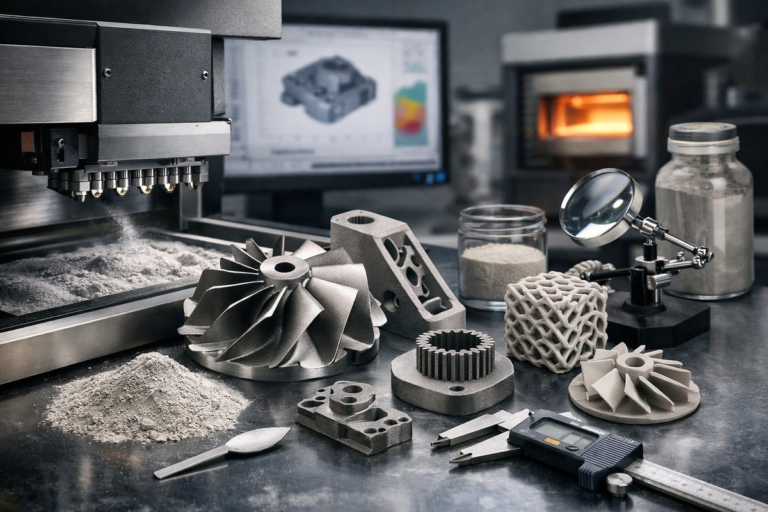
Post-processing is where Binder Jetting parts transform from fragile green bodies into robust components. Sintering, the most common method, involves heating the part below the melting point of the primary material to fuse particles together. This step requires precise temperature control and atmosphere management to prevent warping or oxidation. In some cases, infiltration with a secondary metal can enhance mechanical properties and surface finish.
Safety is paramount when working with powders and binders. Proper ventilation, protective equipment, and handling protocols must be in place to minimize exposure to fine powders and volatile chemicals. Additionally, powder recycling and waste management practices contribute to environmental responsibility.
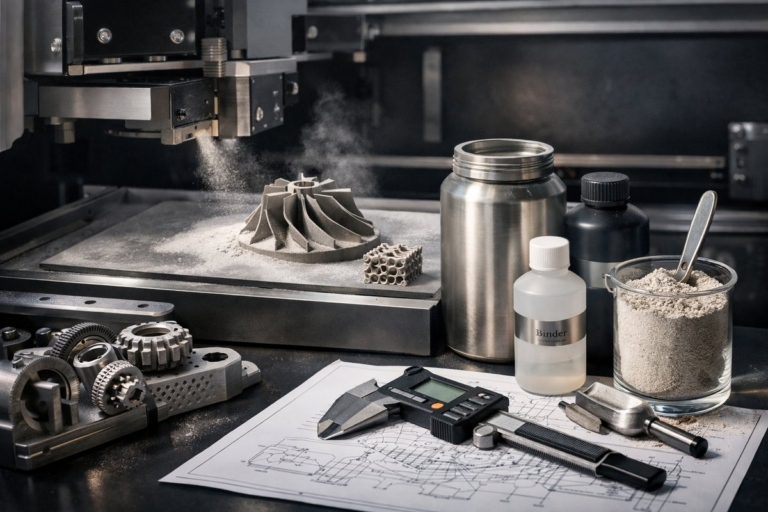
To maximize the potential of Binder Jetting, consider integrating complementary tools and components. A high-quality powder spreader ensures uniform layers, while precision calibration tools help maintain print head alignment. For post-processing, furnaces with programmable temperature profiles are essential for consistent sintering results. Monitoring devices such as thermal cameras can provide real-time feedback during heat treatment.
Binder Jetting also opens creative avenues for designers and engineers. The ability to produce hollow structures, lattice frameworks, and graded materials expands the boundaries of functional design. This technique’s scalability means prototypes can transition smoothly into production runs without major process changes.
In summary, Binder Jetting is a powerful additive manufacturing technique that blends speed, versatility, and sustainability. By understanding the process fundamentals, selecting appropriate equipment, and applying careful post-processing, users can create high-quality parts tailored to diverse applications. Whether you are a curious maker, an educator, or an industry professional, exploring Binder Jetting offers a rewarding path into the future of manufacturing.