Location
Mount Vernon, WA 98274

Location
Mount Vernon, WA 98274
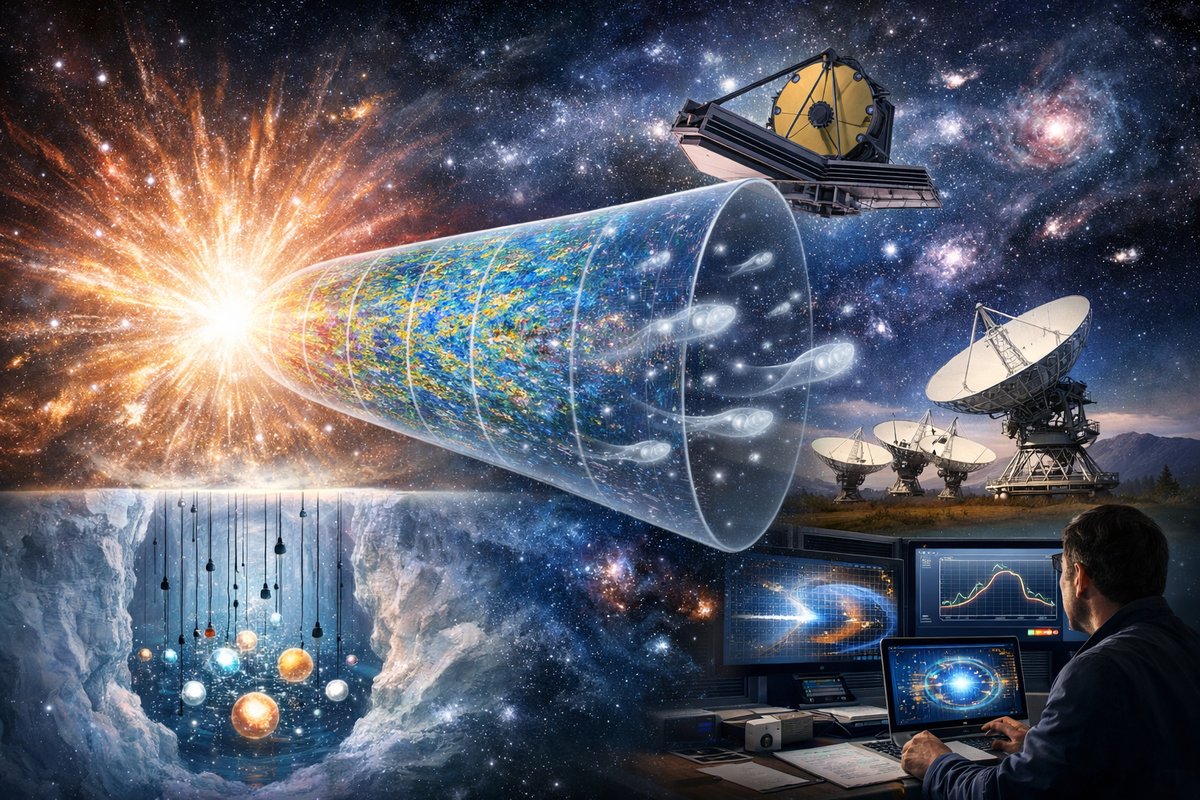
Scientists are tapping into primordial signals-from faint microwave ripples to elusive neutrino ghosts-to reconstruct the universe's opening act. As next-generation observatories and cutting-edge theory converge, age-old paradoxes about inflation, flatness, and cosmic fate are being re-examined under a fresh light.
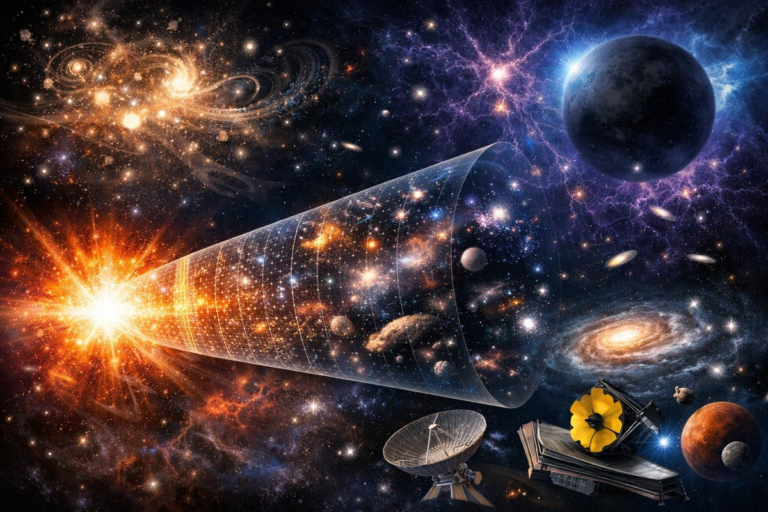
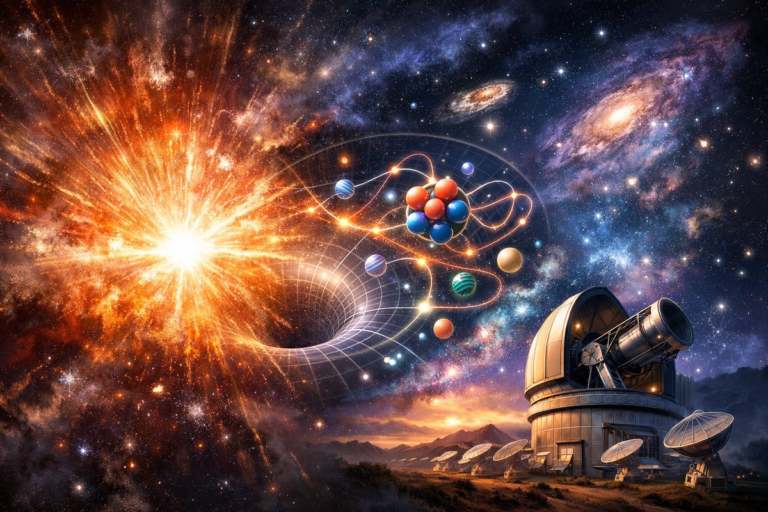
In the quest to understand how everything began, researchers are chasing fleeting clues buried in the cosmos itself. Beyond the bright galaxies and blazing quasars that light up the night sky lies a tapestry woven from whispers of the Big Bang. By capturing subtle patterns in cosmic microwave background radiation, tracing the faint murmur of gravitational waves, and even contemplating the ghostly cosmic neutrino sea, scientists are slowly mapping the universe’s first heartbeat.
At the heart of this effort is the cosmic microwave background, a nearly uniform sea of faint microwave glow left over from when atoms first formed. Tiny temperature differences-mere millionths of a degree-between patches of sky carry imprints of density ripples that later became galaxies and voids. Recent balloon-borne experiments and high-altitude observatories have pushed polarization measurements to unprecedented precision. The emergent patterns, called B-modes, could be the smoking gun for quantum fluctuations stretched by cosmic inflation, the hyper-fast expansion that may have occurred in the universe’s first trillionths of a second.
Yet detecting primordial B-modes is akin to hearing a pin drop in a hurricane. Astronomers must filter out galactic dust swirling in our own Milky Way, instrumental noise, and even the lensing effect of massive galaxy clusters bending background light. By combining data from multiple telescopes stationed at polar plateaus and high desert locales, teams are teasing out the faintest signals. Each incremental improvement refines our picture of inflation’s energy scale and tests bold ideas about how space itself may have stretched faster than light.
Meanwhile, another frontier in the search for cosmic origins lies in gravitational waves-ripples in spacetime predicted by general relativity. While ground-based observatories have already detected mergers of black holes and neutron stars, the hunt is on for a stochastic background of gravitational waves born in the earliest epochs. A detection of primordial gravitational waves would open a brand-new window onto the universe’s birth, complementing what we learn from microwave light and neutrinos.
Plans for space-borne interferometers aim to directly probe this ancient gravitational roar. By placing multiple detectors millions of kilometers apart, scientists hope to capture ultra-low frequency waves that never reach ground-based facilities. These waves, if found, could reveal details about phase transitions as the universe cooled, hinting at exotic physics beyond the Standard Model of particles.
The universe’s hidden neutrino background represents a third avenue for exploration. Neutrinos are nearly massless, chargeless particles produced in huge quantities in the first seconds after the Big Bang. Though trillions pass through every square centimeter of Earth each second, their ghostly nature makes them devilishly hard to catch. But if experiments can eventually detect this cosmic neutrino sea, it would provide a direct snapshot of conditions when the universe was barely a second old.
Designs for neutrino detectors involve massive volumes of ultrapure material and novel isotopes that can capture rare interactions. Some proposals envision specialized targets that would register tiny energy kicks when a cosmic neutrino collides with an atomic nucleus. This sort of detection would be a tour de force, complementing collider data that probes high-energy physics in controlled settings.
High-energy colliders themselves offer another piece of the puzzle. By smashing particles together at energies approaching those just after the Big Bang, physicists recreate microcosms of the early universe. Data from these collisions inform cosmological models by revealing how fundamental forces unify and how exotic particles might have influenced cosmic expansion or seeded dark matter.
Yet even as empirical research advances, theoretical cosmologists grapple with deep paradoxes. The horizon problem asks why regions of the universe too far apart to have ever exchanged information nonetheless share nearly identical temperatures. Inflation provides a neat solution, yet it raises further questions: what triggered inflation, and what caused it to stop? Researchers debate whether a single inflationary burst occurred or if a series of mini-inflationary phases could instead explain observed features.
The flatness problem explores why the universe today appears so spatially flat, as if finely tuned at its birth. Some models invoke additional fields or exotic states of matter to maintain flatness through phase transitions. Others propose cyclic or “bounce” cosmologies, envisioning an endless series of contractions and expansions that sidestep initial fine-tuning altogether.
Emerging ideas in quantum gravity and string theory introduce yet more possibilities. A multiverse of bubble universes might peer into each other’s physics only through rare quantum tunneling events. In this landscape of cosmic possibilities, our observable region could be just one of countless variations in fundamental constants and physical laws.
Despite these sweeping theories, many questions remain stubbornly open. Did inflation occur uniformly, or were there fluctuations in its intensity? What is the true nature of dark matter and dark energy, and how did they influence the universe’s earliest evolution? Could exotic relics like cosmic strings or domain walls still be lurking, waiting to be discovered?
Observationally, the next decade promises an onslaught of data. Ground-based arrays like the Simons Observatory are gearing up to survey large swaths of the sky with unparalleled sensitivity to microwave polarization. At higher frequencies, telescopes on high Antarctic plateaus and the Atacama Desert will join forces, stitching together a global map of the CMB’s subtle patterns.
Meanwhile, space missions are eyeing the gravitational wave frontier. Large constellations of satellites will form kilometer-scale interferometers, aiming to open up a pristine band of the spectrum where primordial signals may reside. Concerted efforts in data analysis and machine learning will be essential to sift through the cosmic cacophony of astrophysical sources and instrumental effects.
On the neutrino side, prototype detectors are being tested deep underground and under ice sheets to shield from background radiation. Scaling these experiments up could one day yield the first direct detection of the cosmic neutrino background, delivering a time capsule from the universe’s infancy.
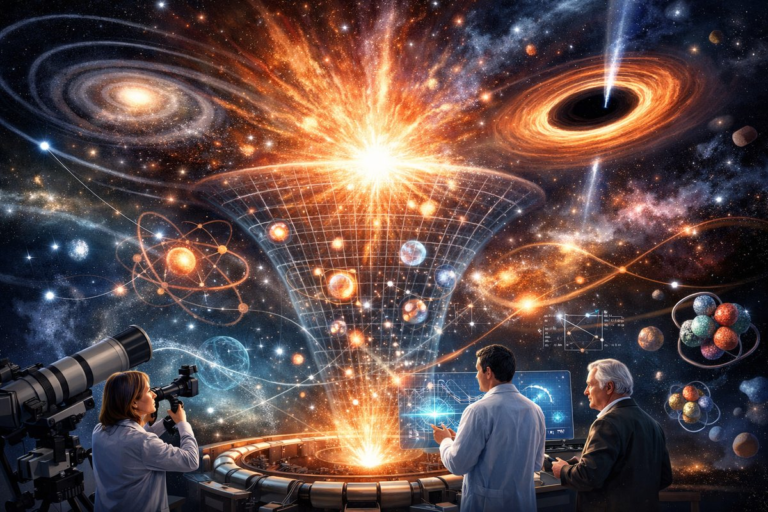
As theory and observation converge, interdisciplinary collaboration becomes ever more vital. Particle physicists, cosmologists, astronomers, and instrumentation experts are collaborating on shared platforms, pooling resources and data. This spirit of collective inquiry embodies the curiosity that drives humanity to peer ever deeper into cosmic origins.
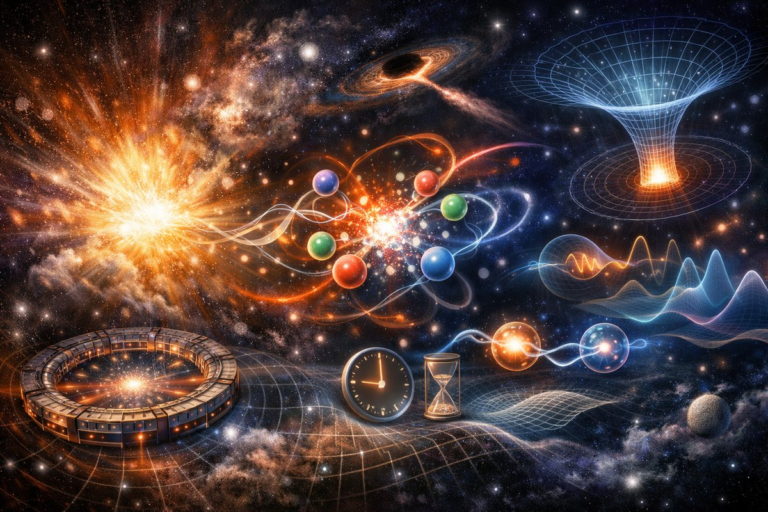
The emerging picture of the universe’s birth is neither simple nor settled. It is a mosaic built from multiple, independent lines of evidence-each one filling in a piece of the primordial puzzle. By integrating results from microwave light, gravitational waves, neutrinos, and particle collisions, scientists hope to transform our picture of the first moments from educated speculation into a cohesive narrative.
In exploring how space, time, and matter blossomed from an unimaginably hot and dense state, we confront the most profound questions of existence. Why does anything exist at all? What laws govern the transition from nothingness to being? By chasing the echoes of creation, we not only illuminate our cosmic origins but also expand the boundaries of human knowledge and wonder.
The story of creation is far from complete. Yet every new measurement, every theoretical breakthrough, and every experimental milestone brings us one step closer to understanding the ultimate dawn. As telescopes grow sharper, detectors grow larger, and theories grow more sophisticated, we edge nearer to hearing that first cosmic whisper-the echo of creation itself.