Location
Mount Vernon, WA 98274

Location
Mount Vernon, WA 98274
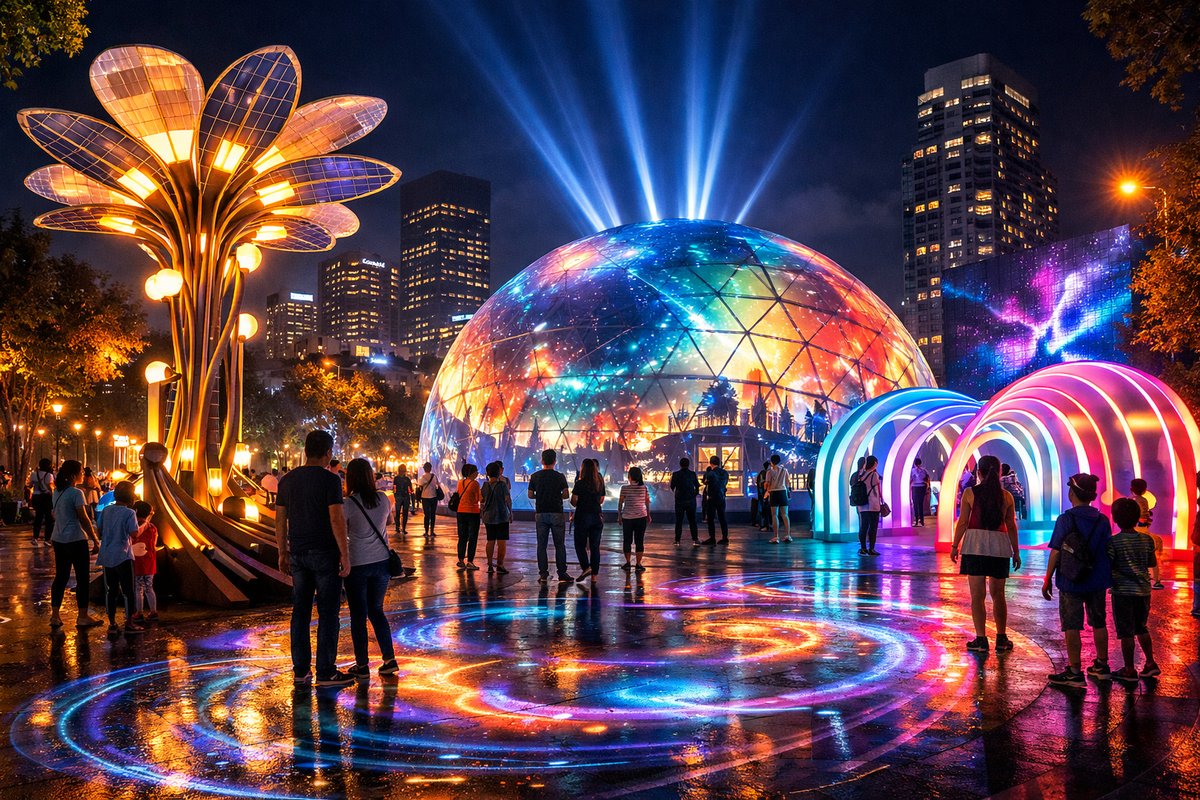
A new wave of interactive exhibitions is transforming city streets into immersive playgrounds where light, sound, and motion converge. From solar-powered sculptures to projection-mapped domes, these installations invite communities to experience public spaces in wholly unexpected ways.
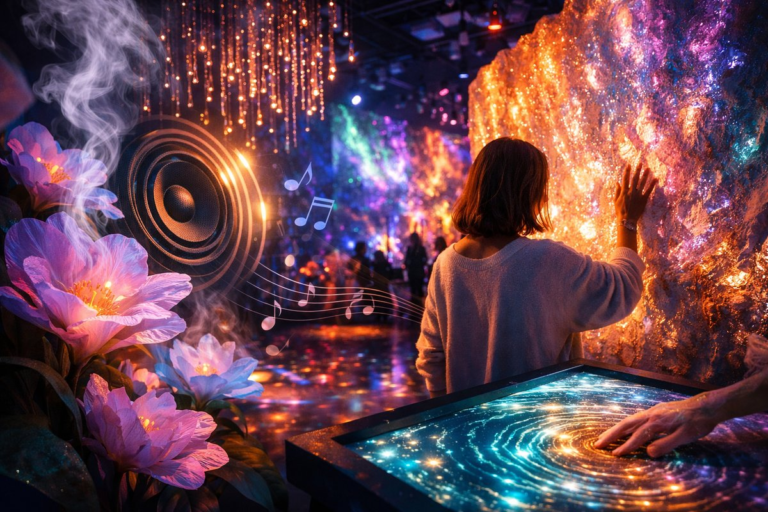
The latest edition of the Synesthetic City festival has reimagined downtown thoroughfares as living experiments in sensory engagement. Across plazas, alleyways, and underpasses, a series of multisensory art and design installations fuse technology with tactile form, inviting passersby to become active participants in ever-shifting experiences. The festival’s ethos is simple yet profound: to blur the lines between viewer and creator, space and sculpture, digital and physical.
One standout piece, “PulseFlow,” by Urban Light Collective, occupies a former loading dock turned public forum. Hundreds of translucent orbs hang from taut cables, each embedded with addressable RGB LEDs and ambient microphones. As city noise-sirens, conversation, passing buses-filters through microcontrollers, the orbs pulse in time with real-time decibel levels and frequency changes. Visitors can clap, speak, or even play portable instruments to coax new light patterns and color gradients. The installation is powered by a network of rechargeable battery packs, concealed in weatherproof housings, and anchored to a custom rail system that accommodates fluctuations in wind and temperature.
Just a few blocks away, the SoundScape Dome marries projection mapping with spatial audio to create a fully enveloping environment. Designed by Resonant Form Studio, this geodesic pavilion uses dozens of pico projectors mounted along its frame to cast kaleidoscopic visuals onto semi-opaque panels. Inside, guests don lightweight headphones connected wirelessly to a digital audio mixer that syncs each note, beat, and field recording to the shifting projections. Sound engineers blended urban recordings-metallic clangs from nearby bridges, birdsong from rooftop gardens, rhythmic foot traffic-with original compositions, crafting an ever-evolving sound design that responds to ambient noise levels monitored by ultrasonic sensors.
Augmented reality takes center stage in the alley known as Canvas Passage, where TechSpirit’s AR Graffiti Garden overlays virtual murals onto aging brick. Visitors unlock the experience by scanning QR codes on repurposed street signage, which launches a custom app. As the smartphone camera sweeps the walls, layers of generative art appear-colors ripple like ink in water, geometric shapes float free of gravity, and virtual vines creep along cracks and crevices. The AR content shifts through user interaction: swiping to reveal hidden forms, tapping to change palettes, or using pinch gestures to scale patterns. The project uses markerless tracking algorithms optimized for low-light conditions, ensuring stability even after dusk.
In a nod to environmental stewardship, Nova Eco Design Lab’s “Solar Glyphs” series harnesses renewable energy and recycled materials. Large, sculptural luminaries fashioned from reclaimed aluminum cast gentle pools of light onto public benches and planters. Integrated solar panels charge lithium-iron phosphate batteries during the day, powering soft LED arrays at night. Each piece is wired to a low-power microcontroller that dims the lights according to ambient illumination levels, conserving energy during cloudy weather. The sculptures also serve as informal charging stations for USB devices, encouraging people to pause and connect with both the artwork and each other.
Festival curator Riley Morgan explains that Synesthetic City aims to puncture the rote patterns of urban life. “We want to turn sidewalks into stages, alleyways into canvases, city noise into a musical score,” Morgan says. “When you can clap to change a sculpture’s glow or step into a dome that responds to your footsteps, you reclaim agency over the built environment.” The festival team collaborated with city planners and local businesses to secure permits, address safety concerns, and ensure accessibility. Portable ramps, tactile wayfinding markers, and multilingual signage create an inclusive experience, while community workshops in the lead-up encouraged residents to share ideas and troubleshoot logistical challenges.
At the intersection of design and technology, these installations rely on an ecosystem of hardware and software. Microcontroller boards coordinate LED drivers and sensor inputs. Projection mapping rigs require carefully calibrated mounts and lens modifiers. Networked audio systems hinge on low-latency protocols and robust wireless links. Developers tapped open-source firmware for real-time data visualization, customizing code to handle varying sensor types-microphones, infrared detectors, motion sensors-and communication protocols like DMX-512 and OSC (Open Sound Control). For on-site adjustments, modular patch bays and labeling systems helped technicians swap cables and reconfigure setups under tight time constraints.
Public response has been enthusiastic. During opening weekend, crowds lingered late into the night, experimenting with interactive elements, sharing recordings of light patterns on social media, and connecting with strangers over shared curiosity. Retail shops reported a bump in foot traffic, while local restaurants saw diners venture into less-traveled blocks. Urban planners are already studying how these ephemeral interventions can inform long-term placemaking strategies, from revitalizing neglected districts to reducing graffiti through sanctioned public-art corridors.
The philosophical undercurrent of Synesthetic City centers on participatory design and emotional resonance. By turning observers into co-creators, the festival challenges notions of passive consumption. Each person’s breath, heartbeat, or voice becomes a medium for artistic expression. Even the architecture of the city-its walls, pavements, and facades-transforms into malleable surfaces. This approach echoes a broader shift in design philosophy: from static monuments to dynamic systems that adapt, evolve, and reflect the communities they inhabit.
Yet the scale and ambition come with hurdles. Power distribution in outdoor settings demands careful planning: weatherproof cabling, lockable power boxes, emergency cutoffs. Technical teams must balance brightness and contrast in projection setups while avoiding light pollution for nearby residents. AR experiences often require app optimization to accommodate dozens of smartphone models, minimizing latency and ensuring stable markerless tracking even under low-light conditions. And sustainability efforts add complexity-selecting battery chemistries, designing rugged solar mounts, and coordinating end-of-life recycling for electronic components.
Looking ahead, the next frontier in urban art and design may involve living materials, AI-driven generative systems, and wearable interfaces. Researchers are experimenting with bioluminescent algae encapsulated in transparent conduits, offering self-sustaining light sources that pulse with environmental changes. Generative AI promises to create visuals and soundscapes that evolve based on real-time data streams-traffic flow, air quality, social media sentiment. Wearable haptic devices could allow participants to feel the heartbeat of a sculpture or sense the temperature shifts of a solar installation.
For designers, city officials, and curious onlookers alike, Synesthetic City offers a blueprint for rethinking public space. It demonstrates how technology can amplify human connection rather than replace it, turning blank walls into communal canvases and city noise into collective music. As urban environments continue to densify, these kinds of creative interventions will play an ever-greater role in shaping how we move, interact, and find wonder in the everyday.
The festival closes this weekend, but its impact will resonate long after the lights dim. When concrete and steel give way to light and sound, we remember that cities are not inert backdrops: they are living, breathing canvases waiting for our most imaginative touches.