Location
Mount Vernon, WA 98274

Location
Mount Vernon, WA 98274
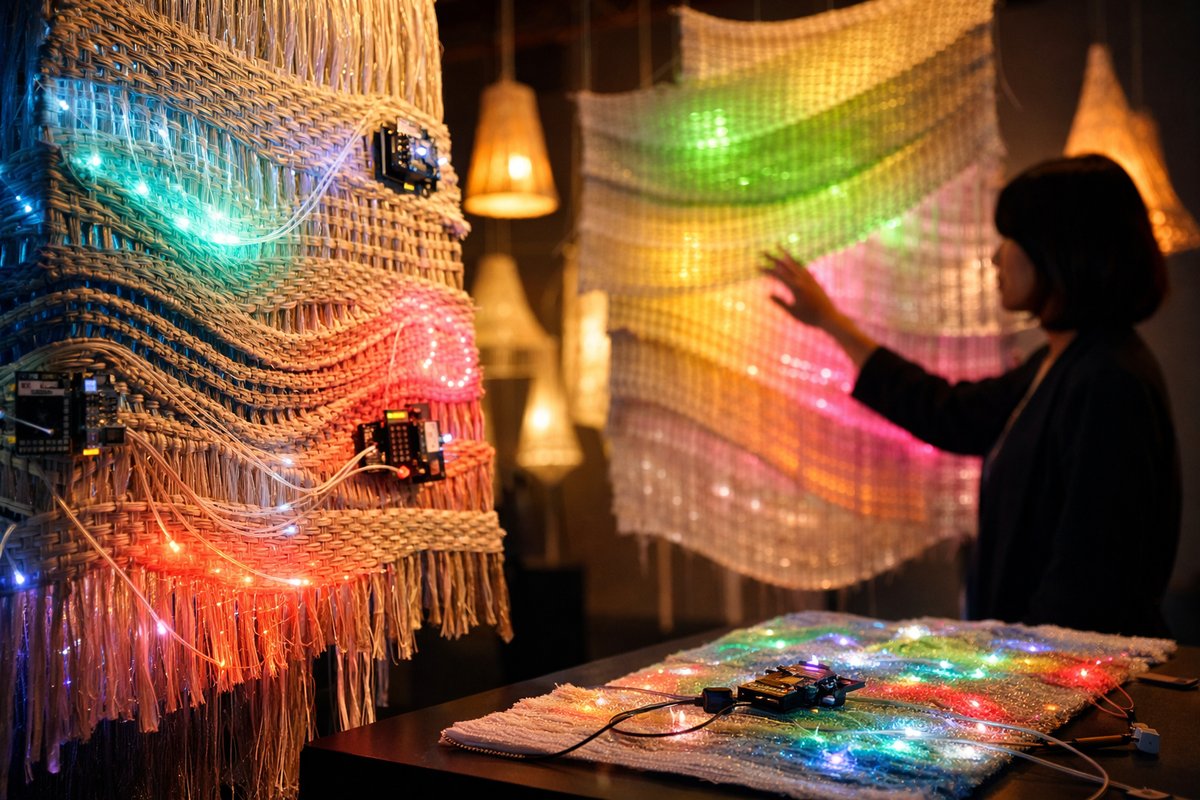
A new wave of artists is blending centuries-old weaving techniques with cutting-edge illumination and microcontrollers. Recent exhibitions showcase fiber optic textiles that shift color, respond to motion, and explore sustainable materials, signaling a luminous frontier in experimental design.
In a dimly lit gallery space in Milan, a tapestry of light pulses gently across a hand-woven textile. At first glance it looks like a traditional loom work, but closer inspection reveals strands of programmable fiber optics entwined with silk and organic cotton. Visitors cannot resist reaching out, only to find the piece dims and ripples as their fingers brush against its surface.
This installation marks the latest chapter in a growing movement of artists and designers who fuse analog craftsmanship with digital interactivity. From studios in Tokyo to research labs in Berlin, innovators are embedding light and sensors directly into fabrics. The result: garments and wall hangings that shift hue, pattern, and intensity in real time, translating environmental data, human movement, and generative algorithms into mesmerizing visual displays.
At Milan’s annual Light Threads Expo, curators presented more than two dozen fiber optic works. One standout piece, “Echo Weave,” responds to ambient noise levels. When conversation swells or footsteps approach, its iridescent threads trace dynamic patterns inspired by sound waves. Elsewhere, a collaborative duo unveiled a floor rug woven from plant-based polyester filament and copper-conductive yarn. Motions detected by embedded accelerometers trigger cascading color sequences, mimicking flora dancing in a breeze.
Beyond their striking aesthetic, these works raise questions about sustainability and material innovation. Many practitioners are experimenting with bio-sourced polymers and recycled optical fibers salvaged from telecommunications waste. By combining reclaimed components with low-power LED drivers and energy-harvesting patches, artists can minimize electronic waste while broadening the palette of textures and translucencies available for textile design.
“At first, engineers thought we were crazy,” says Lena Marquez, whose Barcelona collective develops gesture-controlled tapestries. “They’d watch us hand-stitch fiber optic strands alongside traditional threads, then hack together microcontrollers in shoeboxes. Now they’re designing custom driver boards on flexible substrates so our pieces run on thin solar skins.” Marquez’s recent show featured a pavilion where visitors would stand on pressure-sensitive panels to generate light sequences in an enormous woven canopy above.
That convergence of artisanal skill and hardware tinkering reflects a broader curiosity about the boundaries between digital and material worlds. Schools of design that once kept weaving looms and coding labs in separate buildings are now co-teaching cross-disciplinary workshops. Graduate students in Eindhoven spend equal time drafting patterns in CAD software and sourcing toxin-free coatings that protect optical fibers from abrasion during handloom work.
Critics have begun to label this hybrid practice “lumistic textile art.” Proponents argue it represents a meaningful response to our screen-soaked lives, turning pixels into threads that occupy three-dimensional space. Rather than staring at a flat display, viewers can touch, walk around, and even wear a luminous work. The tactile dimension reintroduces warmth and imperfection, qualities often lost in mass-manufactured LED installations.
At a recent symposium in Vancouver, curator Naomi Chen observed, “We’re witnessing a double revival: fiber arts reclaiming technological relevance, and digital art rediscovering tactile depth. The dialogue between maker and machine is enriching both traditions.” She pointed to an interactive vest that changes pattern according to heart rate and nearby Wi-Fi signals. Users reported feeling more attuned to their environment, noticing fluctuations in network traffic that would otherwise go unnoticed.
The reach of fiber optic textiles extends into realms beyond galleries. Designers in Seoul have prototyped illuminated window treatments that dim in glaring sun and brighten on overcast days to maintain consistent indoor lighting. Stage directors in New York choreograph costumed performers whose garments glow in sync with music tempo and key changes, adding a visceral layer to dance productions. Even interior architects are testing woven LED panels as modular room dividers that transition from warm ambient glow to high-contrast patterns during presentations or events.
Despite the excitement, challenges remain. Integrating conductive threads and fragile optical fibers requires painstaking manual labor, and scaling production without losing artisanal integrity is an open problem. Powering these textiles for extended periods demands efficient driver electronics and battery technologies light enough not to distort the fabric’s drape. Some studios are exploring wireless charging mats and near-field communication tags to wake pieces only when a viewer approaches, conserving energy between interactions.
Nevertheless, funding agencies and private collectors are taking notice. A major arts foundation recently awarded grants to several research teams developing biodegradable light fibers made from cellulose derivatives. Others received support to design open-source toolkits, enabling community weavers and hobbyists to experiment with illuminated threads on tabletop looms.
Consumer brands have begun dipping toes into the trend, offering limited-edition glow-in-the-dark scarves or LED-enhanced backpacks. But most lumistic textile pioneers remain fiercely independent, sharing build guides online and hosting hack-and-weave meetups in repurposed warehouse spaces. Their ethos celebrates curiosity, emotional engagement, and ecological mindfulness-values that skilled craft traditions and forward-looking design approaches share.
Looking ahead, experts foresee fiber optic textiles intersecting with virtual and augmented reality. Imagine wearing a luminescent jacket that syncs to your AR headset, blending physical and digital overlays seamlessly. Or city-scale installations where interactive tapestries map data streams like foot traffic or air quality in living, breathing walls.
As light weaves through thread, a new chapter unfolds at the nexus of art, design, and technology. These glowing fabrics invite us to reconsider the boundaries of materiality and interactivity, reminding us that creativity need not be confined to screens. In the fibers of tomorrow’s textiles, we may find both ancient heritage and futuristic wonder woven together in luminous harmony.