Location
Mount Vernon, WA 98274

Location
Mount Vernon, WA 98274
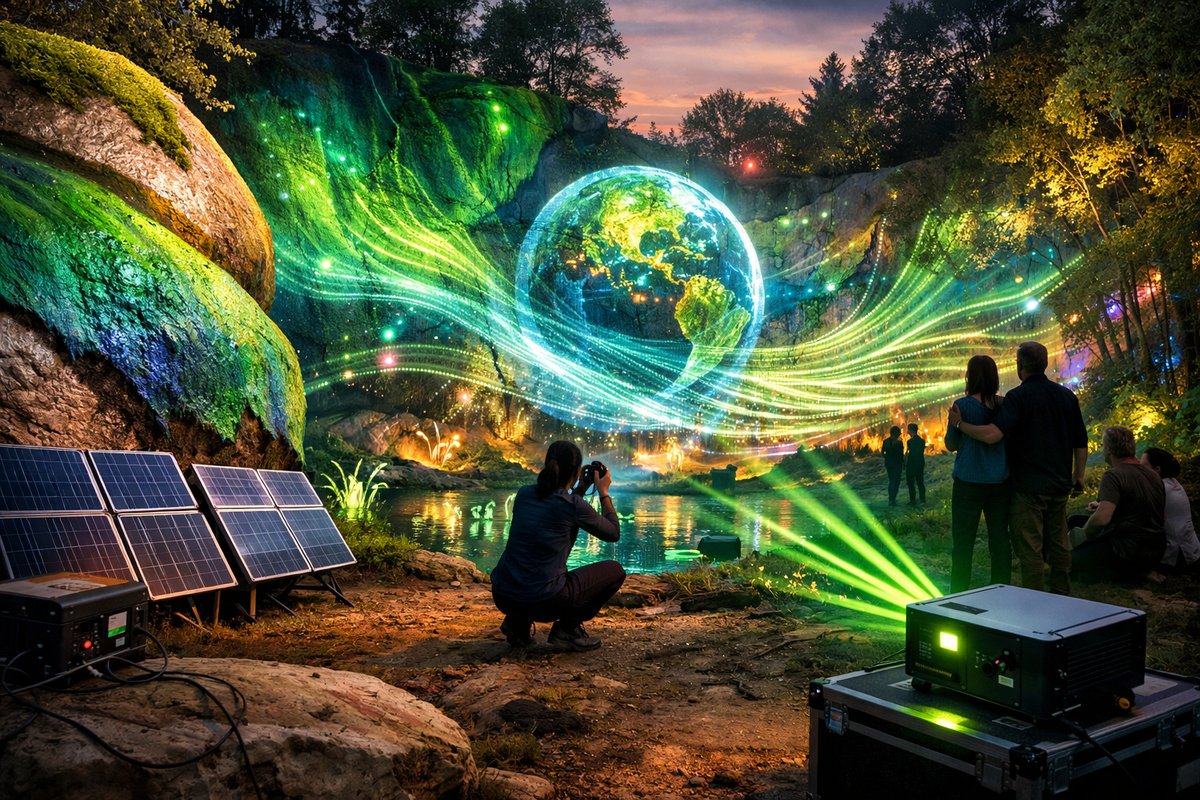
Artists and designers are merging eco-friendly materials with advanced projection mapping to create dynamic, site-responsive installations that speak to environmental awareness and community engagement. From algae-based inks that shift hues with humidity to laser projection systems powered by portable solar arrays, this article explores how creativity and sustainability converge in living lightscapes.
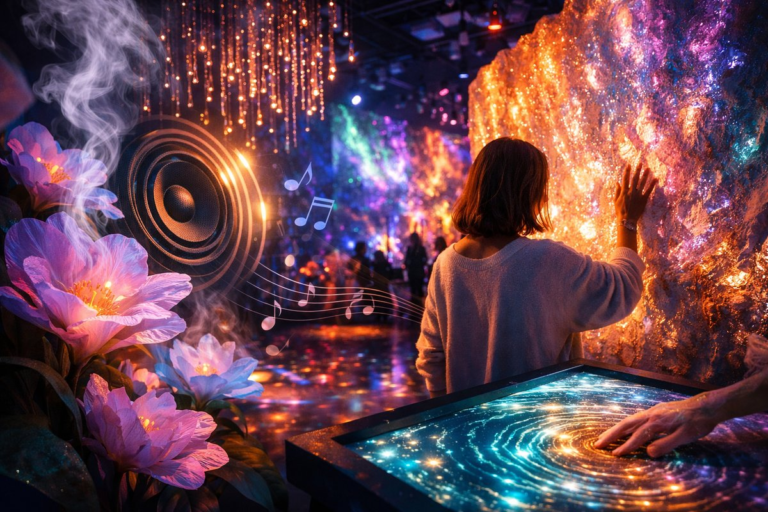
In a city plaza once dominated by concrete and static sculptures, a new kind of public art is unfolding each evening. Shapes of bioluminescent pigment-infused resin rise from planter boxes, their surfaces shifting from emerald to gold in response to passing pedestrians. Overhead, an array of high-power LED projectors bathes nearby facades in fractal patterns that pulse in time with local air-quality readings streamed in real time. This fusion of sustainable materials and immersive media is part of a growing movement that seeks to reconnect viewers with both their environment and each other.
Artists and design studios worldwide are experimenting with pigments derived from algae, fungi and reclaimed plastics. A recent survey by an independent art foundation shows that nearly two thirds of emerging visual artists now prioritize non-toxic, renewable colorants over traditional petrochemical-based paints. Some practitioners are harvesting pigments from living cyanobacteria cultures, while others are upcycling discarded fishing nets into binder-free inks that change opacity under different light sources. By integrating these bio-based materials with light and motion sensors, creators generate works that literally unfold according to real-world data.
On the technical side, advances in portable projection mapping systems have accelerated the shift toward immersive public art. The latest generation of compact, battery-powered laser projectors can deliver up to 6,000 lumens of brightness-enough to animate entire building fronts without relying on fixed wiring. Combined with open-source mapping software and modular sensor arrays, these projectors can wrap dynamic visuals around architectural elements, track viewer interactions and adapt scenes based on environmental inputs like wind speed, temperature and particulate levels.
One pioneering example debuted last season at the Light Art Biennale in Aachen. Design collective Lumen Nature unveiled “Flux Flora,” a dome-shaped pavilion clad in living moss walls and fitted with an array of compact laser projectors hidden among ferns and ivy. Motion sensors detected visitors’ proximity and movement, triggering shifts in projected color gradients that echoed the pavilion’s plant palette. Meanwhile, air-quality sensors measured CO2 levels and translated them into subtle shifts in pattern complexity, uniting environmental data with the artwork’s evolving form.
At the Tate Modern’s spill-out gallery, multimedia artist Ava Chen has been exploring similar themes on a smaller scale. In her current installation, translucent panels coated with microencapsulated algae pigments hang from slim steel frames. As daylight filters through, viewers witness a slow drift from pale cyan to deep jade-an effect intensified by short-throw projectors that layer algorithmic sketches atop the pigment fields. Chen’s goal is to evoke the passage of time and draw attention to the living processes behind seemingly static art objects.
Such works are not purely decorative. They exist at the nexus of art, technology and environmental advocacy. By making pollution data, energy use and biological processes visible and visceral, these installations spark conversations about our collective footprint. A recent community survey conducted near one living-light installation in Berlin found that 78 percent of passersby reported feeling more aware of local air conditions, and 60 percent said they were inspired to take small actions-like choosing public transit-after experiencing the work.
Beyond public squares and museum halls, commercial and urban designers are exploring similar strategies. A downtown redevelopment project in Copenhagen will soon feature interactive bike lanes paved with photovoltaic tiles. At dusk, the tiles will feed power to adjacent floodlights and low-resolution pixel arrays that display neighborhood-generated artwork, including citizen-submitted digital sketches interpreted by generative algorithms. The result: a moving canvas that celebrates community voices while harnessing renewable energy stored during daylight hours.
Of course, the leap from concept to reality requires collaboration across disciplines. Artists are increasingly partnering with materials scientists, engineers and environmental data experts to prototype sustainable inks and sensor-driven media. University laboratories have begun offering residencies for creative technologists, equipping them with access to bioreactors for growing pigment-producing organisms and laser-cutting facilities for lightweight projection rigs.
For practitioners curious about embarking on their own living light journeys, a few practical considerations stand out:
The philosophical underpinning of these living lightscapes is rooted in impermanence and responsiveness. Instead of presenting a fixed image to be admired from a distance, these works invite ongoing participation-whether it’s a cyclist triggering bursts of color or a shift in humidity prompting a palette change. This fluidity reflects a growing cultural desire for art that responds to our surroundings and reminds us of our role within complex ecological systems.
Looking ahead, the next frontier may lie at the intersection of artificial intelligence and biological art. Imagine projections that not only react to environmental data but also to patterns identified by machine-learning models trained on local ecosystem health metrics. Or living pigment films seeded with engineered microbes that respond to light intensity, effectively turning entire walls into bioreactive canvases.
As technology continues to shrink and materials science unearths ever-more sustainable sources of pigment, living lightscapes may become commonplace features in public and private spaces alike. Whether they appear as interactive murals, ephemeral garden domes or adaptive urban facades, these works signal a shift in visual expression-one that embraces change, participation and a deeper connection to the living world.