Location
Mount Vernon, WA 98274

Location
Mount Vernon, WA 98274
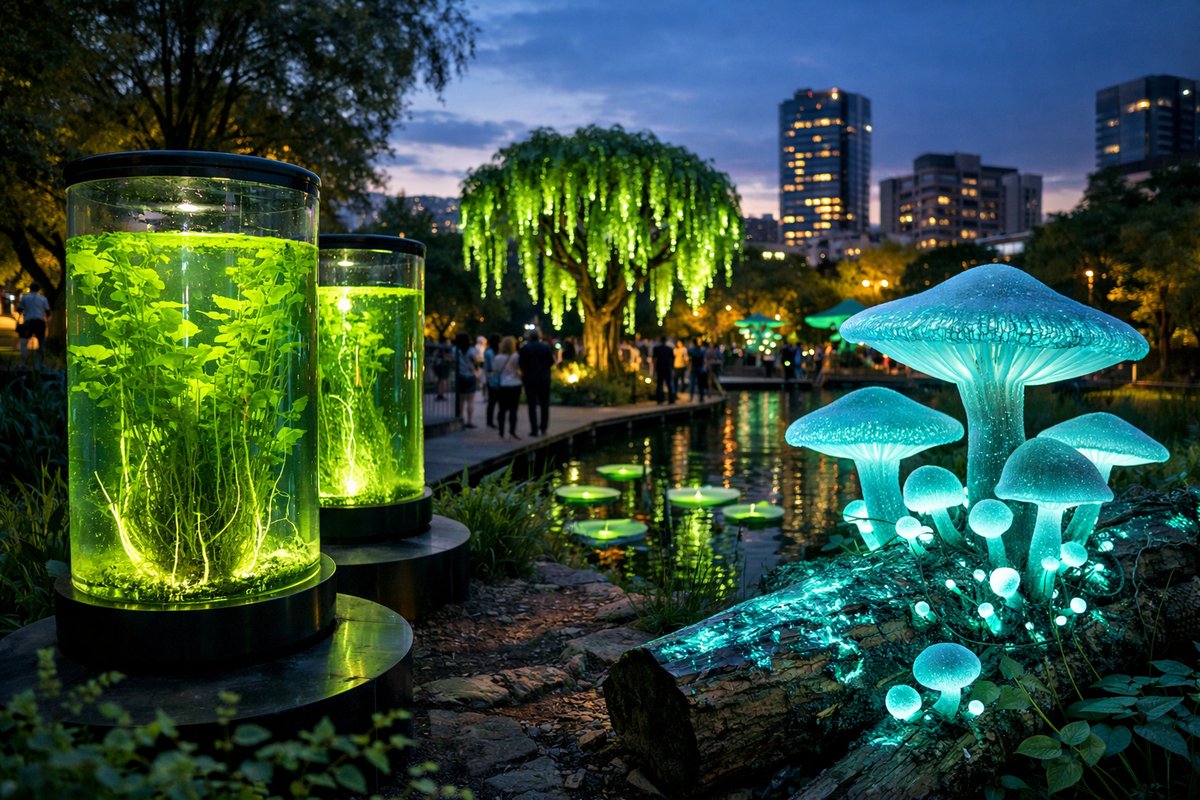
A new wave of artists is collaborating with biologists to cultivate living light sources for public installations. From algae-filled planters to genetically engineered fungal sculptures, urban spaces are being transformed into glowing ecosystems that challenge assumptions about art, nature, and technology.
Cities around the world are beginning to sparkle at night in unexpected shades of green and blue, thanks to artists who have turned to bioluminescent organisms as the latest medium for public art. No longer confined to aquarium exhibits or laboratory demonstrations, glowing algae, modified fungi, and even bacterial cultures are illuminating plazas, train stations, and park pathways. This emerging trend is the result of cross-disciplinary work between creative studios, bioengineering labs, and urban planners, all united by a shared curiosity: how can living materials redefine the boundaries of visual expression?
The roots of bioluminescent art trace back to small-scale experiments in community maker spaces, where hobbyists first mixed common marine dinoflagellates into water-filled vessels to produce gentle pulses of light. Within a few years, these grassroots experiments caught the attention of municipal art committees seeking sustainable lighting solutions for pedestrian zones. Unlike conventional LEDs, which rely on electricity and metal components, biological light sources draw energy from their own metabolic processes and can be scaled with minimal infrastructure. The first major pilot project appeared in a European capital’s waterfront district, where a series of shallow troughs planted with glowing algae replaced traditional street lamps along a promenade.
That initial installation sparked media attention and prompted museums to curate retrospectives on the science of glow-in-the-dark organisms. Galleries began commissioning living sculptures composed of translucent resin chambers seeded with engineered fungal strains that emit soft yellow-green luminescence. These fungal sculptures change intensity in response to humidity, turning damp corners into ethereal beacons. Critics praised the work for its poetic fusion of life science and aesthetics, while environmental activists noted the absence of wasteful light pollution typical of conventional fixtures.
Even more ambitious projects have since taken shape. A network of small planters was installed along a historic canal in an Asian city, each containing custom-blended microalgae that glowed with subtle color shifts over the course of the evening. Visitors reported that the gently undulating light helped guide them through darkened alleys without disturbing local wildlife. In one installation, temperature sensors connected to a microcontroller adjusted the algae’s growth cycle, ensuring maximum brightness during peak pedestrian hours.
At the intersection of art and design, material scientists are developing transparent gel sheets infused with bioluminescent bacteria. These flexible panels can be tiled like wallpaper or draped over architectural facades to create living murals. Early prototypes have been field-tested on university buildings, where students camped overnight to document the slow-moving, dreamlike patterns that ripple across the surfaces. Although the bacteria require a regular supply of nutrient solution, engineers are exploring slow-release capsules embedded in the gel to sustain the glow for weeks at a time.
Such innovations rely on a delicate balance between artistic vision and biological viability. To keep cultures alive, artists often work with local biotech facilities or rent bench space in community labs. Sterile techniques, climate-controlled chambers, and precise nutrient formulations are as essential as a painter’s brush or a sculptor’s chisel. Several collectives now operate open studios where the public can observe scientists preparing agar plates, isolating daylight-activated genes, or fine-tuning light emission spectra.
One of the most talked-about exhibitions of the year featured a walk-through tunnel lined with curved panels of bioluminescent mycelium-a fungal network grown on biodegradable substrates. As visitors passed, motion sensors triggered gentle surges of light that pulsed outward like waves in a pond. The installation explored themes of connectivity, contagion, and ecological interdependence. Reviewers noted how the piece invited reflection on the unseen lives beneath our feet even as it dazzled the senses.
Beyond gallery walls, the technology is finding practical applications. Urban gardeners are experimenting with glowing planters that double as ambient light sources. In horticultural research centers, crop trials are underway to engineer bioluminescence into common vegetable plants, potentially creating self-illuminating garden beds. While edible glowing kale remains a far-off concept, the work exemplifies the broader push toward sustainable design: using biology to reduce energy consumption and material waste.
Of course, integrating living organisms into public spaces raises important safety, regulatory, and ethical questions. City councils and health departments require risk assessments to ensure that bioluminescent strains cannot escape into local ecosystems or transfer genes to native species. Most installations to date use well-characterized, non-pathogenic microbes that vanish if released. Nevertheless, organizers engage community stakeholders, hold open forums, and publish transparent protocols to build trust around what can seem like a futuristic, almost magical practice.
Artists are also exploring biodegradable containment systems and fail-safe kill-switch mechanisms that deactivate organisms if environmental parameters stray beyond safe ranges. These designer features mirror strategies used in synthetic biology research, underscoring how bioart contributes to broader discussions about responsible innovation. By placing living light sources in shared urban environments, these projects invite people to confront the delicate interplay between technology, ecology, and public life.
The visual impact of bioluminescent art has captured the imagination of festival organizers seeking fresh attractions. International design fairs now host nighttime showcases where installations compete for attention in dimly lit warehouse settings. In one standout exhibit, a sculptural canopy of filament-thin glass tubes contained strands of light-emitting algae that swayed with the air currents, creating a gently shimmering ceiling. Festival goers described the experience as part concert, part scientific demonstration.
As the field advances, collaborations have broadened to include architects, lighting designers, and urban planners. Prototypes are being developed for smart street furniture-park benches and bus shelters that glow at night thanks to embedded bioluminescent cells. In coastal cities, new seawall designs incorporate bacterial panels that light up during high tides, offering a subtle warning to pedestrians about incoming water levels.
Ultimately, bioluminescent art is more than a novelty. It represents a shift in how designers approach materials and energy. By tapping into living systems, creators can craft dynamic, self-renewing installations that change over time and foster a deeper connection between people and the microbial world. Viewers are not merely observers of static sculptures but witnesses to unfolding biological processes, from growth and decay to adaptive responses.
With ongoing research into enhanced brightness, longer-lasting luminous cycles, and robust containment methods, it’s only a matter of time before glowing gardens and fungal murals become common sights in urban centers. These living artworks challenge us to reconsider our relationship with light, technology, and the vibrant ecosystems buzzing around us-often unseen until now.
As one curator put it during a recent press preview, “We’re witnessing the birth of a new aesthetic that blurs the line between the laboratory and the gallery, the street and the Petri dish.” In doing so, bioluminescent art illuminates not just public spaces but also the possibilities of a future driven by curiosity, sustainability, and the ever-evolving creativity of human ingenuity.