Location
Mount Vernon, WA 98274

Location
Mount Vernon, WA 98274
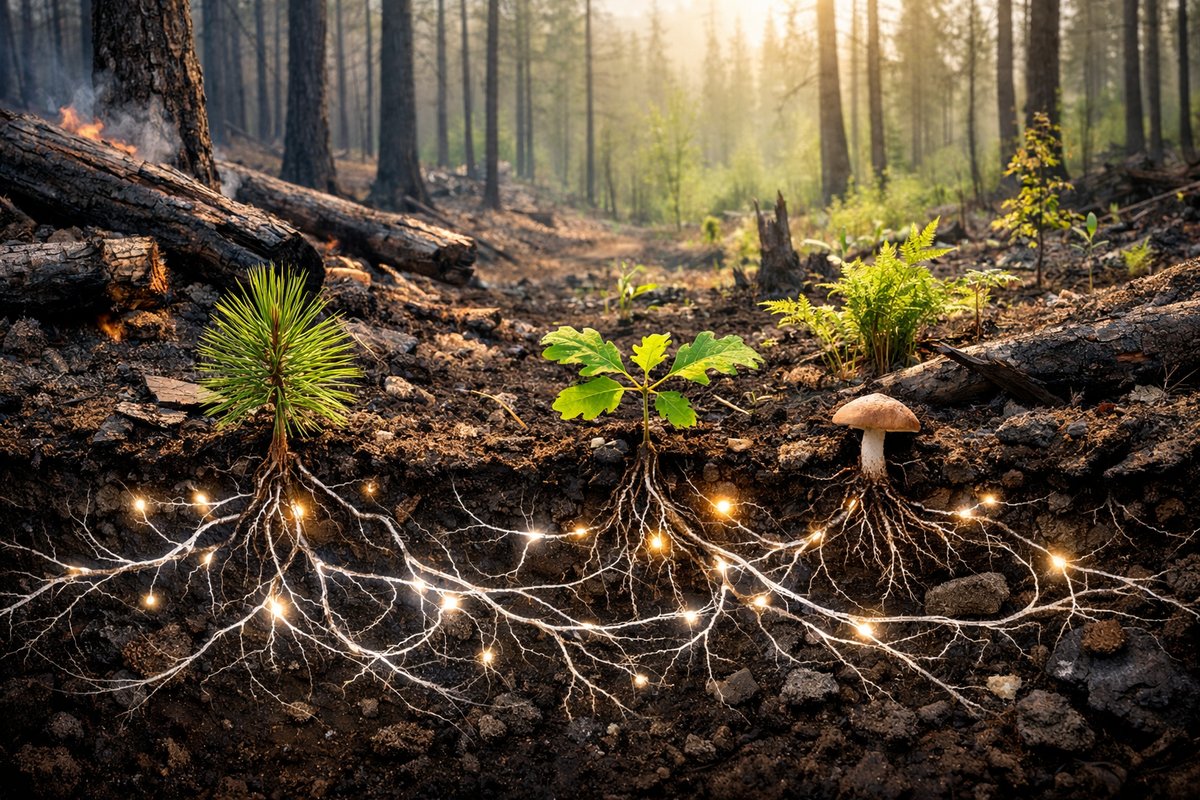
In the wake of recent wildfires, a hidden web of fungal threads is quietly knitting scorched woodlands back together. New research unveils how mycorrhizal networks shuttle nutrients, support seedling growth, and offer a roadmap for forest restoration amid climate challenges.
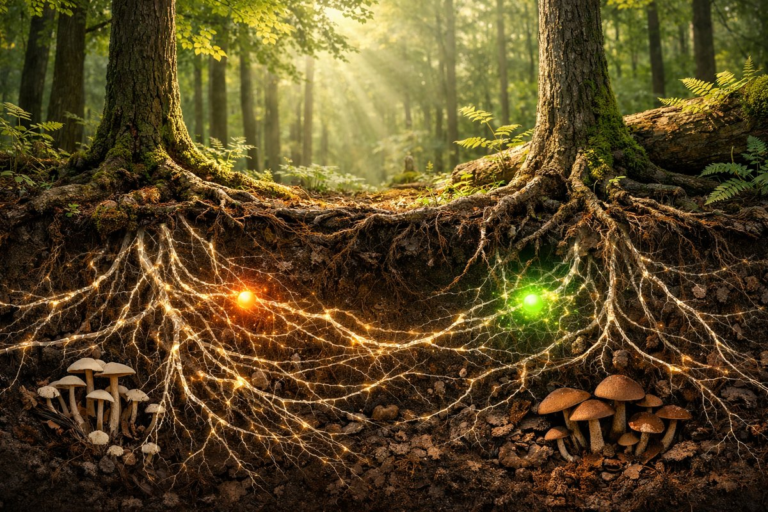
Smoke still lingers in the pines along the ridge, where last season’s wildfire left a charcoal quilt across once-vibrant green slopes. Yet in the damp litter and ash, tiny fungal pins of life are already pushing upward, as if drawing strength from the blackened earth. Scientists have long dubbed this subterranean network the “Wood Wide Web,” but only now are researchers mapping its full power to regenerate forests after fire.
A recent paper published in a leading ecology journal reveals that certain mycorrhizal fungi can restore soil health and accelerate tree seedling survival at rates far beyond what would occur naturally. Teams at a Pacific Northwest research station traced how carbon and nutrients flow through fungal hyphae linking surviving root systems to young saplings in cleared patches. The result: seedlings tethered to this underground lifeline grow twice as fast as isolated ones, even in nutrient-poor, fire-scorched soil.
The study builds on decades of foundational work exploring symbiosis between fungi and plants. In exchange for sugars from photosynthesis, mycorrhizal fungi extend the root network by hundreds of feet underground, mobilizing water, phosphorus, and nitrogen from adjacent soil. When wildfire severs the living roots of mature trees, specialized fungal species can persist on heat-resistant spores or dormant structures called sclerotia. Once moisture returns in autumn rains, these forms germinate, re-establishing the network long before new trees can spread their own roots.
Researchers used a harmless isotope tracer to follow carbon released by surviving cedar and fir stumps into the surrounding soil. Within weeks, microscopic tubes of fungal tissue ferried the marked carbon to redwood and hemlock seedlings planted in burned zones. “It’s like a natural restoration service,” says one forest ecologist involved in the experiment. “Fungi are sending resources where they’re needed most, giving young trees a head start on what would otherwise be a brutal struggle.”
Beyond nutrient transfer, the subterranean web also confers resistance to drought and soil pathogens. Some fungal partners release organic acids that break down mineral complexes, increasing water retention. Others produce enzymes that deter root diseases by outcompeting harmful bacteria and fungi in the soil. Combined, these benefits help seedlings survive scorching summer sun and the pathogen hotspots that often follow asymmetric burn patterns.
Spore dispersal is another piece of the puzzle. Wind currents, raindrops, and animals all carry fungal spores across burned landscapes, with certain insect species playing a key role. Beetles that bore into charred bark inadvertently transport spores into new microhabitats, while small mammals scratch through ashes to cache seeds and nuts-along the way burying spores in the cool duff. In one observation, researchers found an elusive spore-carrying beetle crawling over a blackened log, oblivious to the decimation around it. Even amid devastation, life persists through these small vectors.
Given these discoveries, forest managers are exploring practical ways to harness fungal power for restoration projects. In pilot sites across burned federal lands, crews are inoculating seedling roots with select mycorrhizal strains before planting. Inoculants come in granular form or as a gel applied directly to root balls, containing a mix of fungus species chosen for heat tolerance and nutrient cycling efficiency. Early results indicate higher survival rates and faster canopy closure compared to untreated control plots.
Volunteers are also stepping into the field. Citizen scientists equipped with smartphones and a pocket field guide to mushrooms log sightings of Fruiting bodies-visible clues to the presence of robust mycorrhizal networks belowground. A simple smartphone macro lens attachment brings tiny mushroom gills into sharp focus, aiding identification of key species that signal healthy soil. Participants upload geo-tagged photos into a shared online map, helping researchers chart fungal resurgence across diverse terrain.
Innovations in remote sensing are enhancing these on-the-ground efforts. Hyperspectral drone surveys can detect subtle changes in soil moisture and vegetation greenness weeks earlier than traditional aerial imaging. Coupled with ground truthing by citizen scientists, managers can pinpoint areas where fungal recovery is lagging and deploy inoculant treatments with precision, conserving resources and minimizing ecological disruption.
This approach marks a shift away from past restoration models that relied heavily on mechanical interventions-bulldozing ash layers, trucking in topsoil, or aerial seeding with nonnative grasses. By contrast, a fungus-first strategy aligns with the forest’s own evolutionary playbook: work with the existing underground infrastructure, let nature guide the pattern of regrowth, and intervene only where essential.
Beyond wildfire zones, mycorrhizal networks play a vital role in other ecosystems facing stress. In grasslands, fine-scale fungal associations help plants withstand overgrazing and drought. In boreal forests, they buffer spruce and pine against thawing permafrost and soil compaction. In urban green spaces, inoculated trees exhibit greater resilience to heat islands and polluted soil. Wherever plants face challenging conditions, a fungal ally often brings the balance back.
The broader lesson is one of resilience through connection. In a world of more frequent disturbances-wildfires, storms, pest outbreaks, extreme drought-ecosystems that can tap into deep, living networks will be best placed to recover. It’s a reminder that the visible scars on a landscape tell only part of the story; belowground, an intricate conversation is underway.
For those drawn to quiet awe and curious exploration, this hidden world offers endless fascination. On an evening hike through a blackened glade, look for white mats of fungal mycelium radiating beneath fallen logs. Observe veins of yellow or orange where truffle-like fungi fruit just under the surface. At starlit gatherings in the woods, pause to remember that every seedling owes part of its survival to ancient partnerships forged in the dark.
As our climate shifts and forests face new trials, the humble fungus may prove one of our greatest teachers. It shows us that life thrives not in isolation, but in networks of mutual aid-tiny threads that, woven together, sustain entire landscapes. By tuning our restoration work to these rhythms, we can steward forests that are not only green at the canopy but buzzing with life beneath our feet.