Location
Mount Vernon, WA 98274

Location
Mount Vernon, WA 98274
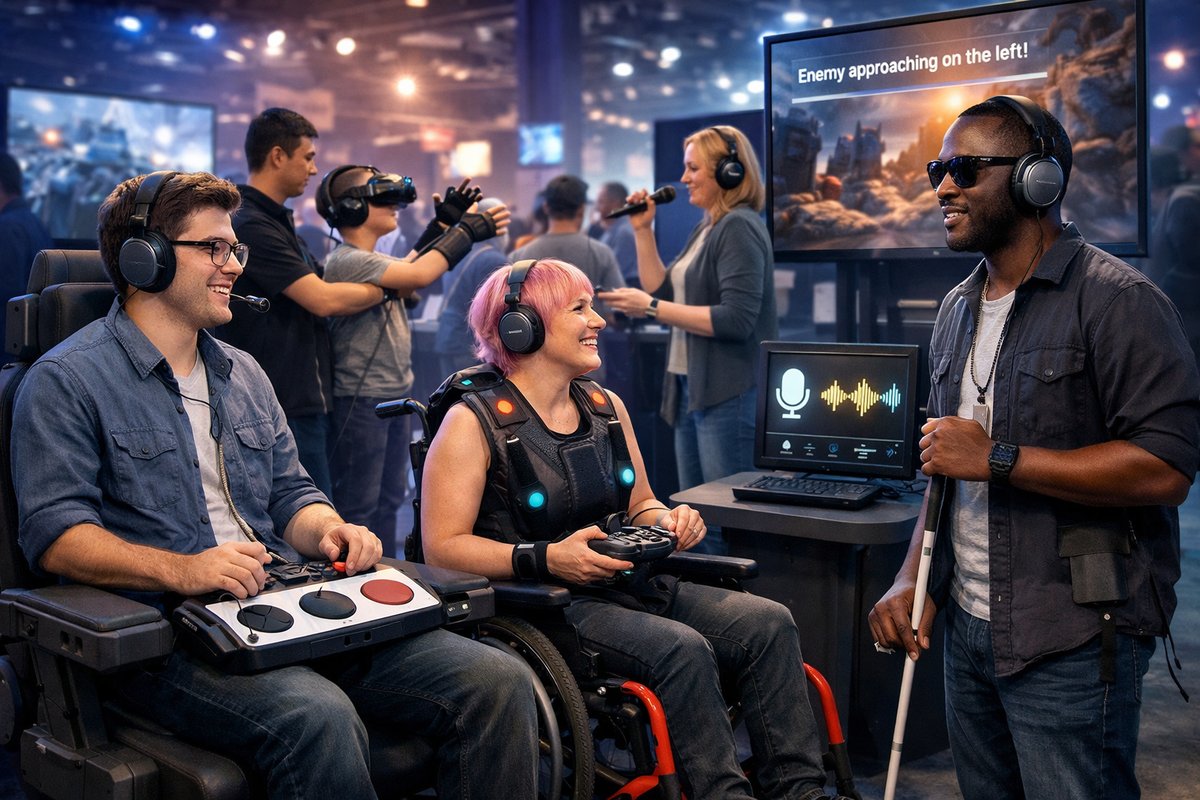
A recent showcase at a major gaming expo highlighted how adaptive controllers, haptic feedback gear, and AI-driven audio accessibility tools are lowering the barriers for players of all abilities. From modular chairs to real-time narration systems, the latest wave of innovations is making interactive entertainment more inclusive and immersive than ever.
In a sprawling demo hall filled with flashing screens and excited chatter, one booth drew visitors not for its blockbuster title or flashy graphics but for its commitment to inclusive design. Developers unveiled a suite of adaptive controllers featuring oversized buttons, touch-sensitive pads, and programmable modules that can be arranged to suit individual mobility needs. Alongside them, haptic vests and gloves demonstrated pinpoint vibration mapping, transforming on-screen events into tactile experiences. This confluence of hardware and software marks a pivotal shift: gaming is moving beyond one-size-fits-all setups toward bespoke play environments that welcome players of every stripe.
The adaptive controller setups on display included a range of customizable modules, from foot pedals and handheld grips to joystick replacements that respond to the slightest movement. Engineers described how an open-source firmware platform allows community volunteers to share custom layouts, ensuring compatibility with a growing list of titles. One developer recounted a playtester who has limited hand mobility yet was able to race at top speeds in a driving simulator simply by reassigning acceleration and brake inputs to a single foot pedal. Stories like this underscore the emotional resonance of tools that prioritize user autonomy and celebrate diverse control schemes.
Complementing these controllers, next-generation haptic feedback gear is pushing immersion to new heights. A lightweight vest embedded with precision actuators can simulate the thump of a distant explosion or the gentle pulse of an alien heartbeat. Paired with gloves that pinpoint sensations in fingertips, players reported feeling raindrops on their hands or the recoil of futuristic weapons. Developers stressed that sustainability guided their design choices: modular haptic units rely on standard rechargeable batteries and interchangeable straps, reducing electronic waste and extending product lifespans.
Accessibility isn’t limited to physical engagement. At the expo, several companies showcased AI-driven audio tools that generate real-time narration and descriptive captions for visually impaired players. One system analyzes on-screen action and offers context-identifying enemies by color, describing environmental hazards, and even conveying emotional tones of NPC dialogue. Another tool overlays customizable subtitles and sign-language avatars over cutscenes, giving hard-of-hearing gamers control over text size, font, and background opacity. Early testers praised the emotional intelligence built into these features, noting that the narrative impact remained intact without feeling like a clunky add-on.
Seated amid the tech demos, a modular gaming chair caught the eye of passersby. Its adjustable armrests, lumbar supports, and seat height can be reconfigured on the fly, accommodating wheelchair transfers or allowing users to adopt standing positions. The chair’s shell is crafted from recycled polymer blends, reflecting an industry-wide push toward eco-friendly materials. As more players seek long-lasting, ethically produced gear, manufacturers are gravitating away from single-use plastics and proprietary parts, opting instead for open-source designs that can be repaired and upgraded by local makerspaces.
These innovations dovetail with a growing movement for inclusive online communities. Game developers are integrating in-game tutorials that cater to diverse learning styles-visual walkthroughs, audio guides, and interactive prompts that adapt to a player’s pace. Social features now include voice-to-text chat conversion, ensuring that team communication remains fluid whether a player has hearing difficulties or prefers text input. Community managers reported a measurable uptick in player retention and satisfaction when these features are in place, pointing to data from beta tests where dropout rates fell by nearly 20 percent.
Behind the scenes, designers emphasize the importance of co-creation. Instead of making assumptions about user needs, many studios have formed advisory councils composed of players with disabilities. These committees participate in early prototyping sessions, providing feedback on ergonomics, interface layouts, and even color-blind-friendly palettes. The result is a design pipeline where accessibility isn’t an afterthought but a guiding principle from concept sketches to final QA sign-off.
On the software side, indie studios are experimenting with modular game engines that allow creators to plug in accessibility modules without extensive coding. One open-source toolkit offers drag-and-drop menus for remapping controls, font scaling, and high-contrast modes. By lowering the barrier for small teams to implement inclusive features, this toolkit has sparked a wave of community-driven mods and custom patches that extend accessibility to older titles once deemed too rigid to retrofit.
The emotional payoff of these advances extends beyond individual players. Streamers using adaptive rigs are finding new audiences eager to learn from their setups, while content creators with disabilities showcase how inventive configurations can unlock genres previously considered inaccessible. Online fundraisers have even launched to provide donated gear to players in underserved regions, demonstrating how community-driven philanthropy and sustainable design can reinforce one another.
Challenges remain. Battery life for haptic devices still lags behind expectations, and some adaptive controllers carry a price point that limits affordability. Developers are exploring crowdfunding models and rental programs to broaden access, acknowledging that true inclusivity demands financial as well as technological solutions. Meanwhile, ongoing research into brain-computer interfaces hints at a future where thought alone could trigger in-game actions, but ethical considerations around privacy and consent will shape how-and if-that future arrives.
As the expo concluded, attendees left inspired by prototypes that blurred the line between accessibility and mainstream innovation. The message was clear: leveling up the play experience means designing for the edges first, then expanding outwards so everyone benefits. When diversity and emotional intelligence guide engineering choices, gaming evolves into a space where every player can find joy, challenge, and connection. With adaptive controllers, haptic suits, AI-powered narration, and sustainable materials all gaining traction, the next chapter of interactive entertainment looks both inclusive and exhilarating.