Location
Mount Vernon, WA 98274

Location
Mount Vernon, WA 98274
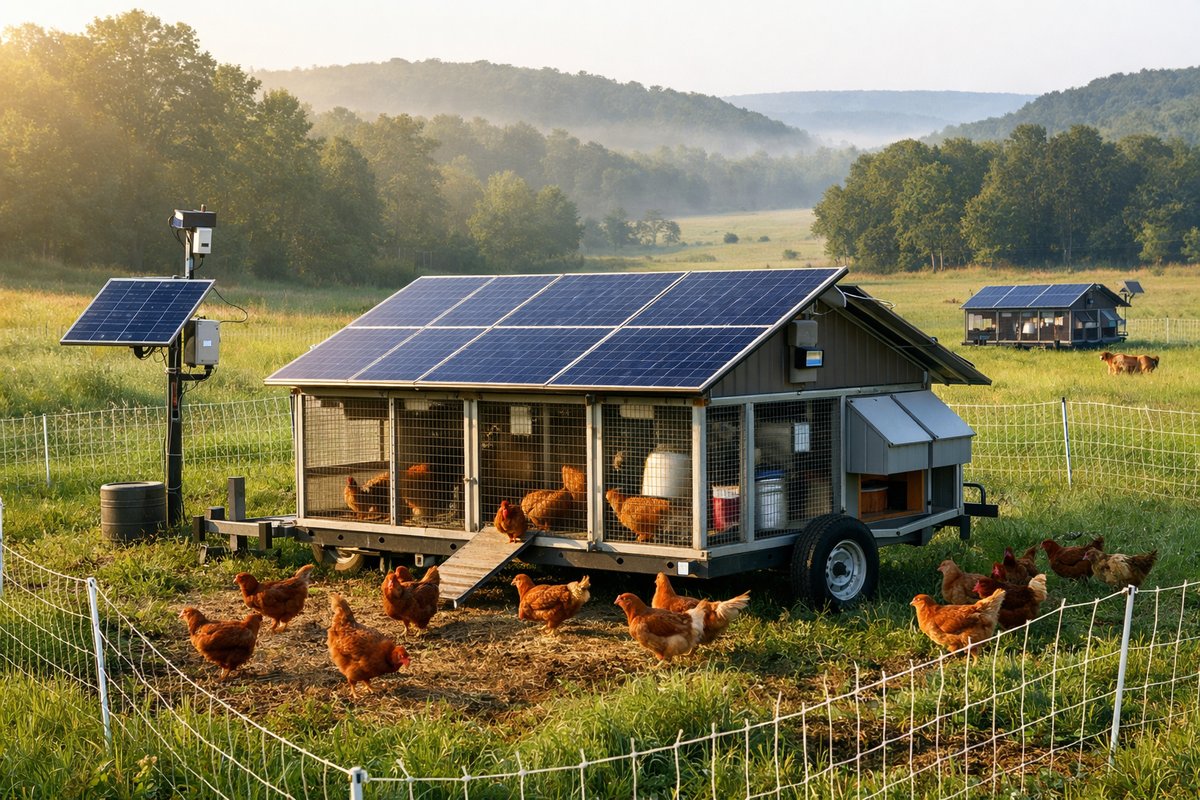
A network of family farms in the Southeast has unveiled a pilot program deploying solar-powered mobile chicken coops designed to blend renewable energy, precision monitoring, and rotational grazing. Early results hint at improved animal welfare, soil health gains, and reduced reliance on grid electricity.
A coalition of ten family-run farms across the Appalachian foothills has launched an ambitious pilot to deploy solar-powered, movable chicken coops across a combined 500 acres of pasture. The initiative aims to marry renewable energy with precision livestock management, offering a replicable model for small-scale poultry producers seeking both environmental and economic resilience.
As pressure mounts on independent farmers to reduce their carbon footprint and adhere to regenerative agriculture best practices, the consortium’s approach addresses two perennial challenges: energy access in remote fields and effective pasture rotation for flock health. By mounting photovoltaic panels atop lightweight coop frames, each unit can generate enough power to run battery-backed sensors, LED lighting, and automated waterers without relying on a nearby outlet or noisy generators.
Each mobile coop is built on a galvanized steel chassis with durable polycarbonate panels that support a 100-watt solar array. Beneath the roof, a 12-volt deep-cycle battery bank stores excess energy collected during peak sun hours, ensuring uninterrupted monitoring through cloudy days and after dusk. Wireless temperature and humidity sensors relay data to a centralized dashboard, where farmers can set alert thresholds for ventilation control or supplemental heat when nighttime lows dip below critical levels.
In-field automation extends to water and feed delivery. Each coop comes equipped with an insulated, gravity-fed waterer that minimizes manual refills and prevents freezing in cooler weather. An integrated timer module can power small auger feeders, dispensing measured portions to reduce waste and keep nutritional profiles consistent. Farmers report that maintaining uniform flock health across multiple pastures has never been easier.
Daily pasture rotation remains the pilot’s core practice. Under the guidance of an agronomist from a regional land-grant university, growers relocate coops along preplanned transects. This not only allows chickens to forage on fresh vegetation and soil microbes but also helps distribute manure evenly, improving soil fertility and reducing parasite cycles. In just three weeks, fields moved through the system have shown a 25 percent increase in organic matter and a marked reduction in fly larvae density.
“This system gives us real-time insight,” says one third-generation grower involved in the trial. “We know exactly when a flock needs extra ventilation or if the pasture behind them has recovered enough for a return visit. It’s sustainable, it’s precise, and it feels like the future of small-scale poultry.”
Preliminary metrics from the first month indicate a 10 percent boost in feed conversion ratio, driven by healthier birds and fresher forage. Egg-laying flocks have maintained steadier production curves, even as ambient temperatures fluctuated. Meanwhile, solar panels offset roughly 80 percent of electrical draw that would otherwise come from portable generators or grid extension.
The pilot’s success relies on hands-on training and community collaboration. Project organizers host weekly workshops at participating farms, covering topics such as basic electrical safety, sensor calibration, and pasture planning. They’ve also set up a digital knowledge hub where members share photo logs, sensor graphs, and seasonal grazing maps.
Environmental advantages extend beyond greenhouse gas reductions. By eliminating diesel for generators and distributing manure naturally, runoff risk diminishes, helping protect nearby streams. Soil infiltration rates have climbed in test plots, suggesting that both carbon sequestration and drought resilience are on the rise.
Of course, challenges remain. Initial equipment costs can run into the thousands for a single coop, and some growers have faced steep learning curves with the monitoring software. Battery maintenance and replacing worn photovoltaic cells require a basic technical skill set that not all operators possess. To address this, the coalition secured matching grants from a regional agriculture development fund and negotiated a low-interest microloan program tailored to regenerative ag equipment.
Looking ahead, organizers plan to expand the pilot to include mobile shelters for goats and sheep, adapting the same solar-sensor framework to graze on brush-covered hillsides. They’re also exploring modular additions like small-scale bag silos for on-demand feed mixing and even portable incubators powered by the coop’s battery bank for local hatcheries.
As the trial enters its second quarter, data will guide potential refinements: optimizing panel tilt angles for winter sun, fine-tuning watering schedules to match flock size, and integrating soil moisture probes to determine ideal rest periods for each paddock. If successful, this solar-mobile coop concept could offer a blueprint for climate-smart poultry farms nationwide, proving that renewable energy and rotational grazing are natural allies in the quest for sustainable food production.
With its blend of on-farm ingenuity, technological integration, and community-driven knowledge sharing, the Southeastern pilot highlights how small-scale operations can leapfrog traditional barriers and embrace a more resilient, regenerative future.