Location
Mount Vernon, WA 98274

Location
Mount Vernon, WA 98274
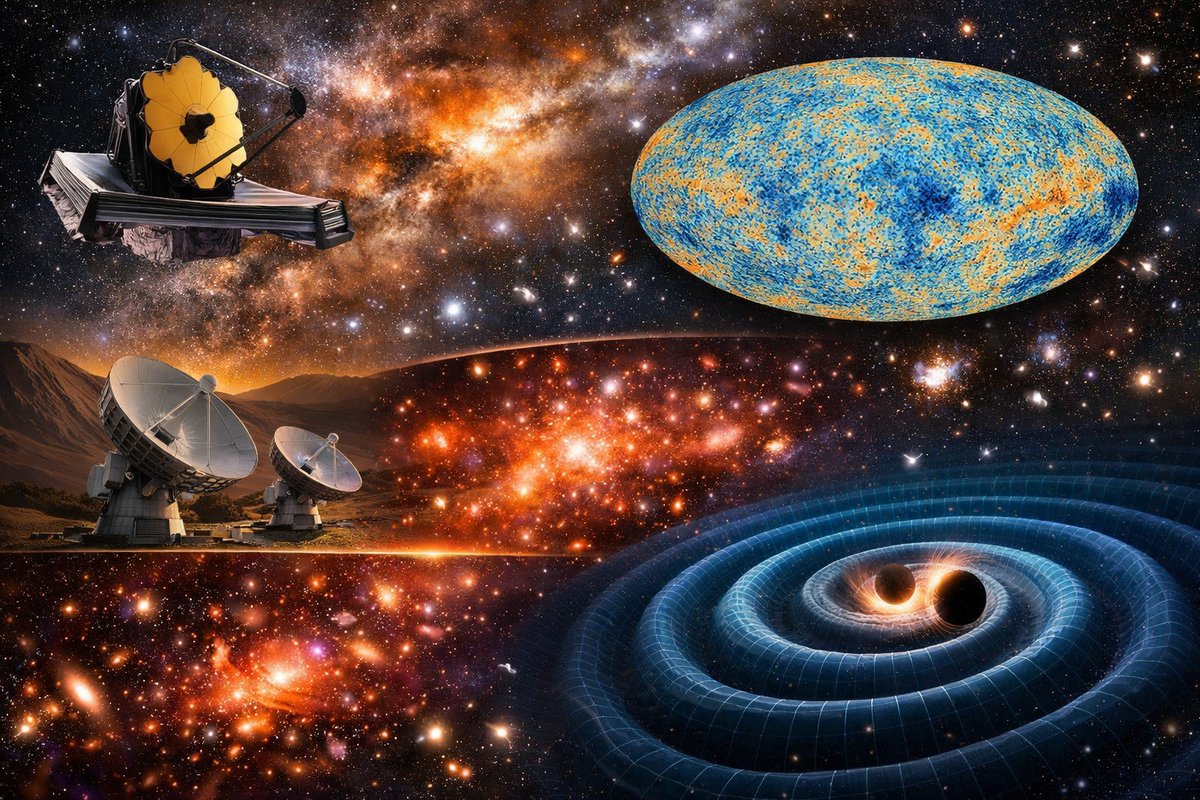
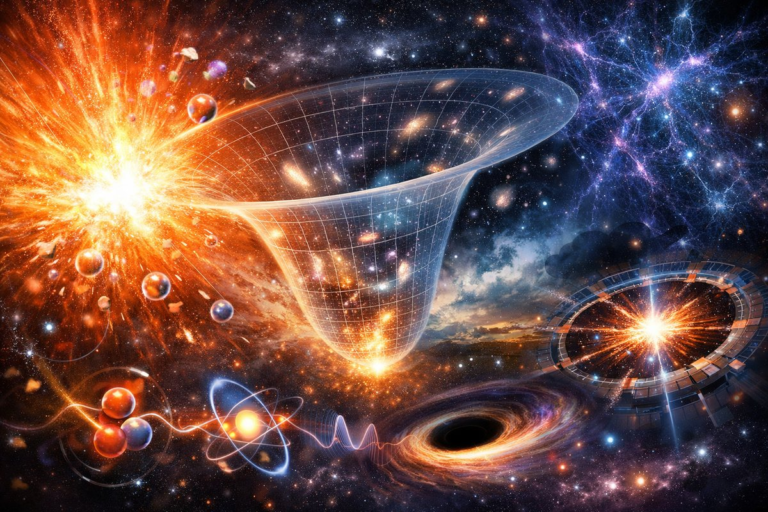
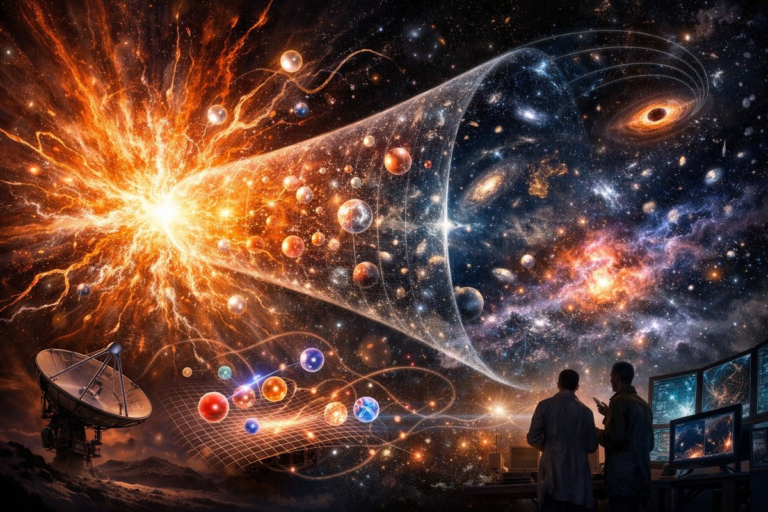
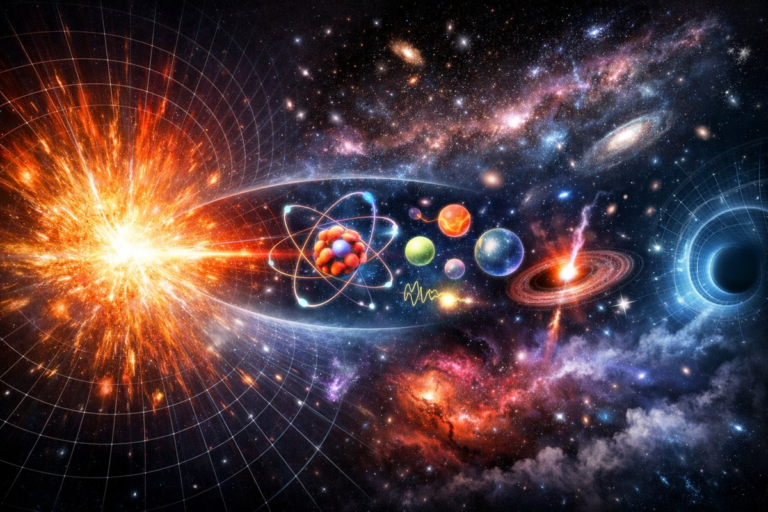
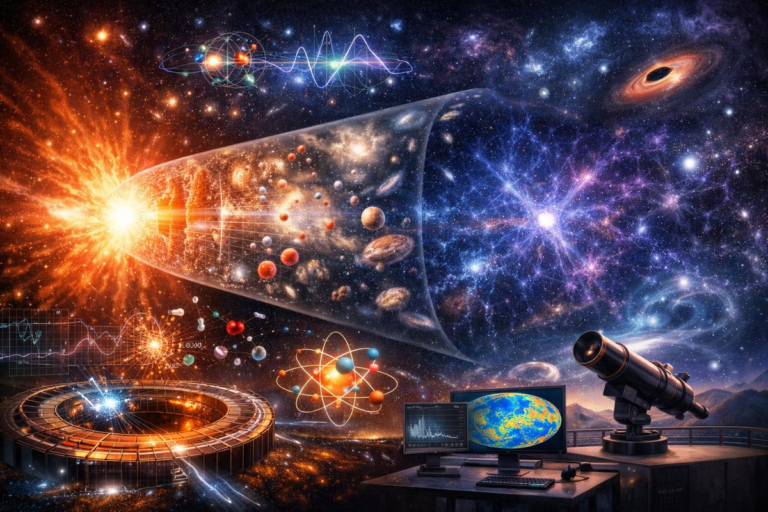
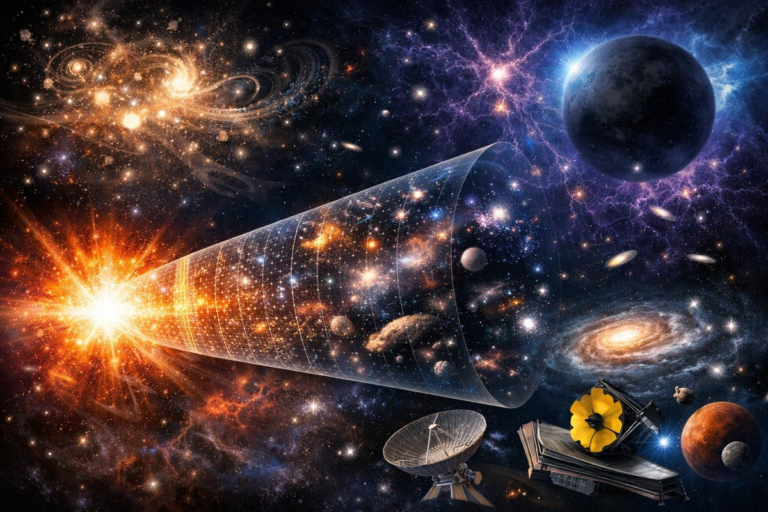
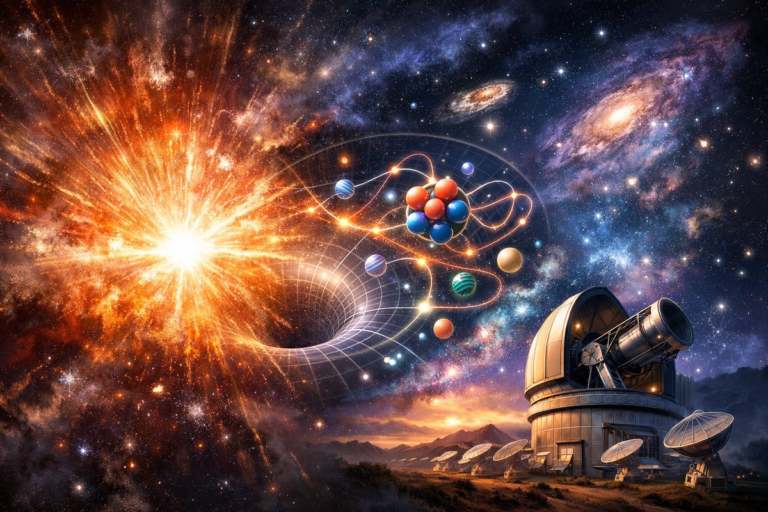
New observations from space and ground-based instruments are painting the most detailed portrait yet of the cosmos in its opening act. By combining infrared imagery, microwave background mapping, and nascent gravitational wave data, scientists are closing in on the physics that governed the universe's leap from quantum ripples to vast cosmic structures.
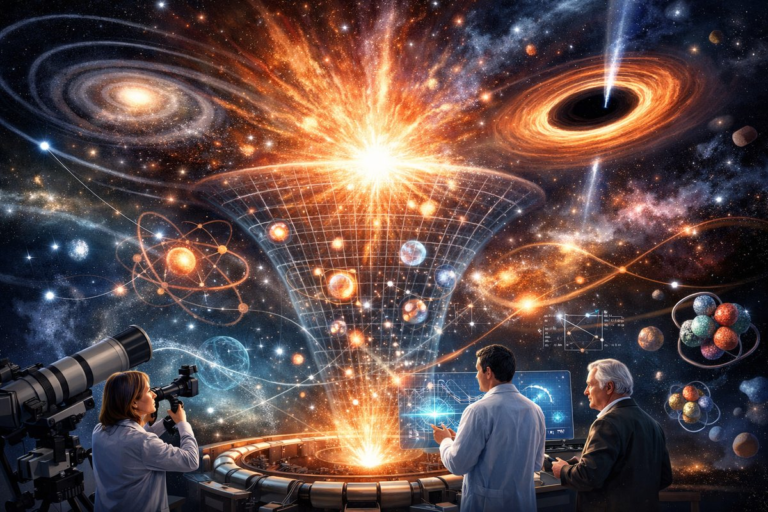
From the first flicker of quantum fluctuations to the sprawling tapestry of galaxies we see today, the quest to understand the universe’s birth has entered a transformative era. In recent months, a trio of observational breakthroughs-infrared deep field surveys, precision mapping of the cosmic microwave background, and pioneering searches for a primordial gravitational wave background-has offered fresh glimpses into the laws that governed the cosmos in its earliest instants.
Infrared Deep Field Revelations
A flagship infrared observatory has now probed deeper than ever into cosmic dawn, capturing faint galaxies that formed just a few hundred million years after the Big Bang. These nascent star systems glow primarily in infrared wavelengths, their ultraviolet light stretched by cosmic expansion. By collecting spectra from dozens of these distant galaxies, astronomers have begun to chart how the first bursts of star formation seeded the intergalactic medium with heavy elements.
Early analyses indicate that some of these primordial galaxies built up stellar masses far more rapidly than expected. This suggests that pockets of unusually dense dark matter halos may have accelerated gas cooling and star formation. If confirmed, the result could revise models of structure formation during the universe’s first half-billion years, shifting the timeline for how the earliest gravitational wells assembled.
Cosmic Microwave Background: A Sharper Snapshot
Meanwhile, advances in detector sensitivity have refined maps of the cosmic microwave background (CMB) left over from 380,000 years after the Big Bang. Ground-breaking work at high-altitude observatories has reduced instrumental noise and atmospheric interference, revealing subtle anomalies in the temperature and polarization patterns.
One intriguing signal appears as a slight dipole asymmetry at the largest angular scales. Though still within the statistical uncertainty of the standard cosmological model, this feature has prompted theorists to revisit scenarios in which the inflationary expansion was not perfectly uniform. If inflation included a brief phase of directional bias or a field transition, it could leave an imprint that modern telescopes are now sensitive enough to detect.
At the same time, new polarization measurements are refining estimates of the optical depth to reionization. By pinpointing when the first stars and black holes reionized intergalactic hydrogen, scientists can better understand how early sources shaped the universe’s evolution from darkness into light.
Primordial Gravitational Waves: Listening for the Faintest Echoes
Perhaps the most tantalizing frontier involves the search for a primordial gravitational wave background. If inflation indeed stretched spacetime to cosmic scales, it should have generated faint gravitational ripples that permeate every corner of the cosmos. Detecting these primordial waves would provide direct evidence of inflationary physics and potentially discriminate between competing inflation models.
For now, terrestrial interferometers are adapting techniques honed for astrophysical sources to boost sensitivity at lower frequencies. Parallel efforts in cosmic microwave background polarization aim to isolate the so-called B-mode pattern that would betray the signature of primordial gravity waves. Though a definitive detection remains just out of reach, ongoing upgrades to instruments are steadily closing the gap.
Converging Probes: A Multi-Messenger Approach
What sets the current renaissance in cosmic origins studies apart is the synergy of multiple observational channels. Infrared deep fields trace early star and galaxy formation. Microwave background surveys probe conditions in the primordial plasma. Gravitational wave detectors listen for the spacetime tremors of inflation. Together, these probes weave a coherent portrait of the universe’s first half-million years, constraining both particle physics at extreme energies and the behavior of gravity itself.
Complementing these efforts are emerging techniques in 21-centimeter cosmology, which aim to map neutral hydrogen across vast cosmic volumes. By observing the faint radio emission from hydrogen atoms as they absorb or emit photons during the cosmic dawn, researchers hope to capture the universe’s large-scale structure before reionization erased these primordial watersheds.
Theory and Paradox: Inflation, Dark Matter, and Beyond
On the theoretical front, data from the earliest epochs challenge physicists to reconcile conventional inflationary scenarios with the quantum properties of spacetime. Candidates for dark matter particles must also fit within this tapestry, since their interactions and abundance influence how density fluctuations grew during the universe’s infancy.
One persistent puzzle concerns the apparent lack of power at the lowest multipoles of the microwave background. While still compatible with random chance, the anomaly has spurred speculation about exotic physics-perhaps a phase shift in inflation, or interactions between dark matter fields and the inflaton. Upcoming experiments will refine these measurements, offering a chance to see whether the anomaly persists or fades away.
The Road Ahead: Next-Generation Facilities
Looking to the future, a new wave of instruments will push the frontier even further. A wide-field space telescope set to launch soon will survey billions of galaxies in both visible and infrared light, mapping the cosmic web across unprecedented volumes. At radio wavelengths, arrays of thousands of dipole antennas will seek the faint whispers of hydrogen from cosmic dawn and map the reionization epoch in three dimensions.
In parallel, plans for a ground-based stage-4 cosmic microwave background observatory envision arrays of nearly a million superconducting detectors distributed across multiple sites. Combined with proposed space missions to measure the cosmic neutrino background, these initiatives promise an integrated, multi-messenger view of the early universe.
Why It Matters
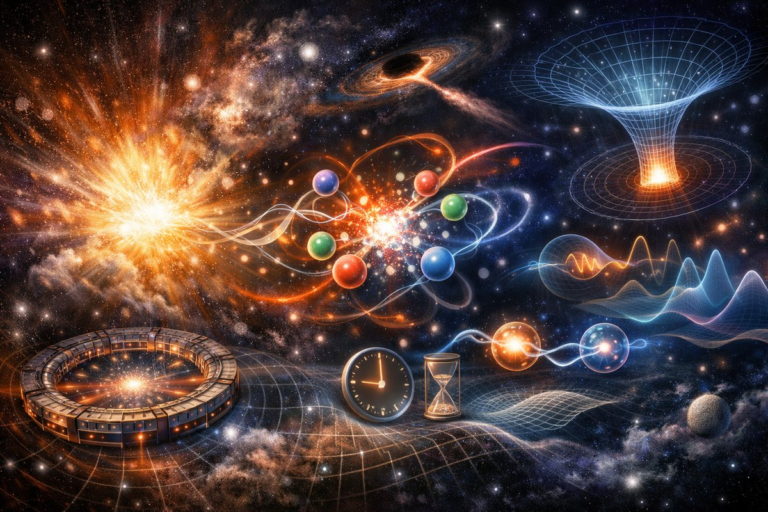
Understanding how the universe emerged from its primordial state is more than an abstract pursuit. The same processes that governed the first moments also underlie the formation of stars, planets, and ultimately the conditions for life. By decoding the physics of cosmic genesis, scientists hope to uncover deep principles that connect the smallest quantum scales with the largest cosmic structures.
As researchers refine their instruments and theories, each new data set brings us closer to answering fundamental questions: What triggered inflation? What is the nature of dark matter? How did the first black holes form? And could the laws of physics themselves have been different in the universe’s opening act?
These questions ignite our collective curiosity and remind us that the cosmos is a laboratory for understanding reality at its most extreme. With every photon captured, every anomaly charted, and every ripple detected, we piece together the story of how everything we know came to be-and glimpse the possibilities of what yet remains to be discovered.