Location
Mount Vernon, WA 98274

Location
Mount Vernon, WA 98274
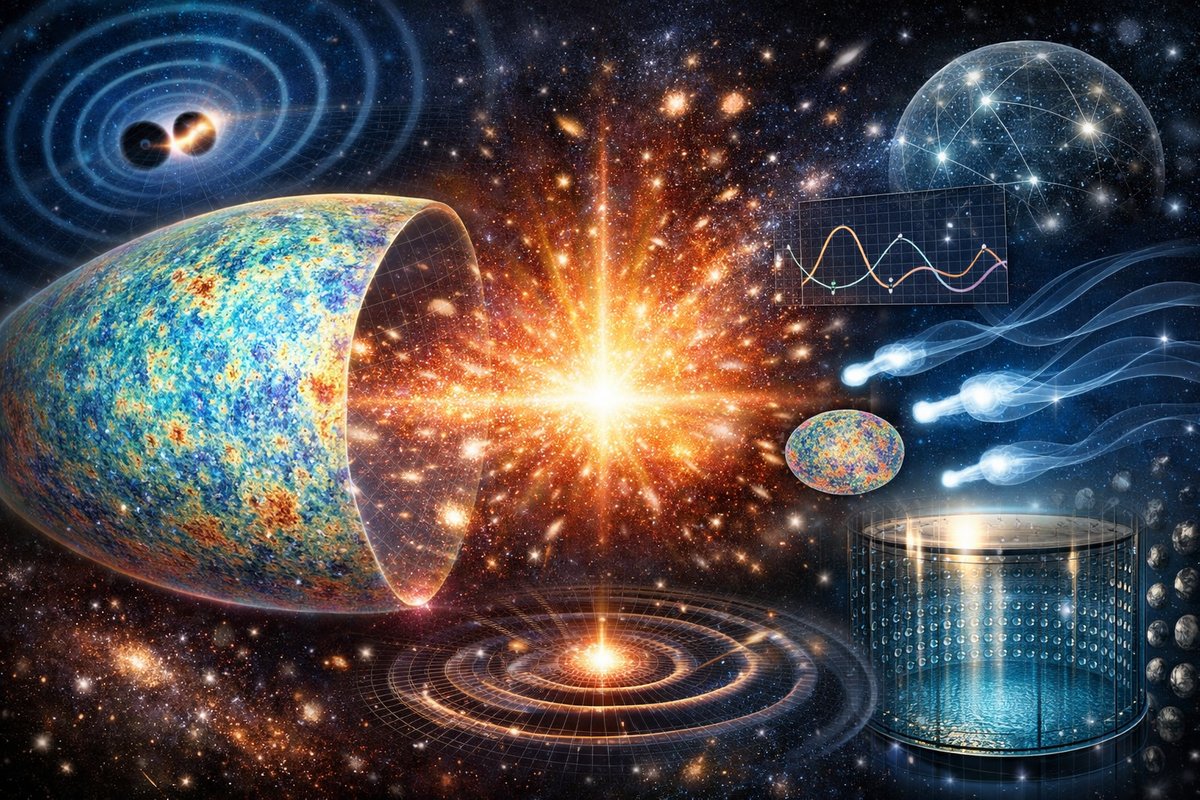
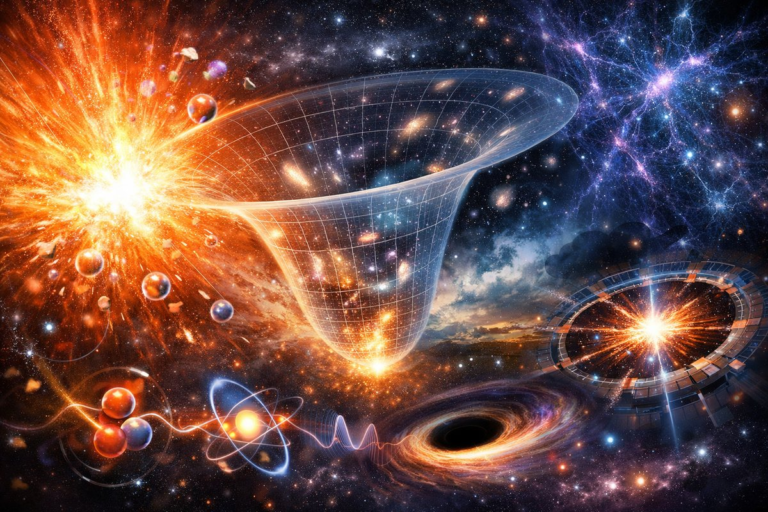
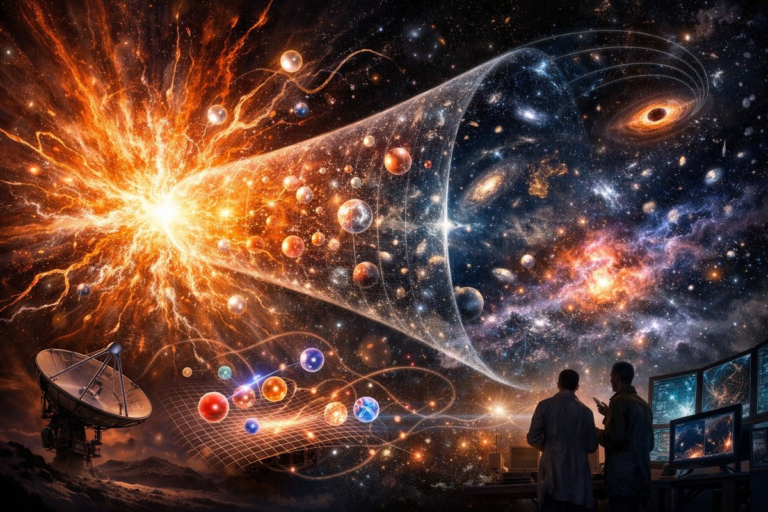
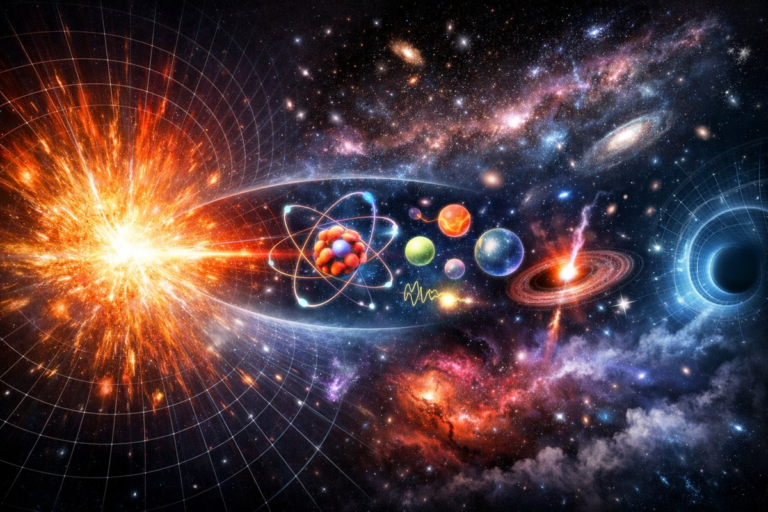
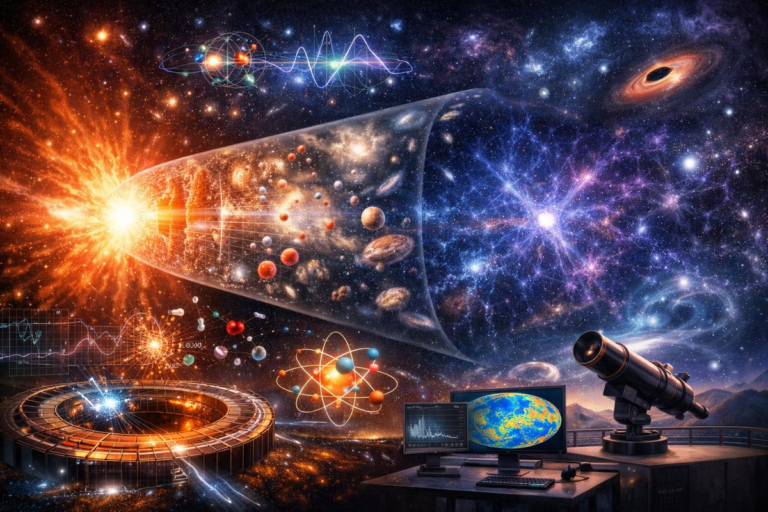
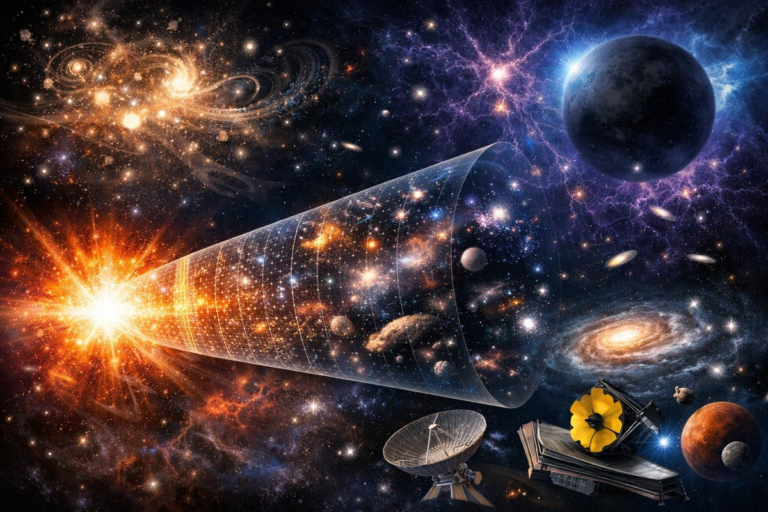
Cutting-edge measurements of primordial signals are rewriting our picture of the universe's birth. From elusive neutrino whispers to subtle ripples in ancient light, researchers are uncovering unexpected clues about the forces and paradoxes that set reality in motion.
Human curiosity has always driven us to look upward and wonder how everything began. In the past year, teams around the world have pushed that curiosity further than ever before, combining ground-breaking instrumentation with theoretical leaps to probe the universe’s first trillionths of a second. What emerges is a story more complex and surprising than textbook lore: the interplay of particles and fields in a boiling quantum cauldron gave rise not only to the familiar matter around us, but also to hints of deeper paradoxes still awaiting resolution.
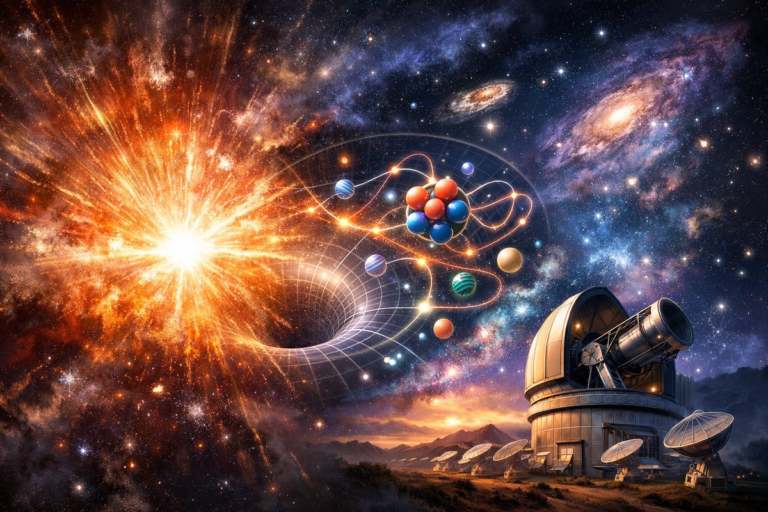
A constellation of high-precision telescopes arrayed at high elevations and in deep ice have delivered fresh maps of the cosmic microwave background (CMB), the afterglow of the Big Bang. Tiny polarization patterns-once considered noise-have become fertile ground for discovery. Recent flights of long-duration scientific balloons over Antarctica captured B-mode polarization ripples with unprecedented clarity, suggesting new sources of primordial gravitational waves. These patterns offer a direct window into the inflationary epoch, the explosive expansion thought to have magnified microscopic quantum fluctuations into the large-scale structures we see today.
Meanwhile, underground laboratories buried beneath kilometers of rock are preparing novel experiments to catch the faint hum of the cosmic neutrino background. Neutrinos from the earliest moments are the most ghostly messengers in the universe: trillions pass through every square centimeter of Earth each second with barely a whisper of interaction. Innovative designs using ultra-cold crystals and quantum sensors aim to freeze out thermal noise and register the rare collisions of relic neutrinos with atomic nuclei. If successful, these detectors will confirm a long-standing prediction that neutrinos outnumber photons in the cosmos and may reveal new neutrino flavors or mass hierarchies that reshape particle physics.
Theoretical physicists have not stood idly by. A series of recent papers propose that the traditional inflation model may be too simplistic. Some scenarios posit a cascading sequence of mini-inflations driven by different fields, each leaving distinct signatures embedded deep in the CMB’s polarization. Others suggest a quantum bounce-a rebound from a prior contracting universe-rather than an absolute beginning. These frameworks introduce testable predictions: subtle features in power spectra, rare topological defects, or correlations between gravity waves and neutrino streams. Researchers hope the next generation of instruments will be sensitive enough to distinguish among these rival pictures.
Simulating the first instants of cosmic history remains a monumental challenge. New supercomputer clusters dedicated to early-universe modeling are harnessing machine-learning algorithms to sift through vast parameter spaces. By training neural networks on millions of simulated universes, teams can rapidly compare predictions against observed sky maps, isolating scenarios that reproduce both large-scale structure and particle abundances. Quantum computing, still in its infancy, shows tantalizing promise: prototype processors have run simplified models of quantum field interactions, hinting at future breakthroughs in simulating non-perturbative physics where classical methods falter.
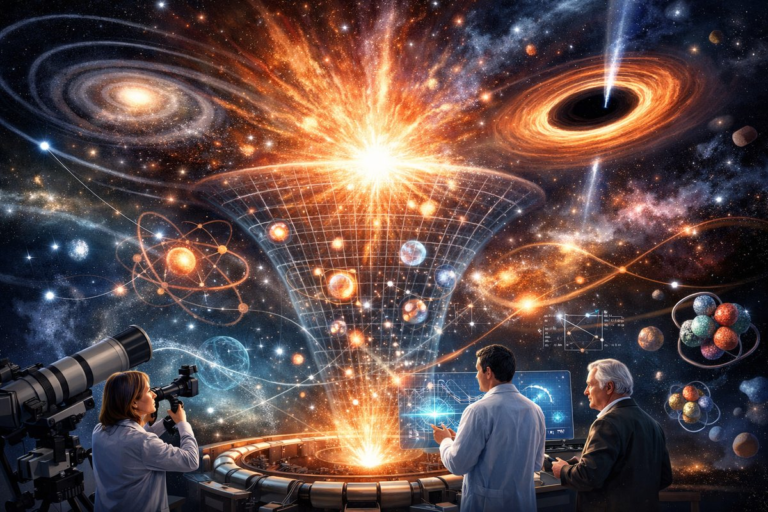
Yet these grand quests are grounded in the practical. University labs are calibrating detectors with microwave emitters that mimic cosmic signals. Cryogenic facilities maintain sensor temperatures mere fractions of a degree above absolute zero. Data pipelines leveraging distributed computing grids shuttle petabytes of observations for real-time analysis. The global nature of these efforts-scientists collaborating across continents, sharing open-source software and data archives-reflects a communal embrace of curiosity and collective stewardship of knowledge.
As we refine our portrait of cosmic dawn, we must also grapple with profound philosophical questions. If inflation flips the universe from quantum foam to classical spacetime, what role does randomness play in giving rise to stars, galaxies and conscious beings? Are we one of countless bubbles in an endless multiverse, or is our cosmos uniquely tuned by deeper principles yet to be uncovered? These paradoxes challenge not only our scientific frameworks but our sense of place in the grand tapestry.
In living rooms around the planet, enthusiasts are joining the cosmic conversation. Home planetarium projectors can now recreate the map of ancient microwaves on ceilings, while citizen-science platforms enable amateur stargazers to contribute real data. Virtual-reality experiences let users dive into simulated early-universe landscapes, witnessing the first quantum fluctuations crystallize into filaments of matter. By democratizing access to cutting-edge research, these tools foster a new generation of lifelong learners driven by wonder.
Looking ahead, a fleet of next-generation observatories promises to push the frontier once more. Kilometer-scale radio arrays aim to detect the 21-centimeter hydrogen signal from cosmic dawn, charting the era when the first stars ignited. Space-based gravitational-wave detectors will scan frequency bands unreachable on Earth, hunting the faint murmur of primordial ripples. And underground cosmic-ray experiments seek the highest-energy messengers, testing whether exotic particles from the very early universe are raining down on us today.
Each new dataset peels back a layer of mystery, yet deepens the enigma. The universe’s birth is not a settled chapter but an open invitation to explore forces and phenomena beyond everyday experience. Every photon, every neutrino, carries a message from the frontier of time. By decoding those messages, we inch closer to understanding not only how everything began, but what lies beyond our current horizon of knowledge.
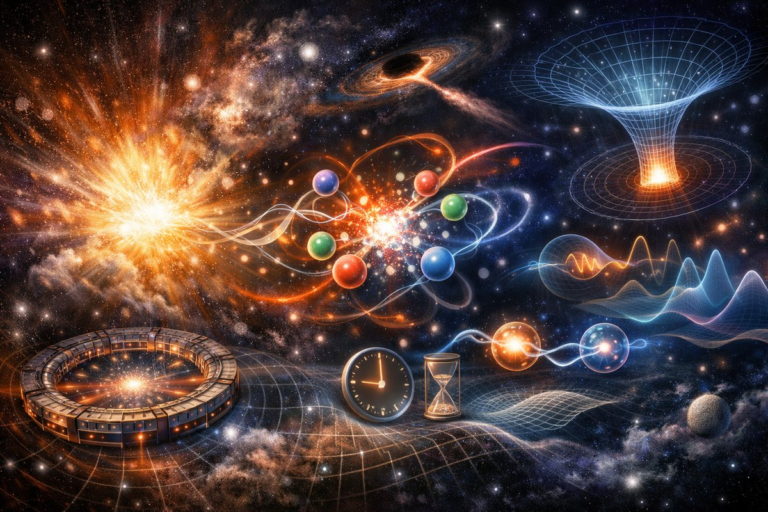
In the coming decade, the narrative of origins will continue to unfold in unexpected ways. Paradoxes born at the universe’s birth-quantum fluctuations, symmetry breakings, the genesis of spacetime itself-may one day converge into a coherent tale. Until then, we stand at the threshold, eyes on the faint echoes of creation, hearts alight with the joy of discovery.