Location
Mount Vernon, WA 98274

Location
Mount Vernon, WA 98274
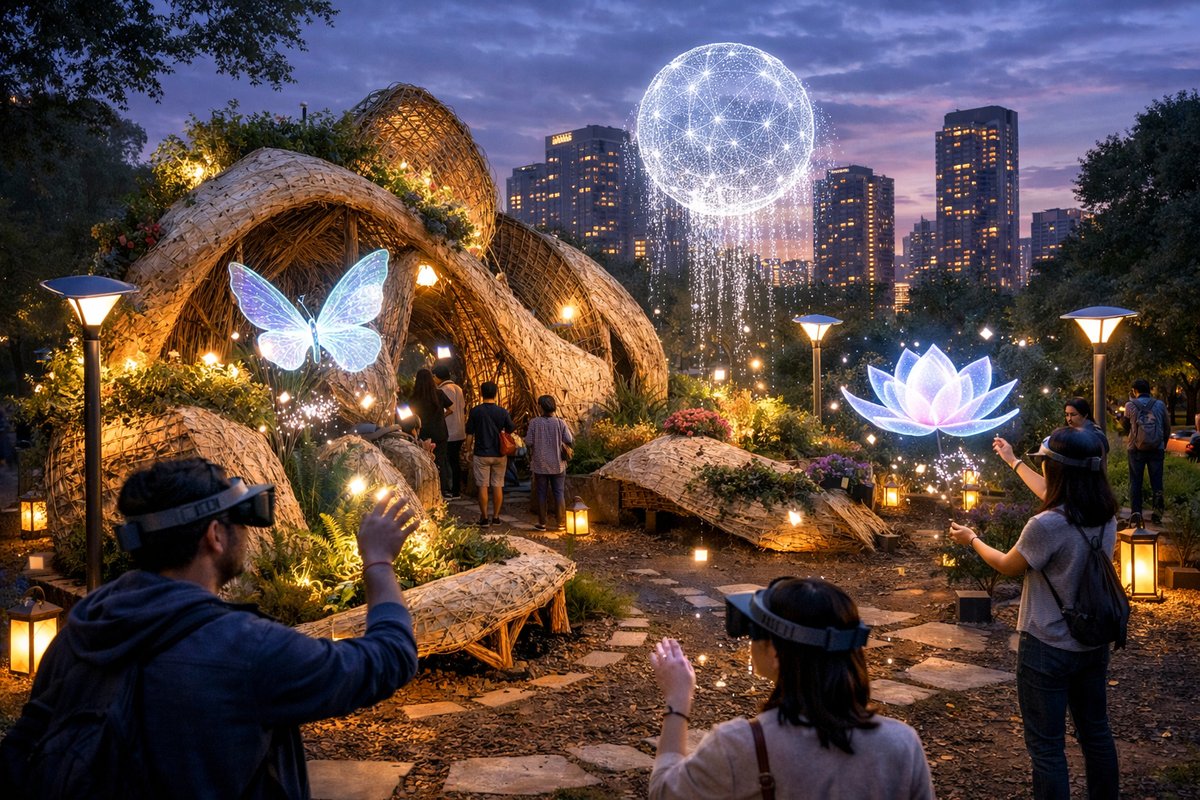
A groundbreaking outdoor installation marries sustainable sculpture with augmented reality overlays and solar-powered lighting to create an ever-shifting urban tableau. By combining biodegradable materials, sensor-driven visuals, and community participation, the exhibition invites visitors to participate in a collective meditation on impermanence and innovation.
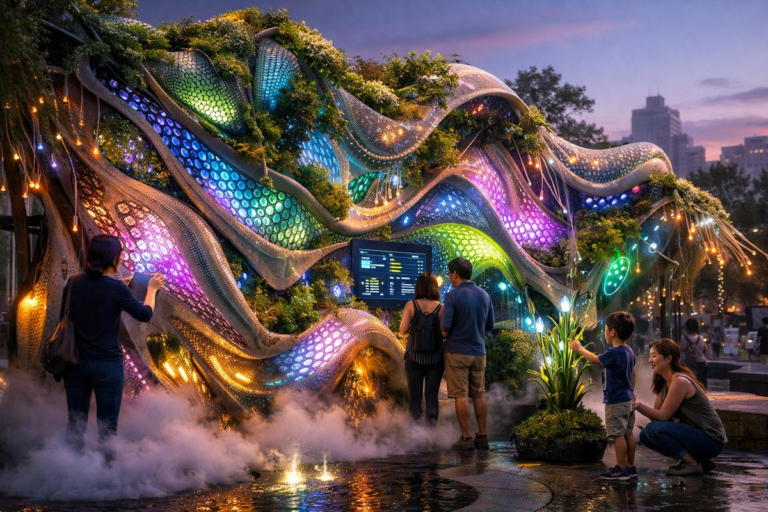
In the heart of a repurposed urban plaza, an experimental art collective has unveiled a series of living sculptures that dissolve the boundary between physical form and digital illusion. Titled “Ephemeral Horizons,” this immersive installation weaves mycelium-grown panels with bioplastic structures, projection-mapped visuals, and smartphone-triggered augmented reality overlays-all powered by rooftop solar arrays and portable energy units. The result is a chimeric environment where visitors navigate shifting silhouettes of light, texture, and sound, blurring the line between installation and performance.
The curators drew inspiration from transient ecosystems and ephemeral architectures found in nature-ice formations that melt, blossoms that fade, and fungal networks that sprout overnight. Rather than erecting monolithic statues of concrete or steel, they opted for materials with life cycles of their own. Mycelium panels cultivated from agricultural waste serve as both structural support and a living substrate that decomposes over time. Complementing these are semi-rigid bioplastic arcs molded into arching vaults that respond to temperature and humidity, warping gently throughout the day to trace environmental changes.
To extend the sensory palette, projection-mapping teams choreographed a suite of abstract animations that wash across the surfaces of these forms at dusk. Visitors using standard smartphones can unlock a suite of augmented reality filters, turning each sculpture into a gateway to hidden geometries, fractal blooms, or imaginary creatures. The AR components are accessible through a lightweight web app-no additional download required-ensuring a seamless gateway from physical exploration to digital discovery.
Central to the exhibit’s ethos is sustainability not just in materials but in infrastructure. A row of inconspicuous solar panels stretches across the rooftop framing the plaza, feeding a bank of battery packs that run projectors, LED light strips, and motion sensors. By day, the solar cells recharge the system; by night, the stored power illuminates the sculptures with shifting hues, giving each structure an otherworldly glow without tapping into the municipal grid.
The site itself-a formerly abandoned bus terminal-was chosen for its dramatic acoustics and open footprint. Retaining elements of the original architecture, designers left portions of rusted steel framework intact, allowing projected light to interplay with jagged edges and open trusses. Soundscapes composed of wind recordings, electronic pulses, and field audio from forests and grasslands fill the space, creating an auditory counterpoint to the visual display. Motion sensors detect passing pedestrians and adjust both lighting intensity and ambient sounds, producing a feedback loop between visitor movement and environmental response.
One of the most compelling features is a series of sensor-activated pods arranged in a ring at the plaza’s center. Each pod houses a sculptural core of compressed bioplastic ribbons wrapped around mycelium columns. When a visitor steps inside, weight sensors trigger rippling waves of color and sound that radiate outward, transforming a moment of curiosity into a participatory ceremony. Children and adults alike have been seen crouching low to inspect tiny circuits or wandering beneath the arches with phones held high, discovering secret digital murals layered atop the organic surfaces.
Beyond the spectacle, the project engages with themes of impermanence and collective authorship. The materials will degrade over six to eight weeks, after which the curators plan to compost the mycelium panels and recycle the bioplastic loops. A series of workshops encourages participants to harvest fragments of the installation-small chips of mycelium or biodegradable ribbons-to take home, sprout, or repurpose. The gesture underscores an evolving relationship with art: one that thrives on transformation rather than static preservation.
Modularity was a guiding principle throughout the design process. Each sculptural unit can be detached, reconfigured, or combined with others to form new arrangements. This not only allows for touring the exhibit in different cities but also invites future collaborators to remix the work. Local artists, architects, and engineers are encouraged to customize individual modules with their own digital assets-be it 3D scans, generative code, or sound files-creating a living archive of adaptations that grows with each presentation.
In conversation with one of the co-curators, the ambition was clear: “We wanted to create a framework that is never fully resolved. Every day brings a new iteration-colors shift, materials settle, visitors leave traces. It’s a testament to the resilience of natural systems and the boundless potential of human imagination when we build lightly on the landscape.” This spirit of openness extends to the exhibit’s documentation as well, which is shared under a permissive license so that cities around the world can replicate the blueprint at minimal cost.
On the technical front, the collective employed 3D scanning drones to capture site geometry, generating precise digital twins that informed every curve and contour of the sculptures. Laser cutters and CNC routers shaped biodegradable wood sheets into folding templates, while community makerspaces handled mycelium cultivation under guided protocols. Projection mapping was calibrated using open-source software, allowing for real-time updates to visuals in response to environmental data feeds-temperature, air quality, and even foot traffic density.
Early visitor reactions have ranged from awe to introspection. Parents have remarked on how their children pause in wonder beneath a shifting vault of light, while seasoned designers have praised the seamless integration of low-impact materials with cutting-edge digital tools. Local environmental groups see the initiative as a model for temporarily reclaiming underutilized urban spaces without leaving a heavy footprint, and several municipalities have already expressed interest in hosting the next iteration.
Looking ahead, the curatorial team plans to expand the concept into a traveling festival of ephemeral art. Future sites could include coastal promenades, desert flatlands, or abandoned industrial lots-each iteration tailored to its unique ecosystem. Collaborations with botanists, climate researchers, and indigenous communities are in the works, ensuring that the project continues to evolve as a dialog between place, people, and poetic possibility.
Ultimately, “Ephemeral Horizons” offers more than a fleeting spectacle. It reframes how we engage with public art, suggesting that the most profound experiences may arise not from permanence but from the delicate interplay of growth, decay, and imagination. In an era defined by rapid change, these living sculptures stand as invitations to embrace transformation-one footstep, one projection, one flicker of light at a time.