Location
Mount Vernon, WA 98274

Location
Mount Vernon, WA 98274
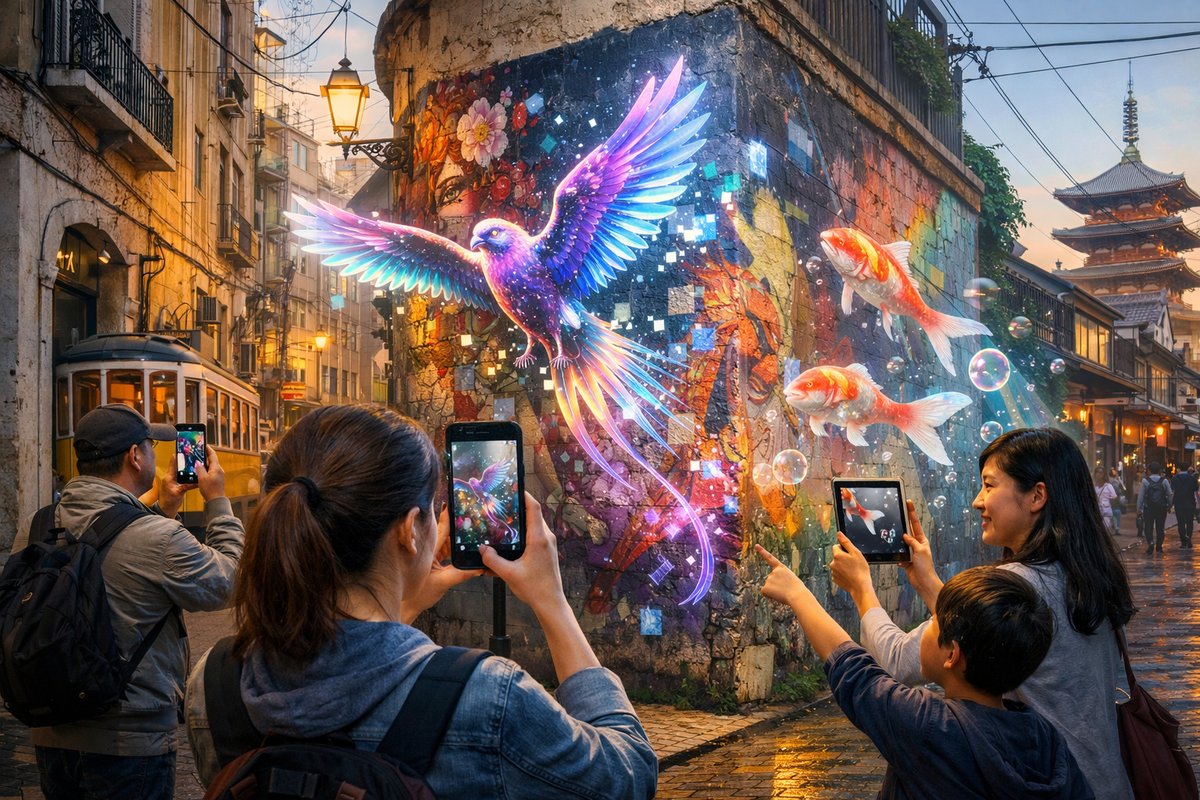
A new wave of public art is blurring the boundary between the physical and the digital with augmented reality overlays on street murals. As artists and technologists collaborate to create living canvases, passersby become co-creators in immersive, site-specific experiences. From Lisbon's historic alleys to suburban facades in Tokyo, AR-enhanced murals are redefining how we interact with the urban environment.
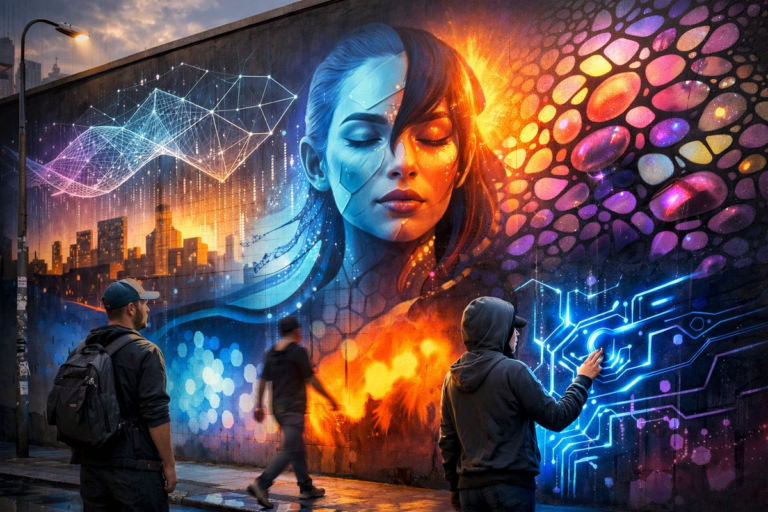
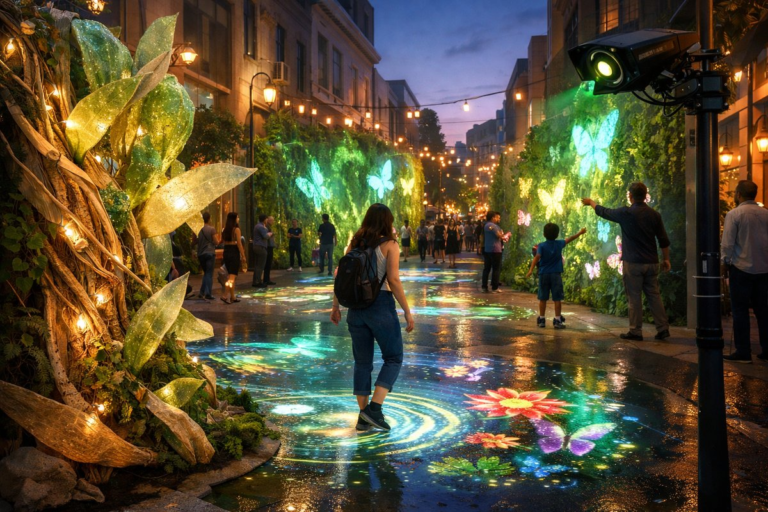
Walk down a narrow side street in an old European quarter and you might be surprised when centuries-old stone façades bloom with moving creatures, shifting colors and hidden messages. Those transformations only appear when you hold up a compatible device and open the right app. Welcome to the world of augmented reality street murals, where spray paint meets smartphones, and public art becomes a living, participatory experience.
Emerging over the past five years, AR street murals have taken root in cities across North America, Europe and Asia. In Lisbon’s Alfama district, a collective of muralists partnered with a local startup to overlay animated marine life onto shorefront walls, allowing audiences to trigger schools of fish with a tap. In Tokyo’s Futako Tamagawa neighborhood, commuters pause to reveal layered portraits of community elders, each telling personal stories unlocked by scanning QR codes painted into the mural’s frame.
Behind these immersive works lies a blend of time-tested craft and interactive technology. Traditional muralists sketch designs, source pigments that withstand UV exposure and weather, then paint large-scale imagery on concrete or brick. Meanwhile, developers use AR frameworks to register digital assets-3D models, animations, soundscapes-to real-world coordinates, syncing pixels with mortar. The result is a hybrid canvas, equally at home on the street and inside a smartphone screen.
One of the earliest high-profile projects appeared at a digital art festival in a repurposed warehouse district, where panels from different artists transformed into portals. Visitors aimed their phones at symbols embedded in the paintings and watched as geometric shapes floated into the rafters. That same technology has been adapted to open-air murals, with GPS data ensuring digital layers remain locked onto painted surfaces even as viewers move around.
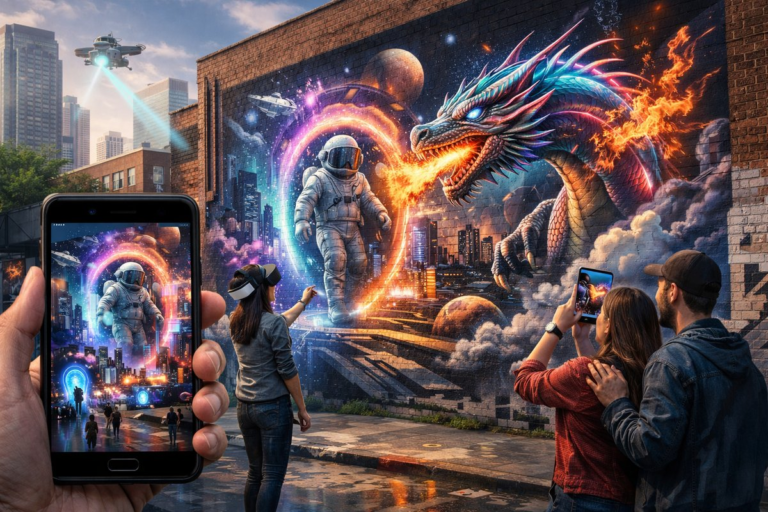
The user experience is deceptively simple: download a free companion app, point your camera at the mural, and live view sensors display overlaid animations in real time. But under the hood, multiple tracking methods are at work: image recognition to detect specific patterns, marker-based triggers hidden in the design, and spatial mapping for precise alignment. Some installations also employ Bluetooth beacons or NFC taps to deliver location-based audio narratives-poetry or ambient soundscapes that complement the visual spectacle.
For artists, AR offers a new palette of effects that defy gravity and time. A painted phoenix can rise from embers, wings unfolding in slow motion. A static cityscape can transition from day to night with twinkling stars and neon signs. A portrait can break its frame, shards drifting into the viewer’s field of view. These digital extensions invite viewers to engage beyond observation: they encourage exploration, uncovering secrets tucked into corners of the mural that only reveal themselves after several scans.
City planners and cultural institutions have taken notice. Municipal arts councils now include AR – alongside sculpture, performance and traditional murals – in public funding programs. One midwestern city transformed a blank underpass into an interactive gallery, funded partly by local tech grants. The installation features sequential murals along a pedestrian trail; scanning each marker triggers chapters of a serialized graphic novel drawn by emerging illustrators.
Critics point out that AR murals can suffer from digital divide issues-viewers without compatible devices or reliable data plans may miss out on the full experience. In response, some projects install QR codes linked to free public Wi-Fi or loaner tablets at nearby kiosks. Others embed Braille tags and audio descriptions, expanding accessibility for visually impaired visitors. When thoughtfully executed, AR street art can bridge communities, offering entry points for different ages, backgrounds and levels of technical familiarity.
Behind the scenes, collaboration is key. Muralists, 3D animators, UX designers and sound artists must align creative visions and technical requirements. Workflow pipelines resemble those of video game studios: storyboarding, prototyping, asset optimization, testing. On-site calibration can take days, adjusting virtual offsets under changing light conditions. Once live, murals require occasional maintenance-repainting chipped areas, updating app versions to match new operating systems, or patching waterproof seals around embedded sensors.
For viewers, these installations feel like magic. Suddenly, a bleak alley can become a portal to unknown worlds. A neighborhood gathering spot turns into an interactive gallery that evolves throughout the day. People share short videos on social media, driving foot traffic and sparking spontaneous meetups. Local businesses benefit, too: cafés near popular murals report bumped sales as visitors linger to capture perfect AR-enhanced shots.
Some AR street murals have ventured further into gamification. In Philadelphia, collaborators teamed with a mobile game developer to create a citywide quest: participants scanned murals to collect digital badges, unlocking exclusive local offers or virtual meet-and-greets with the artists. Others have incorporated real-world impact: one installation in South America linked scans to donations, letting users pledge micro-contributions to environmental nonprofits that clean up coastal waters.
Still, challenges remain. Battery-draining AR apps can frustrate on-the-go viewers. Inconsistent lighting-harsh midday sun or deep shadows at dusk-can impair image recognition. Smartphone models vary in camera quality and processing power. To address this, some projects optimize assets for low-end devices, provide offline content packages, or integrate fallback experiences that display simplified animations on less capable hardware.
Looking ahead, the next frontier may blend AR street murals with wearable tech. Lightweight AR glasses could remove the need for hand-held devices, making participation more seamless. By combining spatial audio with location-aware haptics-micro vibrations triggered by virtual interactions-artists could craft multisensory narratives that unfold as people stroll through an installation.
There’s also potential for collaborative co-creation sessions. Imagine neighborhood workshops where residents use tablet styluses to contribute shapes or patterns to a base mural, then watch as their individual strokes animate across the wall in real time. A feedback loop between physical marks and digital augmentation could democratize authorship, blurring the line between artist and audience.
Schools and universities are embracing AR street art as teaching tools, too. Architecture students use murals as case studies in urban engagement; digital art classes reverse-engineer popular installations to understand tracking algorithms. Public health programs have even used AR overlays to visualize the spread of historical epidemics on city facades, merging education, history and design into outdoor learning experiences.
Ultimately, augmented reality street murals represent a shift in how we conceive of public space-no longer static, but dynamic, layered and interactive. They harness our innate curiosity and turn every passerby into an explorer, armed with a device that reveals hidden dimensions. By transcending the limitations of a single medium, these living canvases invite us to reimagine the city as an open-air gallery that responds to our presence and participation.
A Canvas Without Boundaries