Location
Mount Vernon, WA 98274

Location
Mount Vernon, WA 98274
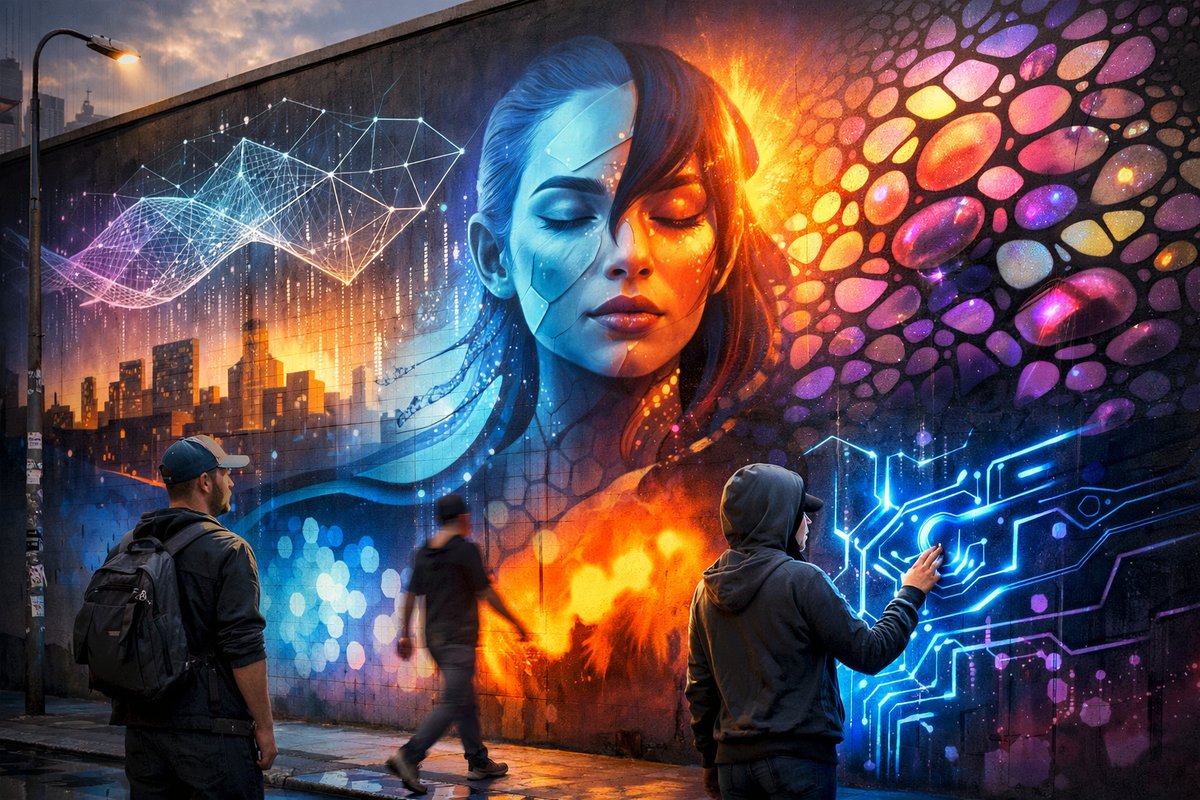
A new wave of street art is emerging at the intersection of code and craft. Artists are harnessing parametric design tools alongside thermochromic, photochromic, and electroluminescent inks to create urban murals that shift with the environment and viewer interaction. These morphogenic murals transform static facades into dynamic storytelling canvases, reshaping how communities engage with public space.
City walls have long served as silent witnesses to cultural shifts, political movements, and creative revolutions. Today, a new generation of artists is reimagining these surfaces through a fusion of parametric design and responsive materials. By leveraging algorithmic modeling alongside thermochromic, photochromic, and electroluminescent inks, creators are producing morphogenic murals that react to temperature, sunlight, and human presence. The result is an ever-changing urban tapestry that dissolves the boundary between art, architecture, and environment.
At the core of this movement lies parametric design software, a suite of tools originally developed for architectural firms and industrial designers. Programs like Rhino paired with visual scripting plugins allow artists to define complex geometric relationships using mathematical rules and environmental data feeds. In practice, a designer might link a wall panel’s curvature to local temperature sensors or wind-speed measurements, generating patterns that shift subtly throughout the day. Once the digital model is finalized, it can be used to cut stencils via CNC routers or laser cutters, granting precision at scale.
In Montreal’s annual Mural Festival, a standout installation dubbed “Thermo Tides” demonstrated the power of heat-sensitive inks. Covering an industrial facade along Saint-Laurent Boulevard, the mural incorporated thermochromic paint that changes pigment at specific temperature thresholds. As the sun climbed higher, cool blues and purples gave way to warmer oranges and reds, tracing the building’s rising heat signature. At dusk, as the surface cooled, hidden patterns emerged-an ephemeral second layer of artwork. Festival attendees described a sense of discovery, as if unlocking a secret code written in color.
Equally compelling are murals that respond to light. Photochromic inks, which darken or lighten under ultraviolet exposure, have been used to craft diurnal narratives. In Berlin’s Kreuzberg district, a recent mural titled “Solar Storylines” spans an entire block. In early morning light, faint outlines of local flora appear in pale green. By midday, UV activation deepens these botanical motifs into a lush forest scene. Then, as sunset approaches and UV levels drop, ghostly silhouettes linger against the concrete. Passersby have noted how the mural feels like a living timeline, mapping the sun’s arc across urban skies.
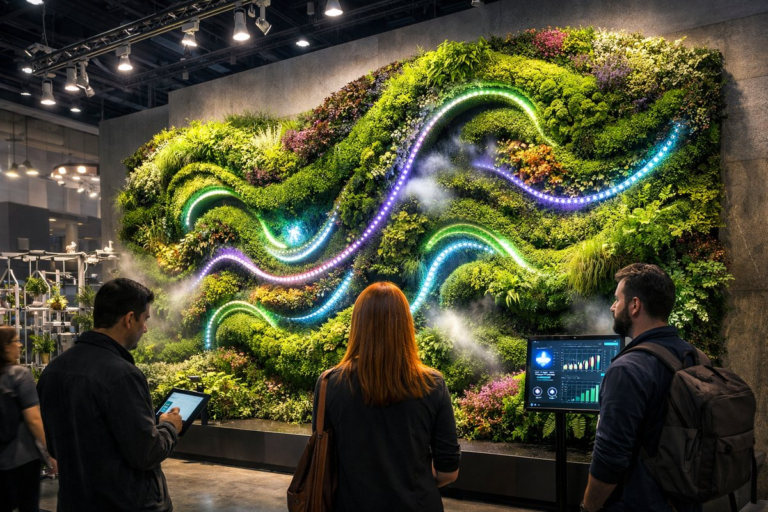
In parallel, electroluminescent inks are adding a layer of nocturnal drama to public art. These conductive pigments light up when a low-voltage current passes through them, emitting soft, neon-like glows. Around the docklands in Rotterdam, a collective of artists installed “GlowFlow,” a towering mural embedded with EL ink patterns. Powered by discreet solar panels on the building’s roof, the artwork pulses gently after dark, simulating the ebb and flow of tidal currents. Viewers can adjust the luminosity via a smartphone app or through proximity sensors, creating a playful dialogue between the piece and its audience.
Integrating electronics and inks requires a multidisciplinary approach. Artists collaborate with electrical engineers, material scientists, and local fabricators. Sensor modules-capturing temperature, humidity, or air quality-relay data to microcontrollers that modulate the inks’ properties. For outdoor installations, components are sealed in weatherproof housings and often run on solar-charged battery packs. Within the studio, prototypes are tested on scale models, ensuring that color shifts align precisely with the intended triggers.
Sustainability has become a guiding value in this field. Many creators opt for water-based polymer inks rather than solvent-heavy alternatives. Chemical engineers are developing bio-derived pigments from algae, clay, and mineral compounds that reduce environmental impact. Panels are designed for disassembly and reuse, allowing the underlying structure to be repurposed for future projects. In one pilot in Lisbon, a team used recycled shipping palettes as backing boards for responsive inks, later reclaiming the wood to build community garden benches.
Beyond technical spectacle, morphogenic murals reshape the relationship between art and civic life. Instead of static monuments, these installations function as communal instruments that invite participation and reflection. Local residents often contribute input to the parametric algorithms-suggesting color palettes that resonate with neighborhood identity or environmental metrics tied to air pollution levels. Such collaborative coding transforms public art into a living archive of collective experience.
Consider a recent project in Brisbane, Australia, where climate data was woven into mural design. The artwork incorporated sensors tracking humidity and particulate matter. When pollution spiked, the mural’s patterns splintered into jagged forms, signaling a call to environmental action. Schools used the mural as a teaching tool, integrating real-time visuals into lessons on air quality and urban ecology. In this way, morphogenic murals become both aesthetic landmarks and educational platforms.
The moral dimension of this practice is hard to ignore. By making environmental and social data visible through artistic expression, designers are fostering empathy and awareness. A mural that responds to nighttime noise levels, for example, can highlight the lived challenges of residents near busy thoroughfares. An installation that mirrors crowd density can spark conversations about public safety and urban planning. In each case, the artwork transcends decoration to become a catalyst for dialogue.
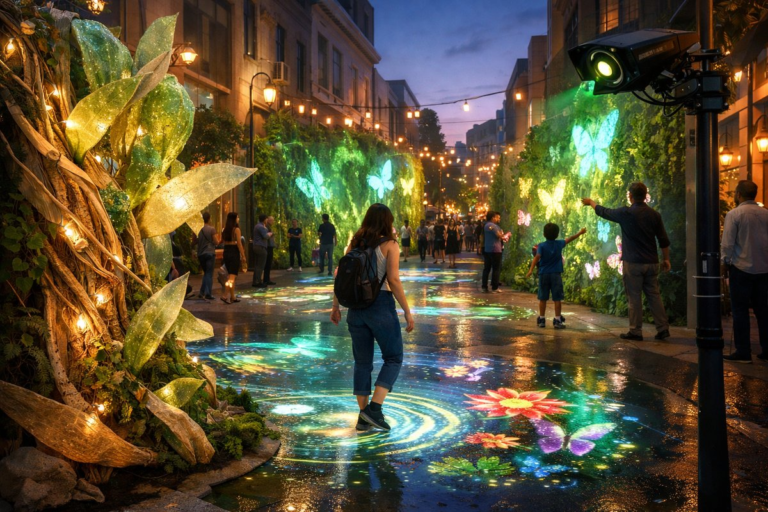
Looking ahead, the integration of artificial intelligence promises even deeper layers of interactivity. Machine learning models could analyze live camera feeds or audio streams, allowing a mural to react to facial expressions or ambient sounds. Imagine a façade that swirls in response to a street musician’s chord progression or transforms in sync with a city marathon’s route. Generative adversarial networks (GANs) might create infinite pattern variations, ensuring that no two viewers ever perceive the same mural.
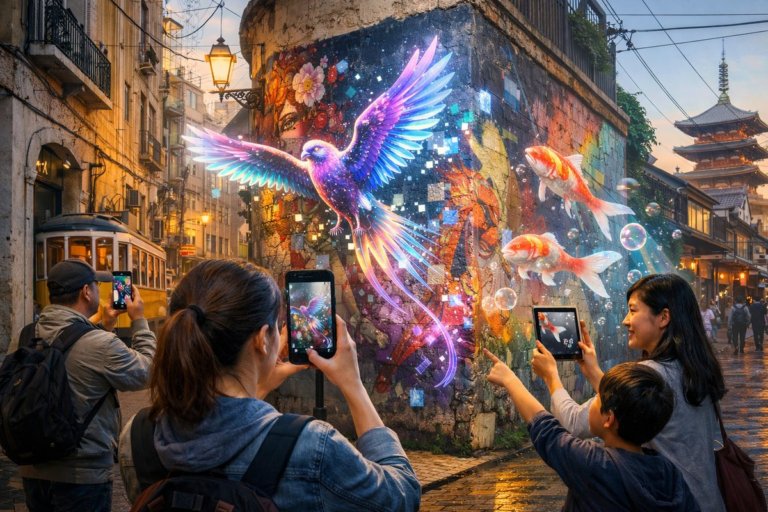
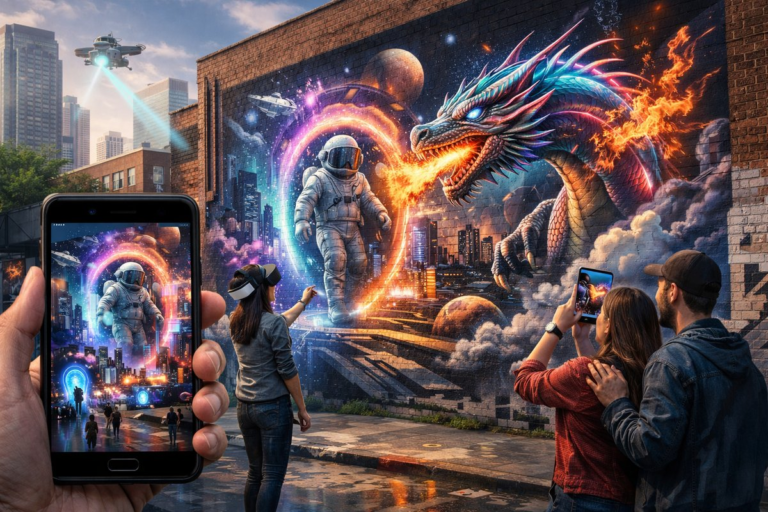
Virtual and augmented reality extensions are already under exploration. Visitors can don AR glasses or use smartphone apps to see hidden data layers-wind vectors, sound waves, or population heat maps-superimposed on static renderings. Galleries are adapting this technology to bridge the gap between ephemeral public works and museum settings, offering interactive archives of past installations.
Amid these advances, the human element remains central. Craft traditions-brush techniques, stencil cutting, hand-colored gradients-imbue the work with warmth and texture. Many artists stress that technology should amplify, not erase, the artisanal touch. As one muralist in Lisbon noted, “Our code generates the structure, but our hands give it soul.”
Whether viewed on bustling boulevards or quiet alleyways, these morphogenic murals are redefining how we perceive and inhabit urban space. They remind us that art is not a static gift from the past but a dynamic conversation unfolding in real time. In an era of rapid technological change, such living canvases offer a hopeful vision of cities as adaptive, responsive, and deeply human ecosystems.
Looking forward, collaborations between city planners, technology labs, and local communities will shape the next generation of morphogenic art. As sensor networks become more wireless and pigment chemistries more sustainable, we can expect to see responsive murals respond to everything from traffic patterns to social media sentiment. One day soon, you might walk down your own street and watch the walls bloom in color according to the mood of the city-a testament to the evolving symbiosis of design, data, and collective imagination.