Location
Mount Vernon, WA 98274

Location
Mount Vernon, WA 98274
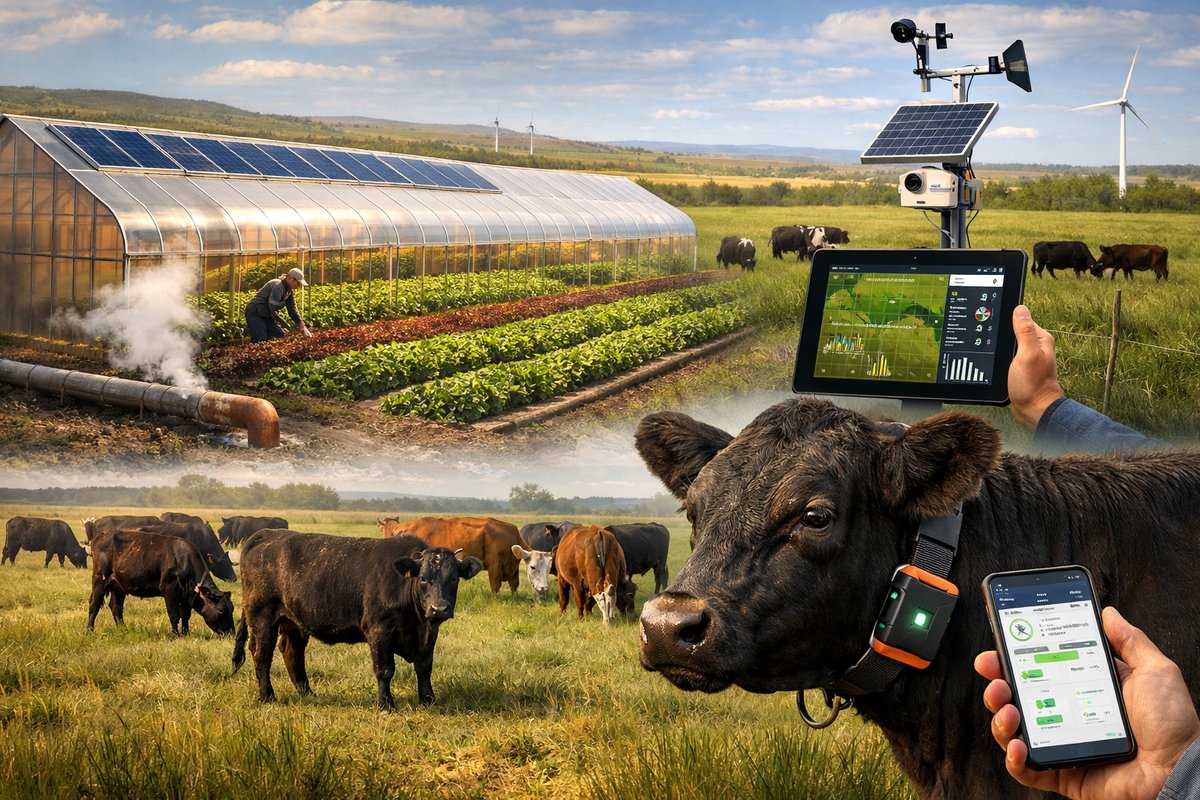
A farmer-owned cooperative in the Great Plains is pioneering an integrated system that combines geothermal greenhouses, IoT-driven pasture monitoring, and wearable livestock trackers. Early results show dramatic cuts in feed costs, improved animal welfare, and a stronger local meat supply chain.
On the windswept prairies where harsh winters and erratic rainfall once dictated livestock performance, a group of Midwestern ranchers has taken an ambitious step toward a more resilient future. The Prairie Co-op, a collective of twenty family farms, has launched a pilot program that marries subsurface geothermal heat, solar-powered pasture sensors, and animal-mounted trackers. The goal: reduce operating costs, enhance herd health, and build a transparent supply chain that meets rising consumer demands for traceability and welfare standards.
At the heart of the operation lies a 5,000-square-foot greenhouse heated by a network of ground-loop heat exchangers. Buried four feet beneath the surface, these pipes circulate a non-toxic glycol solution, capturing stored earth warmth even when winter temperatures plunge below zero. Inside, rows of vertical racks support barley and oat sprout beds, hydroponically grown with reclaimed well water. This steady source of fresh, nutrient-dense fodder ensures that animals receive balanced feed year-round without relying on expensive hay shipments or vulnerable supply chains.
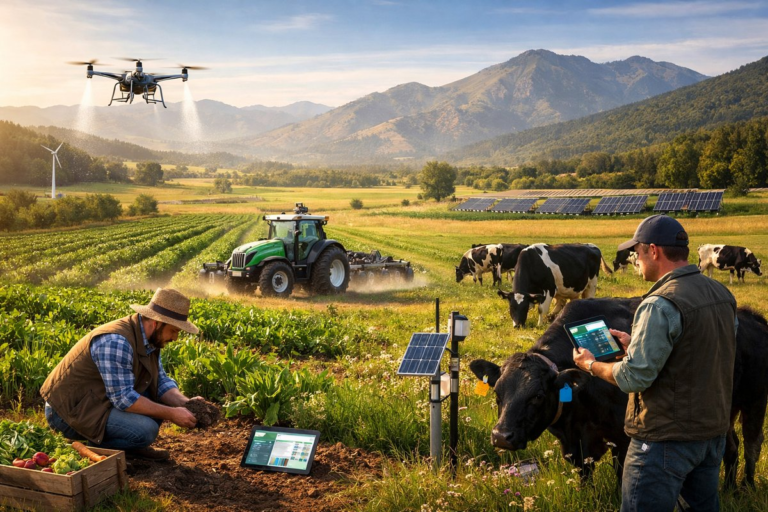
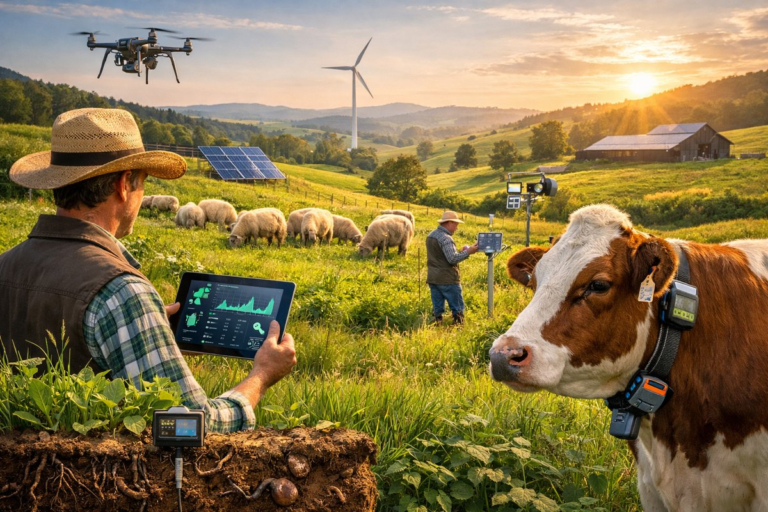
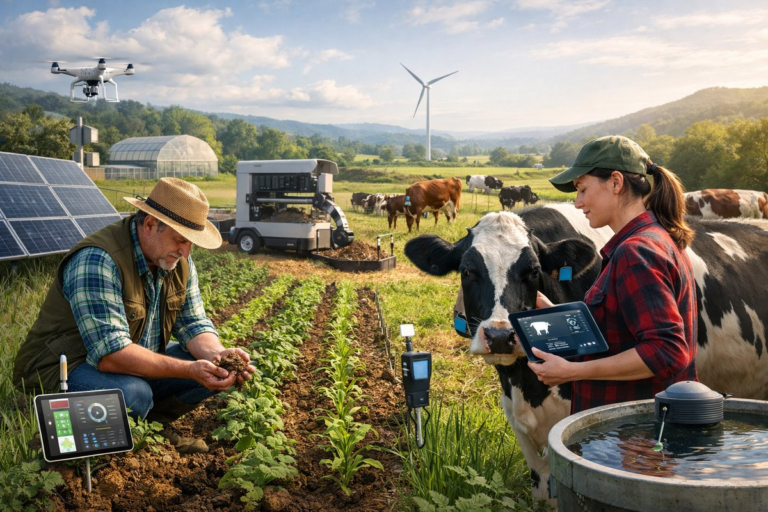
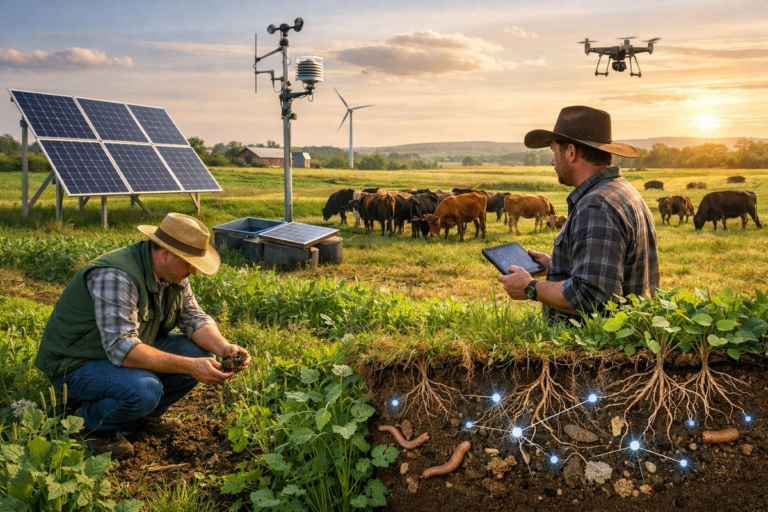
Adjacent to the greenhouse, solar-charged weather stations and wireless soil moisture probes have been installed across rotational grazing paddocks. Real-time data on soil dryness, ambient temperature, and rainfall create a precise moisture profile for each acre. Automated valves on low-pressure drip lines irrigate only the sections running dry, conserving water during drought and helping regreening after rain. Farmers access an intuitive dashboard on tablets or smartphones, choosing when and where to move herds based on grass health and hardiness thresholds.
Inside the main barn, a multiparameter sensor array measures temperature, relative humidity, and ammonia levels. High ammonia concentrations can stress livestock respiratory systems and invite disease. When thresholds are crossed, fans and vents activate automatically, pulling fresh air through filtered intakes. Local alerts notify farm managers of any conditions that need human intervention, while historical logs help veterinarians correlate environmental spikes with animal health events.
Perhaps the most futuristic element of the pilot is the use of GPS-enabled wearable collars on each head of cattle. These collars record movement patterns, grazing time, rumination cycles, and resting periods. Data analytics flag anomalies-such as reduced rumination that might signal digestive upset or extended periods of inactivity that could mean injury. Alerts can be sent directly to farm managers’ phones or to a centralized veterinary teleconsulting service for early treatment.
To close the loop on local processing, the co-op has contracted a USDA-certified mobile livestock processing unit. Towed by a heavy-duty truck, this custom trailer includes a small-scale slaughter floor, chilling room, and cutting station. By bringing processing directly to the farmgate, the system minimizes animal stress caused by long hauls and reduces transport emissions. Finished cuts are vacuum-sealed, labeled with origin and animal history, and distributed to regional retailers or local restaurant partners within hours.
Financing came through a mix of member equity, a state renewable energy grant, and a small-business loan designed for rural development. Each participating farm purchased a share that grants profit-sharing rights and voting privileges on future expansions. Quarterly educational workshops, led by extension agents and agritech specialists, help farmers adapt to the new tools and interpret complex data streams.
In its first nine months, the pilot has yielded striking results. Feed costs per animal dropped by nearly 30 percent thanks to greenhouse-grown sprout rations and precision pasture irrigation. Ammonia events in the barn fell by 40 percent, correlating with a decrease in respiratory issues among young stock. In addition, the mobile processing timeline reduced animal handling stress by an estimated 15 percent, as measured by cortisol markers in cattle blood samples.
The co-op’s environmental metrics also improved. On-farm power usage rose initially due to pumps and heaters, but was offset by a new 50-kilowatt solar array that feeds excess power back into the grid. Water consumption per grazing acre declined by 20 percent due to targeted irrigation. And preliminary carbon footprint calculations suggest up to a 25 percent reduction in greenhouse gas emissions when factoring in shorter transport distances and on-site slaughter.
Nevertheless, the effort has met its share of challenges. Reliable cellular connectivity across sprawling pastures is not guaranteed, forcing co-op members to invest in private LTE hotspots or directional antennas. Startup costs for sensors and geothermal infrastructure remain high, leaving smaller operators to seek low-interest loans or grant subsidies. Data literacy among farm crews varies, prompting the co-op to develop peer-mentoring teams to ensure no one is left behind by the technology.
Looking forward, the Prairie Co-op plans to integrate soil carbon measuring probes into grazing management, aiming to quantify regenerative practices and potentially tap into emerging carbon credit markets. Trials of insect-based protein supplements for seasonal feed gaps are also under consideration, building on research into low-footprint livestock nutrition. Meanwhile, partnerships with local universities and technology startups will fund innovation grants for novel ideas that farm members propose.
Consumer interest has been strong. Local grocery chains place weekly orders for grass-raised cuts, highlighting the farm of origin and the technology that ensures animal comfort and environmental stewardship. A handful of restaurants now advertise menu items that feature produce from the greenhouse alongside co-op beef and pork, branding it as “farm-to-table with real-time traceability.”
This initiative exemplifies a values-driven approach to rural development-one that prioritizes animal welfare, resource conservation, and social cohesion. By pooling risk and sharing expertise, the members of the Prairie Co-op have created a replicable model of how traditional ranching can adapt in the face of climatic uncertainty and evolving consumer expectations. As more farmers express interest, the co-op’s board is drafting a multi-state expansion plan to serve other regions facing similar challenges.
For the ranchers involved, the pilot is more than a cost-cutting measure or a sustainability badge-it’s a lifeline for family farms in an era of volatile markets and extreme weather. The geothermal greenhouse stands as a beacon of winter light, while the smart pastures hum quietly, watching and learning. Together, they form a tapestry of innovation that stitches old-world stewardship to 21st-century technology, ensuring that the next generation of livestock producers can thrive.
As the sun sets over the rolling grasslands, farmers gather by the greenhouse door to compare sensor readouts and plan herd rotations for the coming week. In every flicker of data and every breeze through sensor-controlled vents, there’s a sense that agriculture’s future is not a question of back to basics or high tech-but both working in concert to keep soil, animals, and communities healthy.