Location
Mount Vernon, WA 98274

Location
Mount Vernon, WA 98274
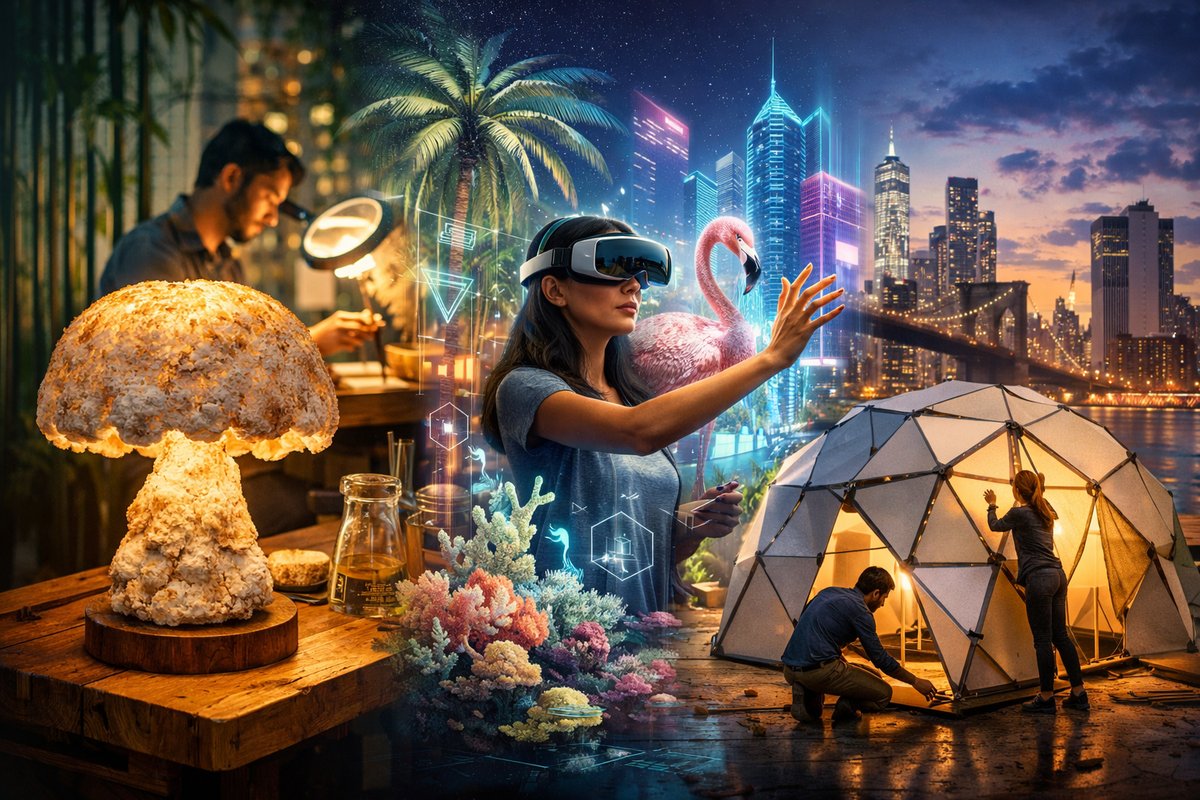
From fungal leather lamps in Milan to AR-enhanced pop-ups in Miami and modular shelter prototypes in Brooklyn, a new wave of designers is blurring the lines between biology, technology, and community. These innovations reveal how sustainability, digital storytelling, and hands-on collaboration are driving the future of visual expression.
In Milan’s historic pavilions during the annual Salone del Mobile event, visitors are accustomed to seeing sleek lines and polished surfaces. This edition, however, felt like stepping into a greenhouseglow-biolamps woven from mycelium leather, coffee-waste seating that still smells faintly of espresso, and sculptural volumes cast in algae-reinforced resin. While the show remains the world’s marquee stage for furniture and lighting, the message was clear: material innovation has become the headline act.
At the heart of the Milan showcase, a collaboration between MycoWorks and a leading Italian workshop unveiled a series of pendant lights spun from pure mycelium. Far from inert decoration, the organic fibers breathe humidity, smell softly of the forest floor, and promise a cradle-to-cradle lifecycle. Nearby, an installation called “Second Roast” by a Dutch collective repurposed spent coffee grounds into molded bench segments, drawing on research from a Copenhagen lab that has been turning coffee waste into bioplastic since 2019. Passersby were invited to run their hands along the granular surface, feeling the recycled grit give underfoot-and tasting faint notes of roast on a fingertip.
These projects are more than showpieces. They hint at an upstream shift in design research: rather than chasing ever-more complex digital effects, studios are mining everyday discards and living organisms to craft new possibilities. An industry white paper from a European innovation network reported this spring that over 30 percent of participants in material-focused symposia listed mycelium, algae, or recycled composites as their primary research interest-up from just 12 percent five years ago. Investors have taken notice, with green venture funds pouring capital into startups that can turn mushroom roots or pond scum into structural panels or upholstery fabrics.
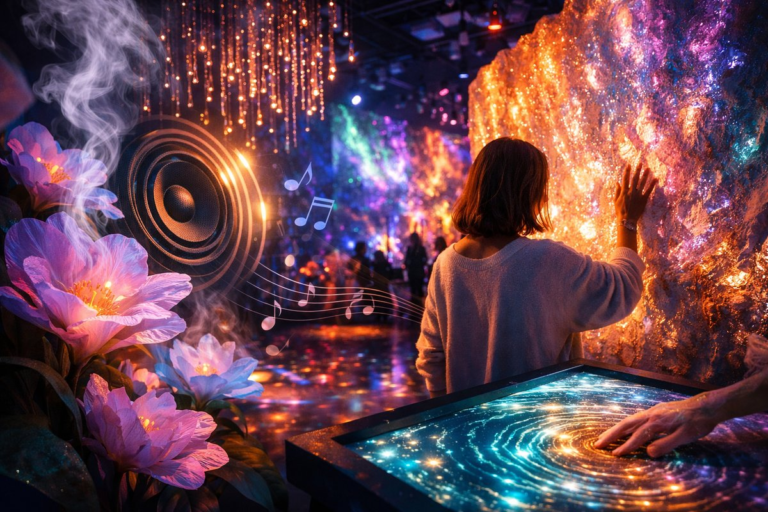
Half a continent away, in Miami’s waterfront galleries during Design Miami, the spotlight belonged to light itself. An artist duo calling themselves Lumina juxtaposed analog projection apparatus with custom-coded software to create a shifting tapestry of color and form on gallery walls. Visitors donned AR headsets and watched virtual tendrils of pigment weave in and out of the physical projections, as if electrons and paint molecules were dancing together in real time. The effect was immersive but never disorienting-guided by an interface that emphasized slow scrolls and deliberate zooms, it felt like stepping into a digitally augmented watercolor.
Behind the scenes, Lumina worked with projection hardware borrowed from film-set vendors. High-lumens laser modules produced deep blacks and vivid primaries, while open-source control protocols ensured that even nontechnical curators could tweak timing and density on the fly. The result: a dynamic experience that can be scaled down to a gallery corridor or blown up to cover an entire outdoor facade. As they rotate their setup through pop-up venues in Chicago and Los Angeles, they’re also opening their code repositories for others to adapt. In an era of closed ecosystems, this gesture toward open design has won praise from digital-rights activists concerned about artistic sovereignty.
On the East Coast, Brooklyn’s studio and incubator A/D/O hosted a three-day “Re:Shell” workshop that brought together architects, engineers, and social workers to prototype modular shelters for underserved communities. Teams sketched parametric joints that allowed panels to snap together like building blocks-no power tools needed. They experimented with hemp-cement composites, upcycled plastic boards, and foldable aluminum frames. In one rapid test, a crew erected a prototype in under twenty minutes on a vacant lot in Bushwick, then opened it for neighbors to host an impromptu poetry reading. Organizers noted that the structure’s low-tech connectors cut assembly time in half compared to conventional systems, promising a route to more responsive, community-driven housing solutions.
Together, these developments illustrate a broader shift in how designers are framing their role in society. Sustainability is no longer a buzzword but a design constraint: materials must be sourced responsibly and disposed of without harm. Digital tools are not magic wands but invitations to collaboration, whether that means community stakeholders shaping modular shelters or art patrons remixing projection-mapping sequences. And the boundary between technology and craft is dissolving: we see digital code inspiring organic forms, and biological processes informing machine logic.
Beyond the headlines, this convergence raises philosophical questions: What does it mean for a lamp to be alive? How do we negotiate authorship when open-source licenses invite anyone to adapt a projection-mapping design? And how do we balance the promise of high-tech prototypes with the need for low-barrier entry in community settings? The answers will emerge slowly, as each project leaves its residue-be it fungal spores, AR artifacts, or footprints around a backyard shelter.
For novice designers and curious learners, these trends offer fertile ground. A growing number of workshops now teach mushroom cultivation for material-making. Projection-mapping tutorials populate video platforms, and open-hardware movement sites distribute connector blueprints for modular furniture. The barrier to entry has never been lower-only a willingness to tinker, a commitment to sustainability, and a dash of creative bravery.
As the dust settles on these festivals, one theme stands out: design is no longer just about objects on pedestals. It’s about living systems, shared experiences, and tools that empower everyone from studio directors to neighborhood organizers. In that space between fungus and firmware, between coffee grounds and code, lies an alchemy that’s reshaping our built environment and our understanding of visual expression.