Location
Mount Vernon, WA 98274

Location
Mount Vernon, WA 98274
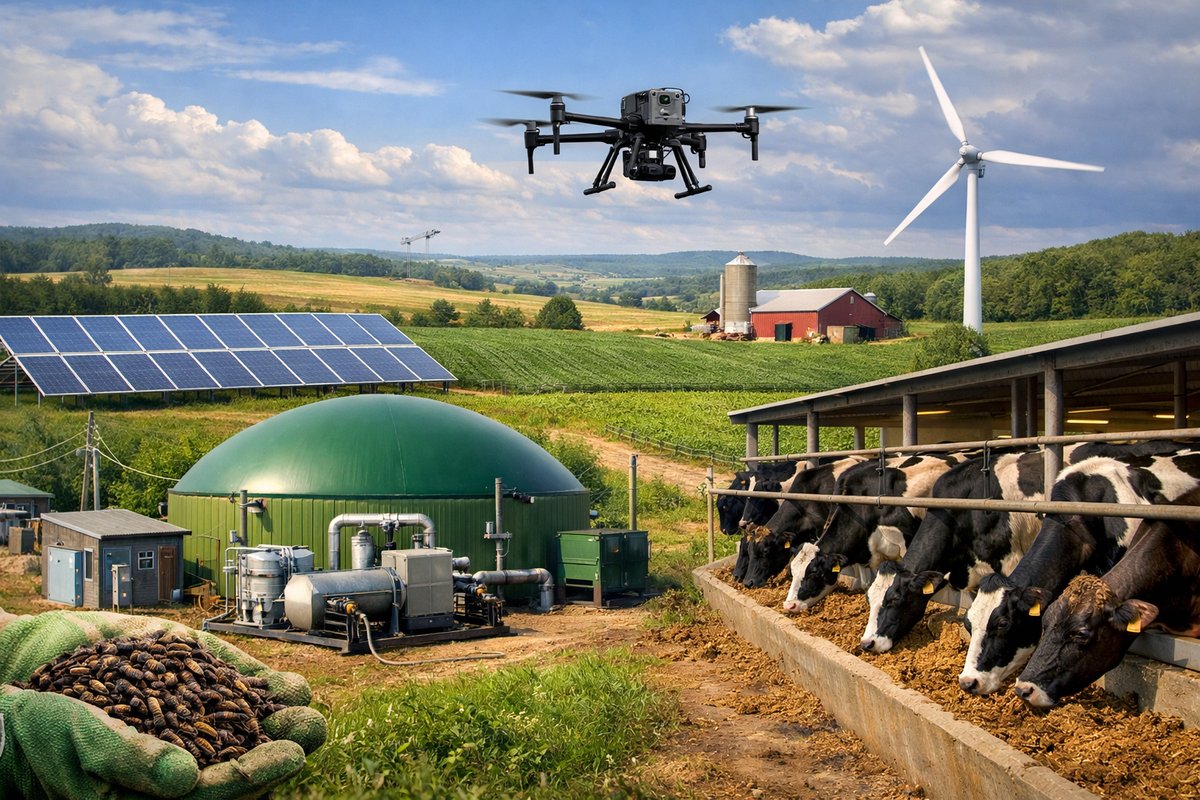
A family-run demonstration farm has launched a groundbreaking pilot that integrates precision monitoring drones, black soldier fly larvae feed, on-farm biogas recovery, and a solar-wind microgrid to cut livestock emissions by over a third. The program aims to prove that regenerative practices and cutting-edge tools can coexist on mid-sized operations without sacrificing profitability or animal welfare.
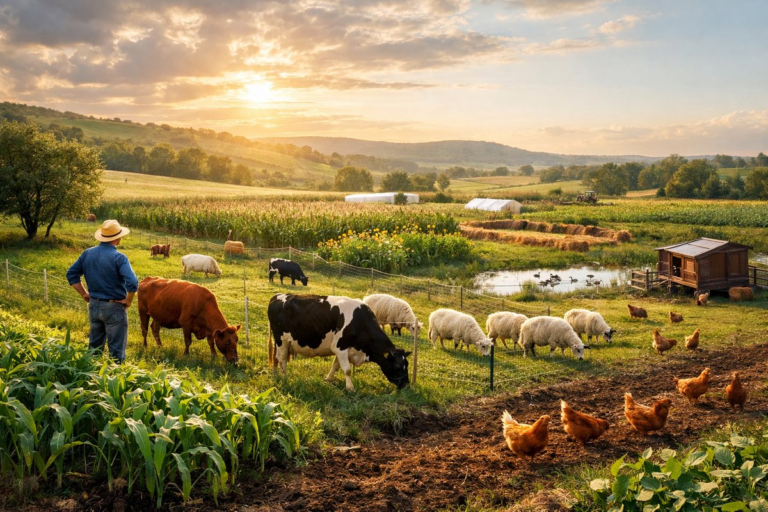
Cloud River Farm, a multi-generation family operation in the heartland, has unveiled Regenerative Ranch 360, a pilot project combining four pillars of sustainable livestock management: precision monitoring drones, insect protein integration, anaerobic biogas recovery, and a hybrid solar-wind microgrid. The goal is to reduce greenhouse gas emissions, improve soil health, and build resilience against drought without compromising herd performance.
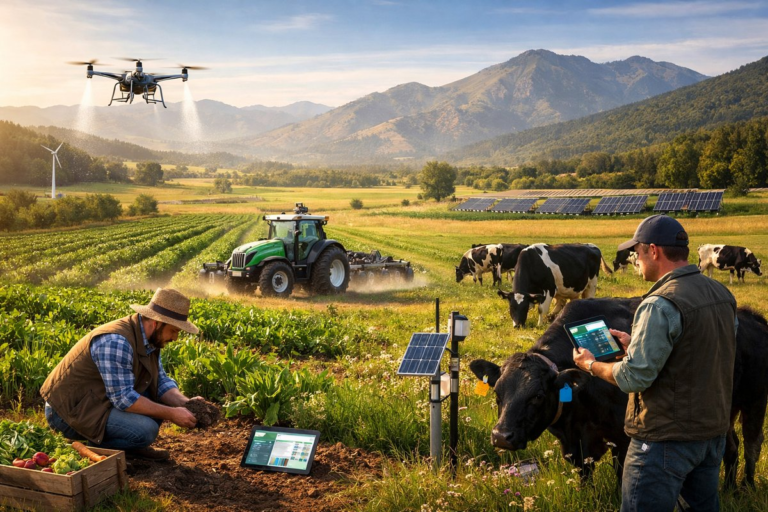
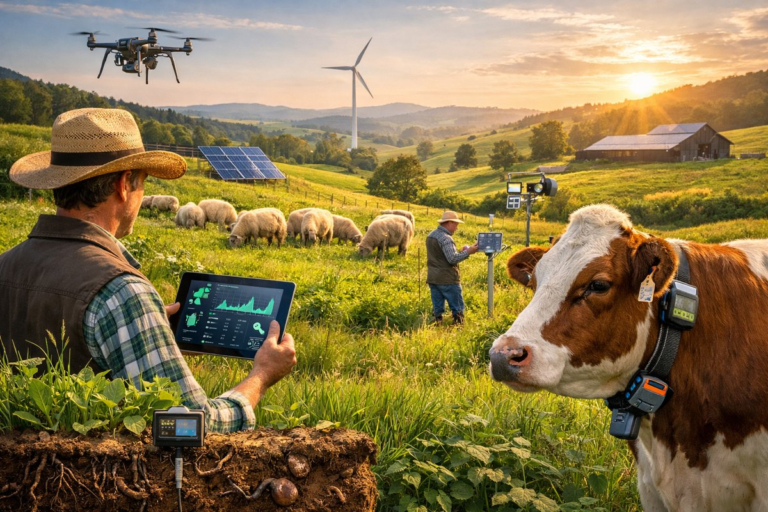
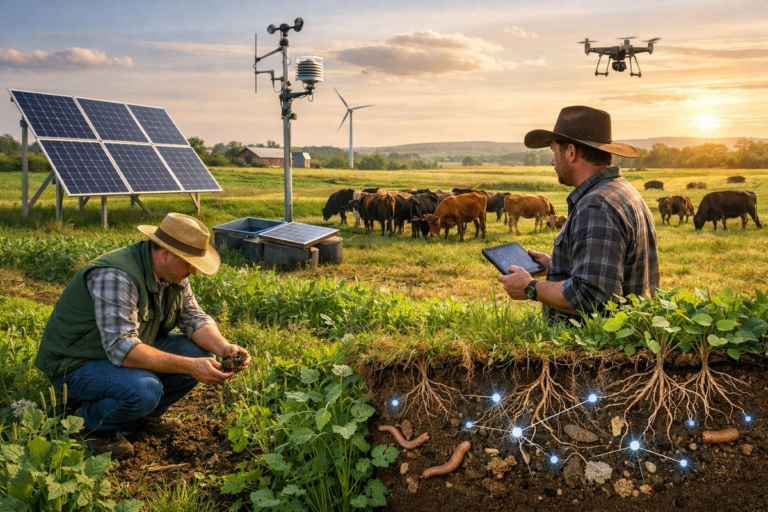
The demonstration covers 500 acres split between rotational paddocks, silvopasture alleys, and native grass corridors. Operators use lightweight fixed-wing drones equipped with multispectral cameras to map forage health, identify parasite hotspots, and track animal movement. Flights are scheduled twice weekly over grazing rotations, feeding data directly into a dashboard curated by the farm’s tech partner.
At the core of Regenerative Ranch 360 is a network of vertical grazing corridors-narrow strips of deep-rooted grasses mixed with nitrogen-fixing legumes. These corridors thread through existing pastures, encouraging cattle to graze more evenly, reducing soil compaction, and extending root depth. The corridors also serve as windbreaks and wildlife habitat, connecting forest edges with riparian buffers.
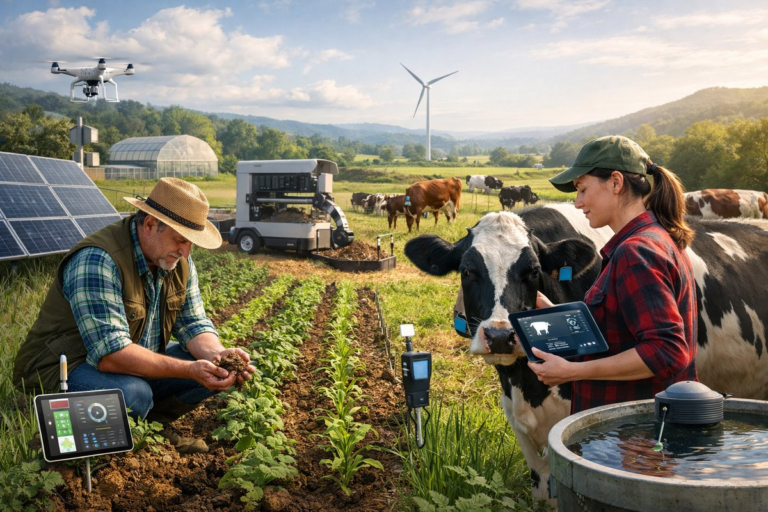
Cloud River Farm has installed dozens of wireless soil moisture and temperature sensors at varying depths in each paddock. These LoRaWAN-enabled nodes send real-time data to a central gateway, allowing ranch managers to optimize forage irrigation and predict drought stress. Automated alerts notify staff when conditions exceed threshold values, triggering temporary fence line adjustments via a solar-powered electric fence energizer.
Feeding has also gone high-tech. Automated dispensers loaded with balanced mineral blocks and precision-mixed supplements release measured doses when cattle step on weight-activated plates. The system logs each animal’s intake, adjusting rations to body condition scores derived from drone imagery. Early results show a 12 percent improvement in feed conversion ratios, reducing overall supplement usage.
Nutrition takes another leap through insect protein. Cloud River Farm partnered with a local startup to raise black soldier fly larvae on food waste from nearby breweries and bakeries. The dried larvae meal is blended into traditional feed at up to 10 percent inclusion, supplying essential amino acids and fatty acids. Trials indicate a 15 percent drop in methane emissions per animal, alongside healthy weight gains.
On-farm energy recovery comes from a modular anaerobic digester installed adjacent to the main barn. Manure and spent insect bedding feed into a heated tank, producing biogas that powers an on-site generator. Excess heat warms calf nurseries and greenhouse-propagated fodder troughs year-round. Digestate returns to the fields as a nutrient-rich biofertilizer, closing the nutrient loop.
Supplementing the digester is a compact solar-wind microgrid. Ground-mounted solar panels feed a battery bank sized to run electric waterers, fencing, and lighting. A single vertical-axis turbine contributes during low-sun winter months. Together, the renewables cover 65 percent of the farm’s electricity demand, reducing reliance on the local utility and lowering operating costs.
All data streams-drone maps, soil sensor logs, feed intake records, energy output metrics, and digester performance-feed into an open-source platform built on farmland data standards. Cloud River Farm invites other producers to access anonymized results and customize the dashboard for their own operations. This transparency supports collective learning and faster innovation adoption across rural communities.
Water stewardship is equally central. Runoff from paddocks is captured in shaded catchment basins lined with native wetland vegetation. The system filters sediment and nutrients before channeling cleaned water into troughs. Automated float switches regulate inflow, ensuring livestock always have fresh water while minimizing waste and potential contamination in nearby streams.
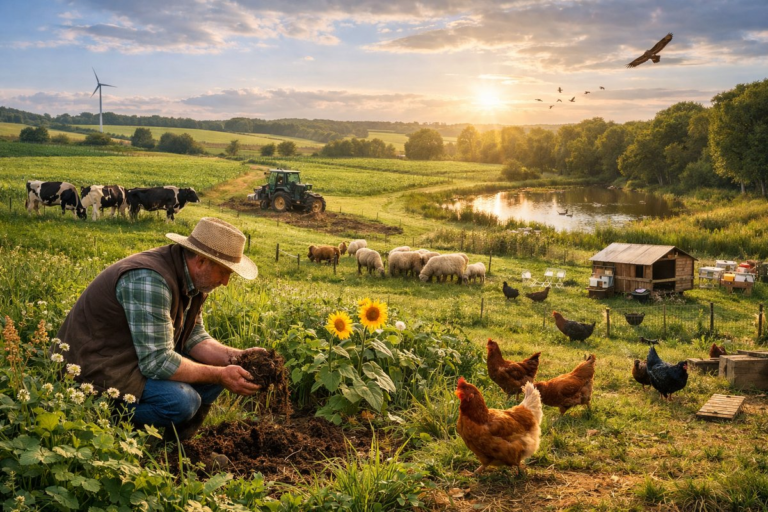
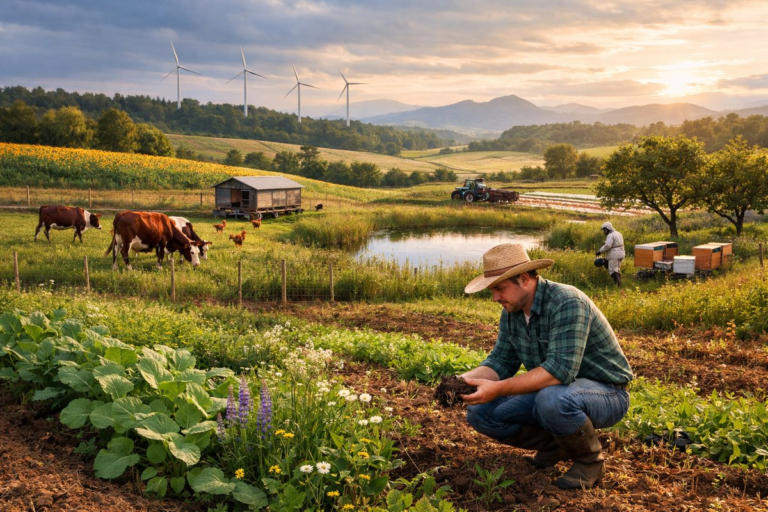
Biodiversity gains have surprised many observers. Bird counts doubled in two seasons, as silvopasture corridors attracted nesting songbirds and raptors. Pollinator surveys registered a 30 percent uptick in bees and butterflies around legume-rich strips. Soil microbial analyses revealed higher carbon sequestration compared with control pastures, validating the regenerative grazing approach.
Lead ranch manager Sara Delgado describes the project as “the most exciting chapter in our family’s history.” Delgado notes that integrating technology didn’t replace hands-on stewardship. “It amplified our ability to read the land. We still walk fences, check cattle, and mend fences ourselves. The tools just help us make better decisions faster.”
The local extension service contributed soil lab support and hosted educational field days. Graduate students from the nearby state university conducted feed trial assessments and livestock welfare audits, adding scientific rigor. Visitors included policymakers, ag lenders, and veteran farmers keen to see if similar setups could work on larger or smaller scales.
After the first year, the project reports a 38 percent reduction in scope-1 emissions, measured via direct methane capture and energy conservation. Feed costs fell by 18 percent due to precise rationing and insect protein replacement. Water usage per head dropped by nearly one-third, thanks to soil monitoring and efficient trough controls. Net operating expenses remained flat despite upfront capital investments.
These results suggest a viable pathway for mid-sized ranches seeking both environmental and economic resilience. Rather than chasing large-scale corporate grants, Cloud River Farm leveraged community partnerships and phased equipment purchases. This incremental rollout smoothed cash flow impacts and allowed staff training alongside new deployments.
Beyond the farm gate, community outreach events have drawn hundreds of attendees. Workshops on small-scale digester maintenance, drone piloting, and insect rearing have empowered neighbors to experiment on their own properties. Coordinated bulk purchasing through a county co-op lowered prices on shared technologies, fostering peer-to-peer learning networks.
Financial analysis shows a three-to-five-year payback on major components for farms within 200 head range. Tax incentives for renewable energy, carbon credits for soil carbon gains, and livestock methane offsets all factor in. While smaller operations may face challenges with digester scale, the insect protein and drone modules can be deployed on herds of any size.
Looking ahead, Cloud River Farm plans to refine its insect feed protocol, potentially moving toward on-site algal photobioreactors for omega-3 enrichment. They also intend to trial centralized solar hydrogen production for fueling slow-moving farm vehicles. Meanwhile, open-access data will continue to drive refinement and spur novel collaborations.
Agricultural analysts point out that combining tech and biology in an integrated fashion sets this pilot apart. Rather than treating emissions reduction, feed optimization, and energy capture as separate silos, the initiative blends them in a coordinated cycle-one that uses waste streams to feed new inputs and uses sensor data to keep the system in balance.
Challenges remain. Equipment maintenance in winter, training farmhands on digital tools, and ensuring insect cultures stay disease-free are ongoing tasks. Biosecurity protocols for larvae rearing and digester operation require careful oversight. Cloud River Farm has dedicated staff for these tasks, a luxury not every operation can afford.
Yet farmers visiting the site note the emotional uplift that comes from seeing cattle thrive in greener pastures, fields buzzing with pollinators, and carbon-rich soils bubbling with life. There’s pride in knowing that traditional ranching values-family legacy, animal care, and land stewardship-can align with next-generation innovation.
Regenerative Ranch 360 stands as a living roadmap. Its success hints at a future where networked sensor platforms, circular feed systems, renewable microgrids, and collaborative data sharing become standard on American farms. For communities wrestling with climate impacts, volatile markets, and resource constraints, this hybrid approach offers hope backed by both science and lived experience.
As the second grazing cycle begins, Cloud River Farm prepares for another year of data-driven grazing, insect-powered nutrition, and renewable energy gains. The family invites peers nationwide to join the open-source network, proving that sustainable livestock production can be both high-tech and high-touch.