Location
Mount Vernon, WA 98274

Location
Mount Vernon, WA 98274
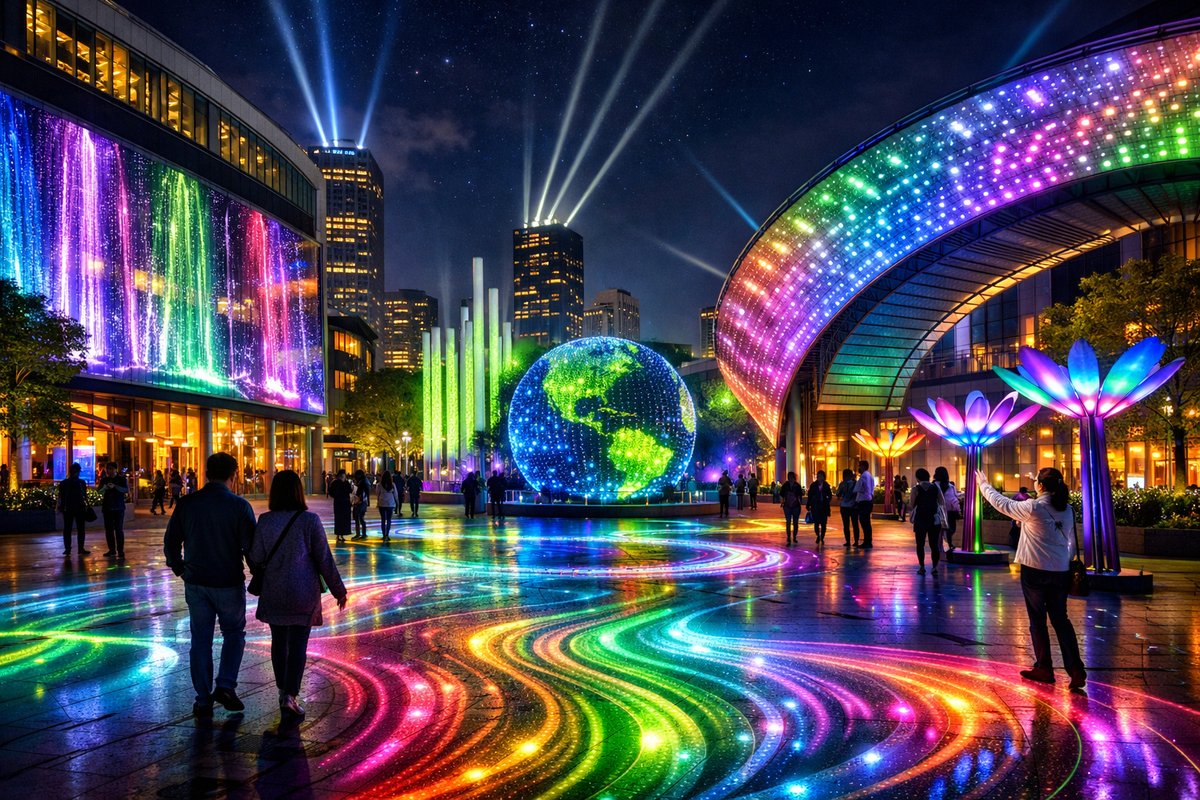
A new wave of sustainable light art is transforming cityscapes around the globe, turning streets and plazas into immersive canvases of color and motion. Eco-conscious LEDs, projection mapping, and interactive sensors are guiding designers toward a future where urban lighting doubles as public art and environmental statement.
As twilight falls in metropolises worldwide, a growing number of art and design practitioners are harnessing the gentle glow of sustainable light technologies to reimagine public spaces. From the winding laneways of Sydney to the grand façades of Berlin, festival organizers and civic planners are commissioning luminous installations that marry ecological responsibility with dazzling visual spectacle. Gone are the days when utility lighting merely chased away darkness-today’s light art movements are forging new alliances between technology, nature, and communal experience.
Last spring’s Vivid Sydney festival exemplified this shift. Amid harbor breezes and historic sandstone walls, designers unveiled works powered entirely by solar-charged batteries and low-energy LEDs. One courtyard installation featured a field of handcrafted lanterns that pulsed in response to foot traffic, each lantern’s microcontroller kit quietly tracking motion patterns and modulating brightness. Spectators paused beneath canopies of shifting color, discovering how real-time data could transform static material into a living tapestry of light.
Over in Europe, the Berlin Festival of Lights projected graceful geometric patterns onto centuries-old cathedrals and modern glass towers alike. Using open-source projection mapping software, a team of interactive media students synchronized multiple projectors to paint colossal narratives across the urban skyline. The result spoke to a deeper philosophy: that technology need not erase history but can instead highlight the architectural texture of a city, breathing new meaning into façades once taken for granted.
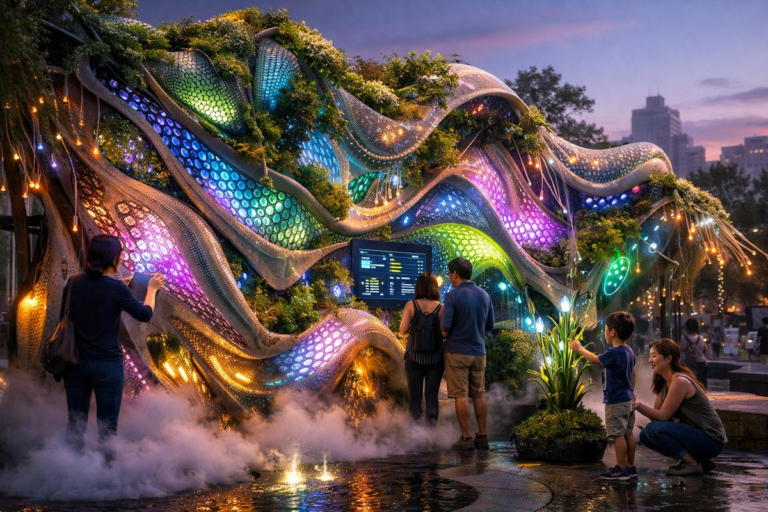
Meanwhile, at the most recent Chicago Architecture Biennial, a collaborative installation titled “Pulse of the Prairie” married analog craftsmanship to generative algorithms. Lightweight frames woven from biodegradable bioplastic supported tubes of diffused LED threads. Hidden motion sensors detected the proximity of passersby, triggering soft ripples of light that traversed the structure like waves. The piece underscored the potential for reclaimed or compostable materials to coexist with digital control systems, offering an antidote to the throwaway mentality that too often accompanies technological progress.
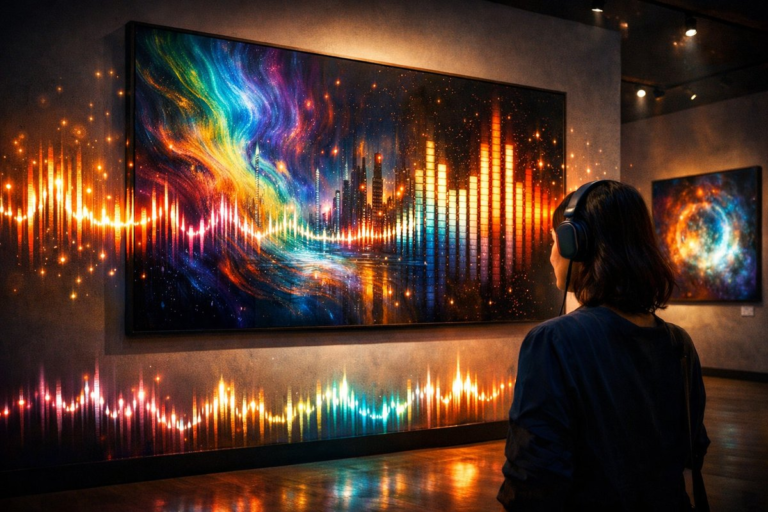
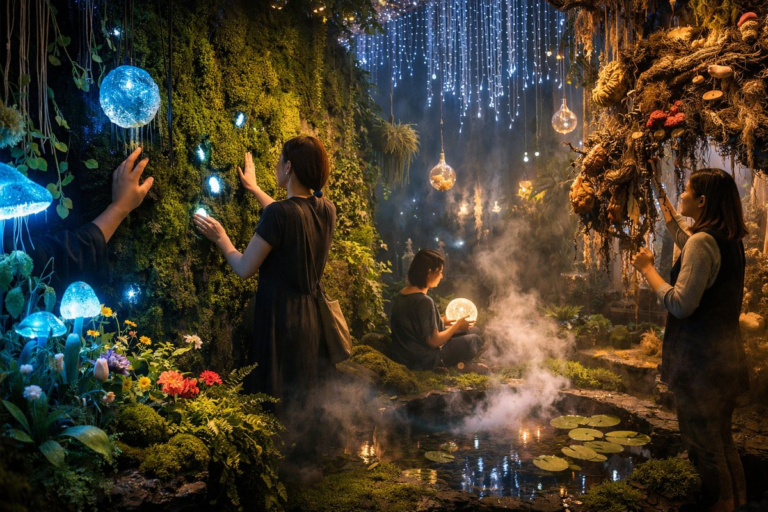
Behind many of these innovations are pioneering collectives such as Marshmallow Laser Feast and United Visual Artists. The British collective known for their multisensory forest installations introduced a canopy of suspended LED orbs that responded to ambient sounds, forging an immersive environment where light and sound danced in tandem. Across the channel, United Visual Artists’ landmark “Momentum” installation transformed an old warehouse into an undulating corridor of light, its sine-wave structures choreographed by custom-built sensor arrays. Both groups emphasize open platforms and modular components, inviting other designers to remix and reinterpret their code.
Sustainability is more than a buzzword in these projects-it is the guiding principle. Artists are experimenting with quantum-dot LEDs that deliver high color purity at a fraction of the energy cost, and testing new phosphorescent coatings that can store daylight and glow long after the sun dips below the horizon. Upcycling has also entered the toolkit: salvaged glass bottles become light diffusers, bicycle dynamos power rotating sculptures, and algae-based bioluminescent gels offer a novel, living light source still in the experimental phase.
Advancements in interactive technology have further expanded the creative vocabulary. Affordable microcontroller boards now allow small-scale teams to prototype responsive lighting systems overnight, integrating ultrasonic sensors, accelerometers, and even simple AI models. At a pop-up plaza event in São Paulo, one installation used facial-recognition routines to tailor color palettes to audience moods-shifting from warm amber when viewers laughed to cooler blues at moments of reflection. Though questions of privacy remain, these experiments reveal the promise and challenges of embedding digital awareness into our physical surroundings.
These developments are not purely ornamental; they intersect with urban planning and community engagement. In neighborhoods seeking renewal, light art has become a catalyst for economic activity, drawing locals and tourists alike to revitalized corridors. City officials in Montreal report that interactive night installations have driven foot traffic to cafés and shops, while in Rotterdam, a temporary light tunnel facilitated safer pedestrian crossings and fostered dialogue between residents and designers about urban safety.
Amid this renaissance, designers grapple with the ethical dimensions of nighttime illumination. Light pollution and its effects on local wildlife remain central concerns, prompting a new design ethos that prioritizes directional fixtures, adaptive dimming schedules, and periods of intentional darkness. Collaborative research projects with ecologists are underway in several cities, charting migratory bird patterns and testing how specific wavelengths influence insect behavior. In doing so, the light art community is forging vital partnerships that could reshape both environmental stewardship and aesthetic innovation.
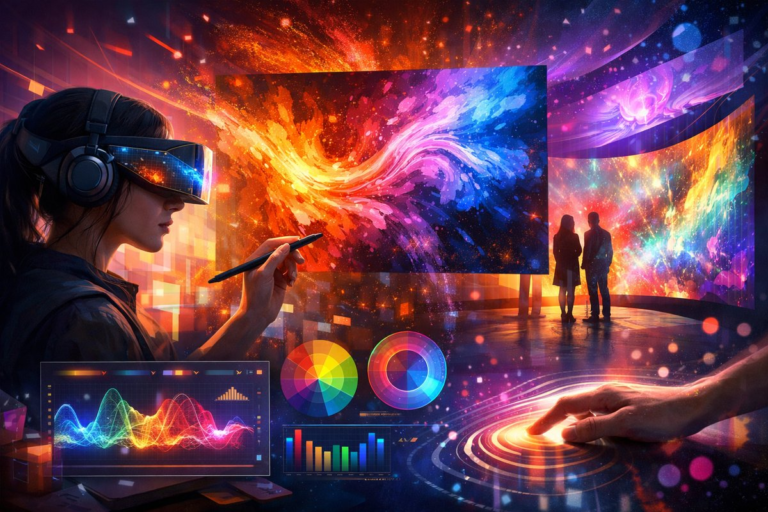
Looking ahead, the fusion of light art with augmented reality and mixed-reality headsets promises yet another frontier. Imagine wandering through an empty square that springs to luminous life only when viewed through a digital overlay-an ephemeral art gallery co-curated by the city’s inhabitants. As open-source toolkits become more robust and hardware costs continue to fall, these hybrid installations may soon move from festival circuits into everyday urban infrastructure.
In the end, sustainable light art offers more than fleeting wonder; it provides a blueprint for how cities can evolve through design that honors both people and the planet. By embracing low-impact materials, interactive technologies, and ecological research, artists and planners are crafting luminous expressions that resonate with our collective aspirations. The urban nightscape, once defined by utilitarian glare, is poised to become a shared canvas-one where curiosity, creativity, and environmental respect shine brightest together.