Location
Mount Vernon, WA 98274

Location
Mount Vernon, WA 98274
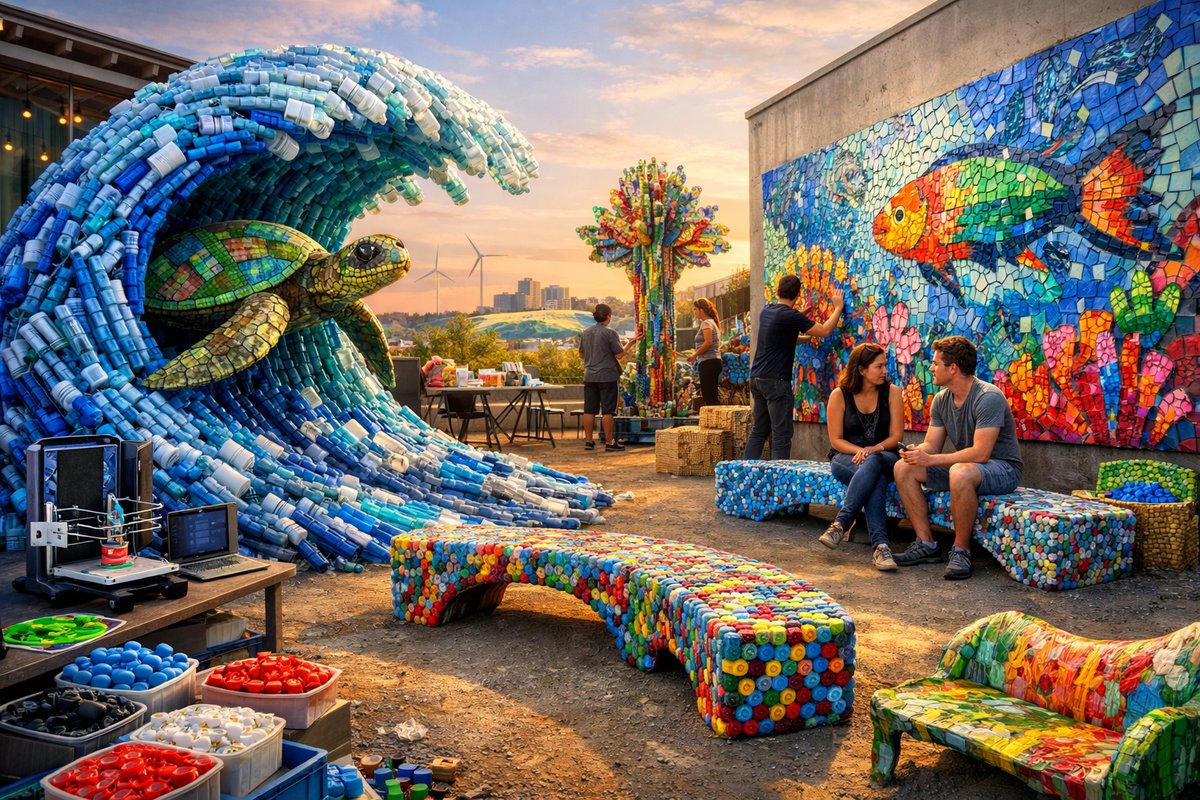
Design studios and public art collectives are transforming discarded plastic into immersive sculptures, benches and murals that merge activism with aesthetics. Through cutting-edge recycling techniques, community workshops and digital workflows, this movement is redefining how we repurpose waste streams into lasting works of art.
In a sunlit warehouse on the outskirts of a coastal city, piles of ocean-bound plastic await a second life. What was once a symbol of environmental crisis now feeds the ambitions of designers and artists who view waste as their raw material. Over the past year, a wave of installations and urban interventions has demonstrated that upcycled polymers can become powerful canvases for public engagement, blending sustainable technology with sculptural finesse.
The driving force behind this renaissance is a network of design studios, makerspaces and grassroots collectives that have perfected processes to sort, clean and reprocess plastics into new components. In one project, thousands of PET bottles recovered from local beaches were shredded into flakes, melted down and extruded into colorful filaments. These strands were then woven into arching canopies that hover above pedestrian walkways, filtering sunlight while drawing attention to the origin of each material.
What sets these installations apart is their emphasis on transparency. Visitors scan QR codes embedded in the edges of benches or the supports of pavilions to see the journey of each bottle, from collection to final form. Interactive kiosks allow onlookers to experiment with virtual color-matching tools before selecting a shade for digital prototypes. By collapsing the gap between material sourcing and finished artwork, designers are fostering a deeper understanding of consumption patterns and waste reduction strategies.
At the heart of this movement lies a collaboration between material scientists and creative practitioners. Researchers at a regional institute recently unveiled a recycled polymer composite fortified with natural fibers-coconut husk and hemp-that adds structural strength without sacrificing recyclability. Early tests show that panels made from this composite can withstand outdoor conditions for years, offering a viable alternative to virgin plastics in public furniture, wayfinding signage and sculptural frameworks.
In another example of cross-pollination, a design collective partnered with a local recycling center to pilot an on-site extrusion unit. Instead of shipping sorted plastics to a distant factory, the setup transforms waste directly into filament spools for desktop 3D printers. Artists and students then use these bespoke spools to prototype small-scale models of larger installations. The immediate feedback loop cuts down on shipping costs and carbon emissions, while nurturing a culture of experimentation in underutilized industrial spaces.
Community involvement has proven to be a critical component. Weekend workshops invite volunteers to break down plastic fragments by hand, learning about polymer families and contamination issues as they work. Once the material is prepped, attendees participate in collaborative weaving sessions, crafting tessellated panels for upcoming exhibitions. These hands-on events not only supply working material but also strengthen local stewardship, turning consumers into co-creators.
One of the most talked-about projects this season is a sprawling mural made of translucent plastic tiles that shift hues with changing daylight. Installed on the façade of a former factory, the artwork was assembled piece by piece during live-streamed sessions. Remote participants manipulated a digital design board, selecting tile colors that were then 3D-printed on site. The result is a kaleidoscopic façade that both conceals and reveals the building’s industrial past.
Behind the scenes, designers are tackling technical hurdles. Color consistency across batches remains a challenge when recycled feedstock contains varying levels of pigment. To address this, some studios are employing AI-powered spectrometers that calibrate extruders in real time, adjusting temperature and flow rates to achieve uniform tones. Others rely on manual pigment blending guided by digital color-matching apps, which archive each formula for future runs.
Durability is another concern. Recycled polymers can degrade faster under UV exposure or mechanical stress. The introduction of natural-fiber reinforcements has alleviated this issue, but designers also apply protective coatings derived from bio-based resins. These clear topcoats enhance scratch resistance and slow down photodegradation, extending the lifespan of outdoor installations without compromising recyclability when the piece reaches end of life.
Funding for these initiatives often comes from a mix of public grants, community crowdfunding and partnerships with environmental nonprofits. In many cities, local governments have begun earmarking urban beautification budgets specifically for projects that reuse waste material. This policy shift not only reduces landfill impact but also sparks innovative design proposals from students and emerging practitioners.
Upcoming exhibitions will put these methods on full display. A major design biennial is dedicating an entire pavilion to works made solely from upcycled polymers, complete with educational panels on material science breakthroughs. Another gallery is curating a series of small-scale prototypes built by recent graduates using mobile recycling labs. These showcases are expected to attract not only art enthusiasts but also municipal planners and sustainability officers eager to replicate the concepts in civic infrastructure.
The ripple effects of this trend extend beyond the art world. Architects experimenting with recycled polymer cladding, furniture makers producing low-cost chairs, even toy designers are taking cues from the open-source toolkits developed by these collectives. Online repositories now host dozens of free files for extrusion profiles, filament recipes and assembly guides, encouraging reproduction and remixing across disciplines.
As the movement gains momentum, its leaders emphasize that material innovation is only part of the story. Equally important is the narrative around consumption and community empowerment. By transforming discarded plastic into objects of beauty and utility, these designers are reframing waste as a resource and engaging audiences in a dialogue about responsible living.
In the coming months, as more communities embrace localized recycling-to-design pathways, we can expect to see streetscapes and public spaces animated by shimmering benches, luminous pavilions and mural-scale tapestries that celebrate circular creativity. Material alchemy, once a niche pursuit, is now forging a new chapter in sustainable design-one where discarded polymers become the building blocks of shared experiences and collective activism.
With each extrusion, weave and weld, upcycled art and design practices are charting an alternative vision: a world in which the byproducts of our consumption are not buried or burned, but reborn as signals of hope and ingenuity. This is the latest chapter in a story where creativity and curiosity converge to redefine the very notion of waste.