Location
Mount Vernon, WA 98274

Location
Mount Vernon, WA 98274
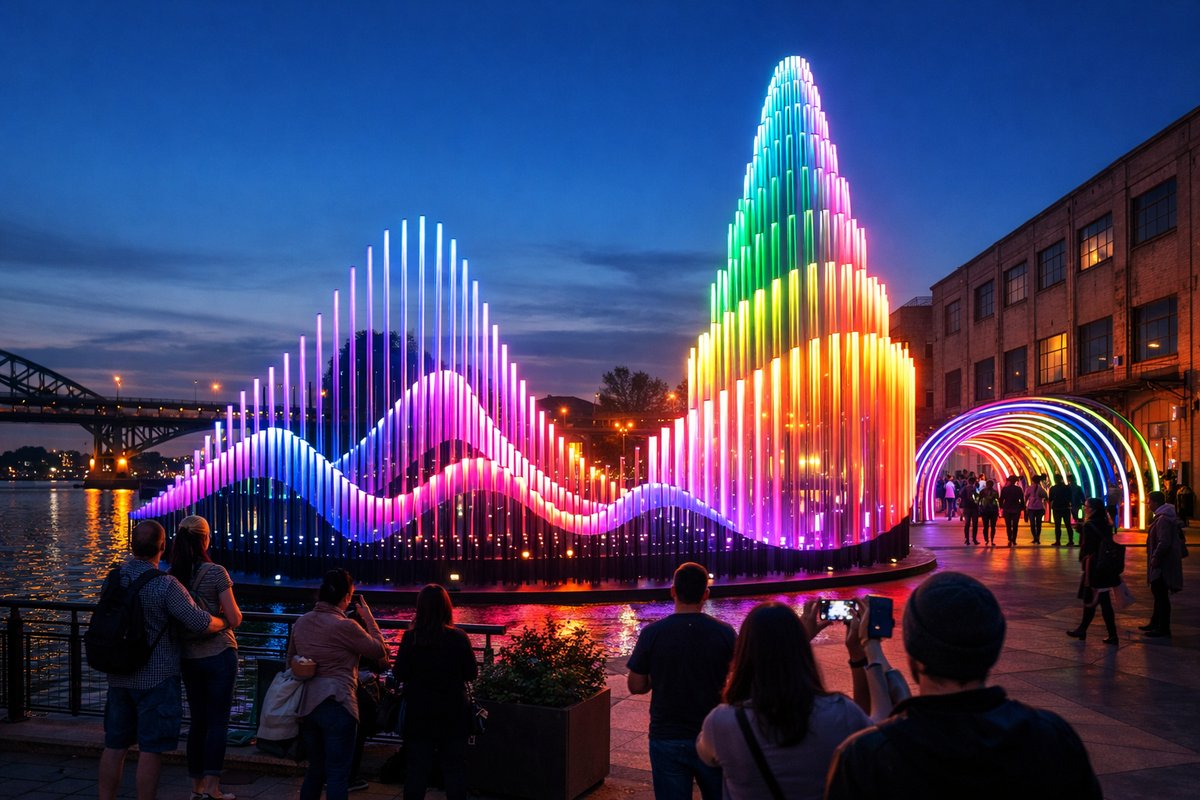
A surge of sound-responsive light sculptures is bringing a new dimension to public spaces, turning ambient noise into vibrant displays of color and form. From riverside promenades to repurposed warehouses, these installations invite passersby to become co-creators in an evolving dialogue between art, technology, and community.
At dusk, the once-grey expanse of an urban plaza begins to vibrate with color. Passersby pause as soft chimes, conversational hums and distant footfalls trigger waves of glowing columns that pulse, flicker and bloom across the pavement. Welcome to the era of sound-activated light sculpture, where ambient noise becomes both brush and canvas, and the audience holds the palette.
Across major cities from Chicago’s lakefront promenades to Berlin’s repurposed warehouse districts, artists and designers are debuting interactive installations that translate sound into radiant visual forms. In the heart of the city, “EchoPulse”-a sprawling display of 200 sensor-laden pillars-stands as a landmark example. Conceived by a cross-disciplinary collective, this kinetic artwork uses an array of hidden microphones and infrared sensors to measure decibels and frequencies in real time. Low background chatter yields gentle ripples of cerulean, while a sudden outburst of applause spawns a burst of magenta and gold.
Early pioneers of interactive light art date back to experiments in the mid-20th century, when avant-garde artists first harnessed photoelectric cells to modulate lights in sync with music. But advancements in microcontrollers, wireless sensors and energy-efficient LEDs have sparked a renaissance. A recent survey by the International Light Art Association found interactive installations have grown by 45 percent over the last five years, driven by falling hardware costs and rising public interest in participatory experiences.
“People aren’t just spectators anymore,” says a curator at a prominent design museum. “They become co-authors of the artwork. Each footstep, whisper or shout shapes the atmosphere in ways we never predicted.” In EchoPulse’s debut run, engineers analyzed usage data showing that passersby tended to break the ice by gently tapping on nearby railings, reserving their loudest expressions for group celebrations or impromptu street performances.
Behind the scenes, a blend of artistry and engineering powers these luminous marvels. Open-source code running on microcontroller boards translates raw audio data into color values, mapping low frequencies to cool blues and high pitches to warmer tones. The light elements themselves are addressable LED strips housed in weatherproof acrylic columns, each column topped with diffusers to soften the glow and invite lingering interaction.
Sustainability has become central to these projects. Many installations incorporate solar panels to recharge battery banks by day, eliminating reliance on grid power. Low-energy LED technology draws less than five watts per meter of light strip, and intelligent power management routines dim the display during low-activity hours. Such measures align with guidelines from UNESCO’s public art program, which emphasizes environmental responsibility alongside community engagement.
Beyond the spectacle, equitable access and educational outreach are core priorities. In partnership with community centers, collectives behind these exhibits often host hands-on workshops where attendees learn to code simple visual effects or build compact sensor arrays. One popular session guided participants through assembling their own miniature sound-responsive lamp, using basic soldering tools and a starter kit of components. This grassroots approach fosters technical literacy and demystifies the machinery behind the magic.
Local councils, too, are recognizing the value of these installations for placemaking and tourism. A recent pilot in a mid-size European city turned an underused canal towpath into a nightly destination. Pedestrian traffic increased by 60 percent on installation evenings, and nearby businesses reported a surge in footfall and social media buzz. The project’s success has spurred plans for a permanent network of sound-infused art along walkways, bridges and waterfront promenades.
Critics note that abundant interactivity can sometimes dilute artistic intention, but many creators see this as part of the appeal. “Art was always meant to stir emotion,” explains a designer involved in a large-scale festival installation. “Now we’re giving people a direct line to express themselves, to highlight how our cities are alive with noise-be it lullabies of conversation or the clatter of daily routines.”
Technologists are already imagining the next frontier: integrating spatial audio analysis to differentiate between laughter, music and mechanical sounds, allowing sculptures to respond with tailored visual narratives. Machine-learning algorithms could enable installations to recognize patterns-transforming the collective audio signature of a crowd into evolving stories of light.
Even with such sophistication, the heart of these pieces remains joy and curiosity. Visitors often discover playful rituals-clapping in unison to summon waves of neon green or whispering secrets to coax faint pinpricks of violet. Children drag siblings into the columns, while elderly couples rest on nearby benches, smiling as the lights mimic the rhythm of their conversation.
As urban living grows more fast-paced and digitally mediated, sound-activated light sculptures offer a moment to pause and reflect on our shared presence. They remind us that art need not be distant or untouchable; it can thrive in the hum of a crowd, in the echo of our voices. In these glowing dialogues, creativity meets community, forging new pathways for expression in the public sphere.
For city planners, designers and everyday explorers, the lesson is clear: when art listens as closely as it shines, the possibilities are endless.