Location
Mount Vernon, WA 98274

Location
Mount Vernon, WA 98274
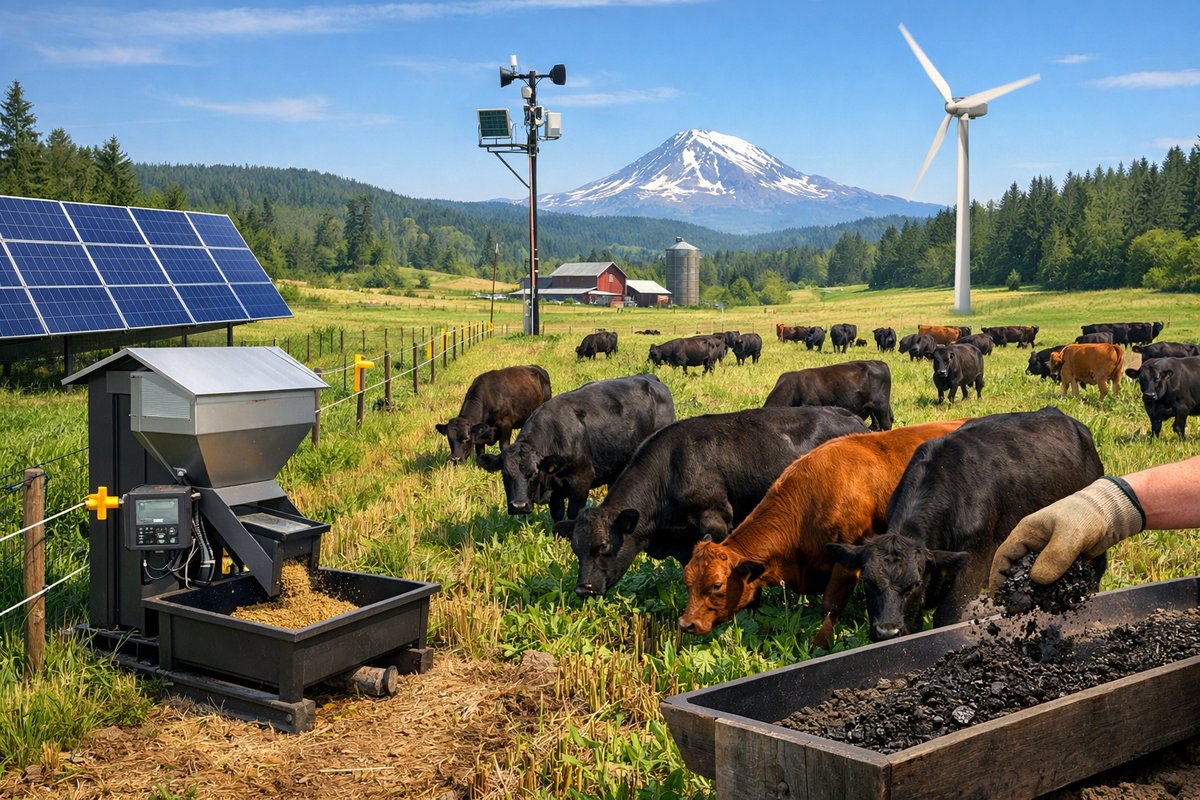
A new pilot project in the Pacific Northwest is combining pasture cropping, automated feeding, and renewable energy to slash greenhouse gases and improve animal welfare on a working cattle ranch. The initiative integrates solar fencing, biochar supplements, and precision sensors to create a blueprint for low-carbon livestock management.
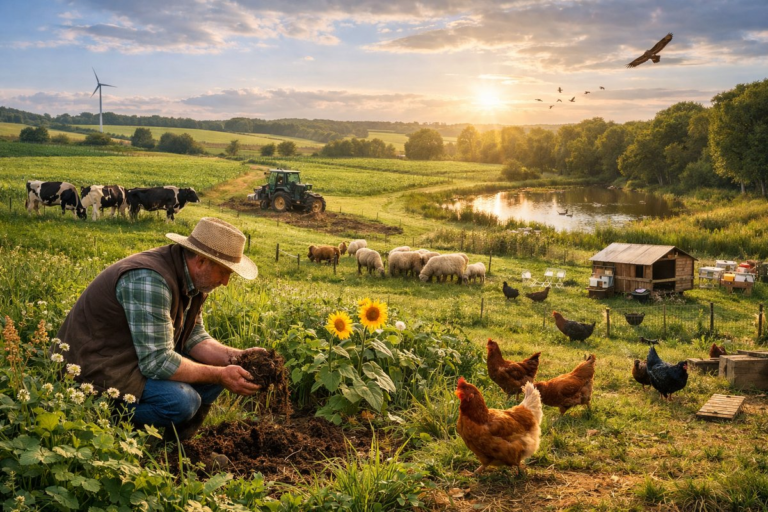
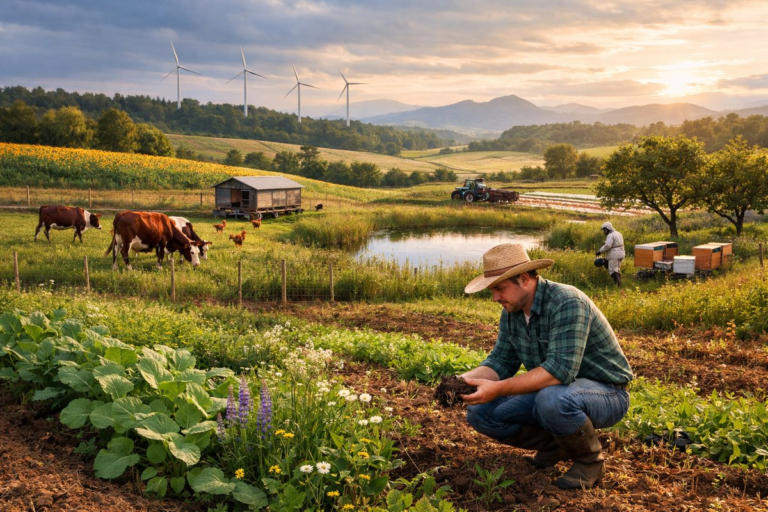
A cattle ranch nestled among forested hills of the Pacific Northwest has launched an ambitious pilot program that marries regenerative grazing with smart-farm technologies. The goal: demonstrate how a mid-sized livestock operation can cut greenhouse gas emissions by nearly half while boosting herd health and resilience.
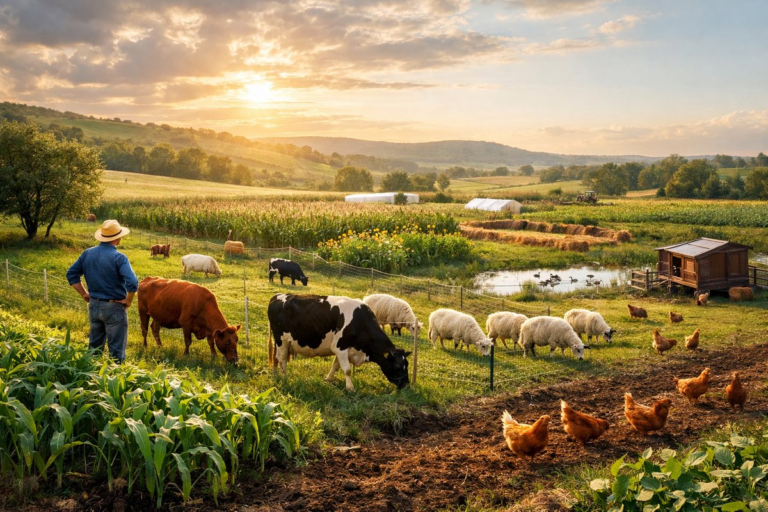
Stretching across 800 acres of rolling pastures and alder stands, the ranch faces the same pressures that challenge many family operations: fluctuating feed costs, rising fuel bills for irrigation and fencing, and the need to meet consumer demand for eco-friendly meat without compromising animal welfare. The new pilot leans on three main pillars-pasture cropping, renewable power, and precision livestock monitoring-to meet those demands.
At the heart of the project is pasture cropping, an approach that involves sowing cover grains or legumes into existing grass stands. Rather than disrupting root systems with tillage, specialized seeders drill small slots in the sod. In early spring, peas and oats emerge alongside native perennials, providing an extra layer of forage when grass growth is slow. By autumn, the cover crops are grazed or baled, and the deep roots boost soil organic matter over time.
“We saw pasture cropping increase available feed by 20 percent without additional water inputs,” says the farm manager, who collaborated with a university extension service to design the seeder attachment. In practice, this means the herd can stay on pasture longer, reducing reliance on trucked-in hay.
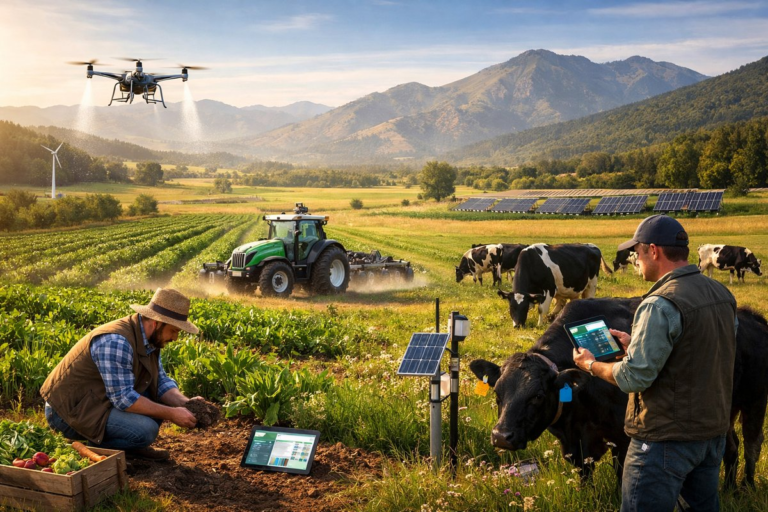
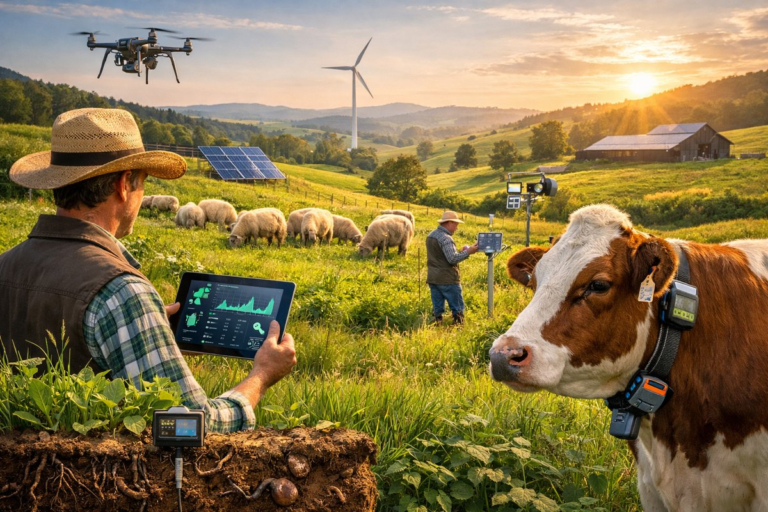
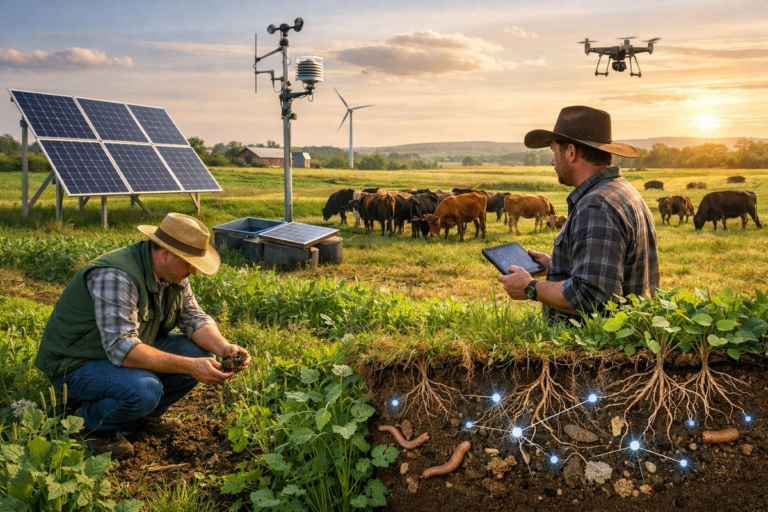
To power water pumps, electric fencing, and automated feeders without burning fossil fuels, the ranch installed a 50-kilowatt solar array on a former hay barn roof. Excess energy is stored in batteries and fed into a microgrid that also keeps remote weather stations, electric pasture gates, and livestock-welfare sensors running through drizzly winter months. A diesel backup generator only kicks in if batteries fall below a critical threshold, a rare occurrence according to early logs.
Adding further soil benefits, the team has begun applying biochar-charcoal produced from wood waste-to high-traffic grazing lanes and laneways. Studies show that mixing biochar into heavy-use areas can reduce soil compaction, improve drainage, and lock carbon underground for decades. The ranch sources its biochar from a nearby sawmill that captures tree residues, creating a closed-loop wood-to-soil carbon cycle.
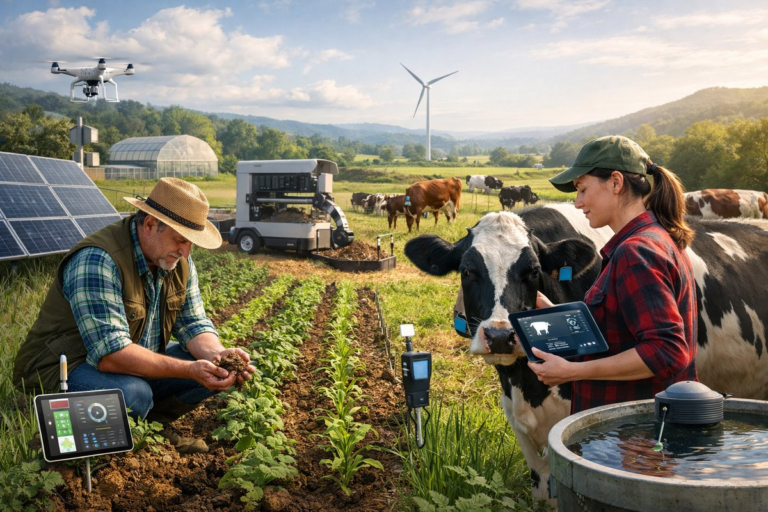
Perhaps the most visible piece of technology is an automated gravity-fed feeder mounted on a movable trailer. This feeder holds a mix of locally grown barley, peas, and a small fraction of insect-derivative protein pellets, which supply amino acids normally scarce in pasture. Farmers manually refill the hopper twice a week, but the feed is dispensed on a timed sequence as the trailer is pulled through the grazing paddocks by the herd itself.
Embedded scales under the feed tray record each cow’s weight when it steps up for a snack. Those weight data, along with gait-analysis cameras and even small RFID-linked temperature sensors clipped to ear tags, feed live metrics to a cloud dashboard. Within hours of detecting subtle shifts-say, a 0.5 percent weight loss or a slight limp-the system flags an alert on the farm manager’s tablet. Early intervention can prevent minor issues from escalating into veterinary emergencies.
In the first three months of the pilot, the herd’s average daily gain improved by 10 percent, and lameness cases dropped by nearly one-third. Veterinarians attributed this to more consistent nutrition, less stress from overcrowded feed bunks, and proactive health alerts.
Meanwhile, methane capture plays a role in heating a solar greenhouse where the ranch produces winter fodder like kale and brassicas. Manure from the cattle is collected daily in shallow pits and fed into a small-scale biogas digester. The biogas powers a heater in the greenhouse and drives a generator that offsets 10 percent of the ranch’s grid electricity use. The nutrient-rich digestate is then diluted and sprayed on the greenhouse soil as a liquid fertilizer.
Local commodity markets are already expressing interest in purchasing carbon-neutral beef from this pilot. The ranch has economic agreements in place to sell regenerative credits on voluntary carbon markets, backed by independent auditors who verify soil organic matter gains and methane reductions through satellite imagery and on-site probes.
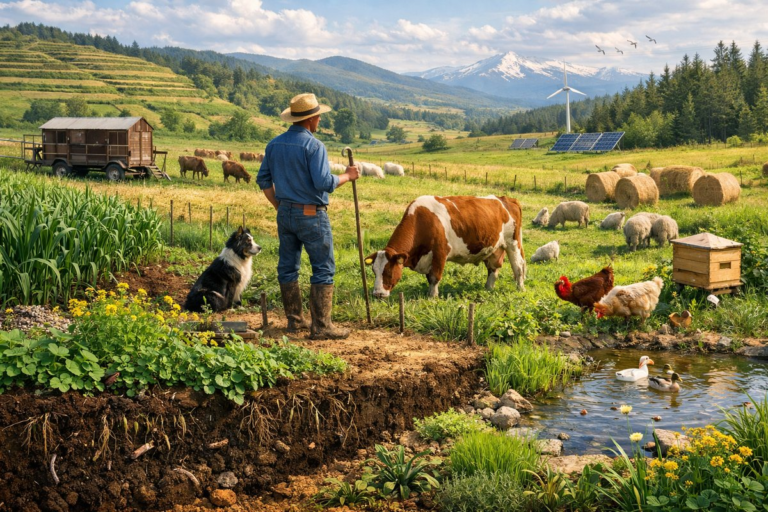
Any successful innovation needs buy-in from the animals themselves. The grazing plan staggers paddock rotations every five days, allowing forage to recover and promoting deeper root growth. Portable solar fencing keeps boundary lines flexible and eliminates costly post-pulling. When combined with strategic water placement, the herd’s natural movements help seed new grasses and trampling distributes manure where it’s needed most.
Community outreach is another cornerstone of the pilot. Once a month, the ranch hosts open days for area farmers, conservation groups, and local schools. Visitors walk the pastures with QR-coded signage explaining each technology, from the principles of agroforestry to the chemistry behind biochar. Live dashboards project real-time data on soil moisture, animal weight, and carbon flux.
“There’s still a long road from pilot to widespread adoption,” acknowledges the project coordinator. Upfront costs for sensors, solar equipment, and specialized machinery can be daunting for smaller operators. But the team has launched a cost-share program funded by regional conservation grants and private donors to demonstrate the economic viability over a five- to seven-year payback period.
Financial modeling suggests that by the sixth year, participating ranches could see net savings of up to 15 percent compared to conventional grazing systems-driven by reduced feed purchases, lower vet bills, and income from carbon credits. Beyond pure economics, the intangible benefits include improved soil health, stronger community ties, and a demonstrable commitment to environmental stewardship.
While the Pacific Northwest ranch is just one of several pilots nationwide exploring climate-smart livestock, its integrated approach-combining pasture cropping, renewable power, biogas, and precision monitoring-could offer a replicable roadmap. As consumers scrutinize meat labels more closely, ranches that can verify both animal welfare and carbon performance may stand out in a crowded marketplace.
Innovation in agriculture often involves incremental improvements, but this pilot’s systems-level redesign signals a more transformative path. By treating soil, energy, and animal health as interconnected components rather than separate challenges, the project team hopes to redefine what sustainable livestock production can look like in a world bracing for climate uncertainty.
With winter approaching and new seedlings taking root among perennial ryegrass, the ranch’s next phase will test cover-crop mixes that include clover for enhanced nitrogen fixation. A planned expansion of sensor networks aims to monitor soil carbon sequestered at various depths. And a collaboration with a local tech startup will trial drone-mounted thermal cameras to detect early signs of mastitis in dairy heifers.
For now, the grass is greener-literally and figuratively-on this forward-looking ranch. Its blend of regenerative practices and cutting-edge devices offers a glimpse of a future where livestock farming can not only feed communities but also heal the land and safeguard the climate.