Location
Mount Vernon, WA 98274

Location
Mount Vernon, WA 98274
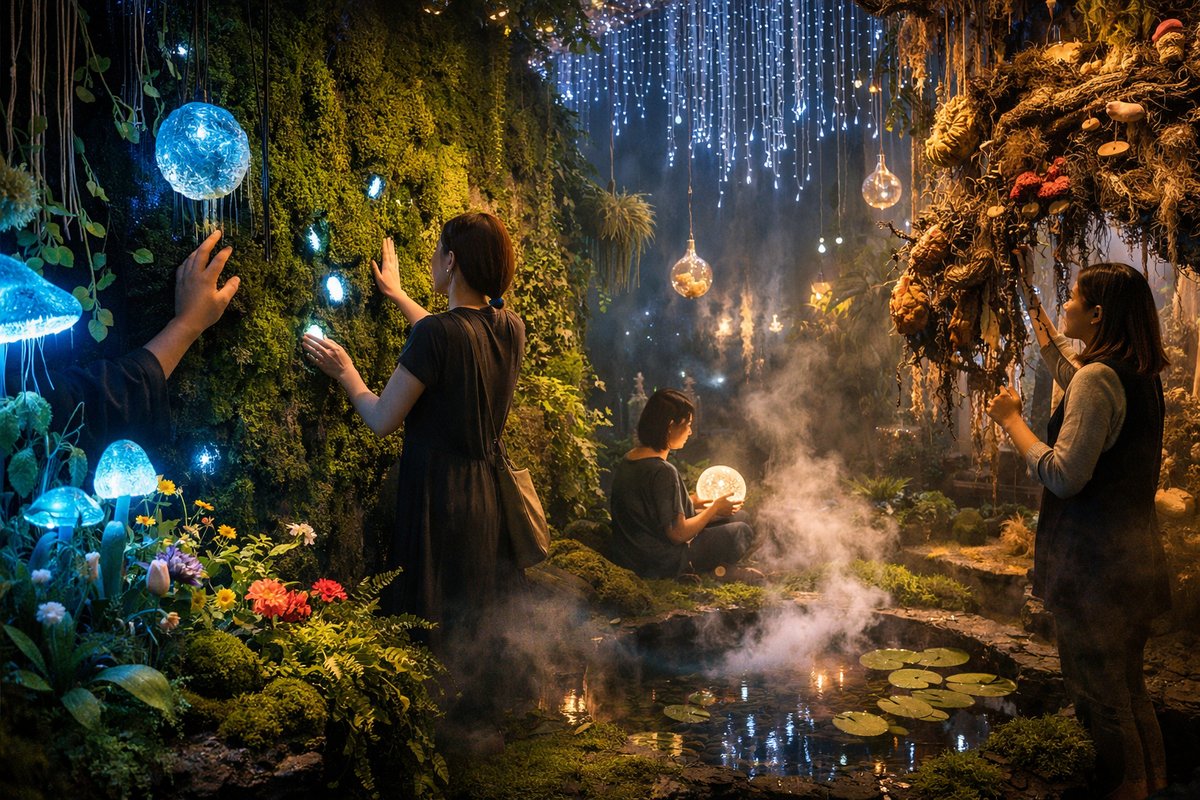
Artists are extending the realm of visual expression beyond sight and sound, weaving scent, touch, and living materials into immersive installations. Recent showcases in Berlin and Tokyo demonstrate how sustainable materials, interactive sensors, and bio-luminescent elements converge to engage audiences on a deeply emotional level.
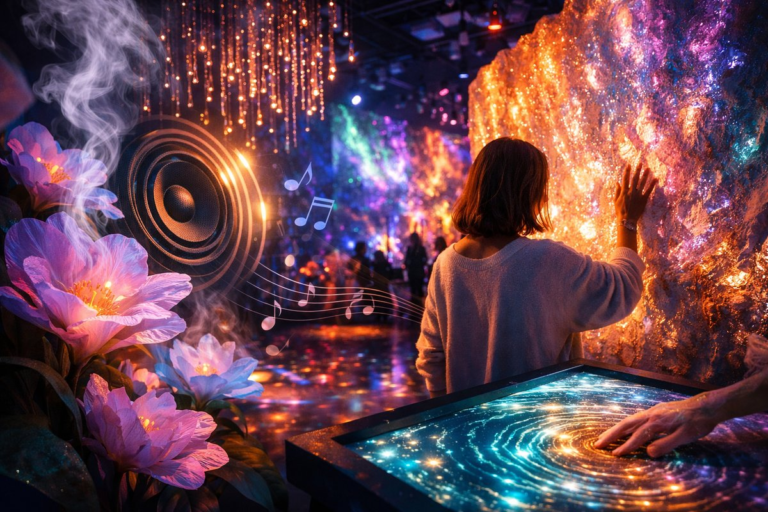
From darkened galleries pulsing with iridescent algae to open-air plazas where scent trails guide visitors through vibrating floors, the art world is witnessing a surge in multisensory installations. No longer content to hang static paintings or project videos, creators are knitting together sight, sound, touch, scent, and sometimes even taste into cohesive environments. This shift isn’t simply a technological stunt; it reflects a broader philosophical turn toward empathy, sustainability, and embodied experience.
Earlier this year, a collective in Berlin transformed a decommissioned airport hangar into the “Synesthetic Garden,” a living labyrinth where motion-activated scent diffusers released floral and earthy aromas as participants navigated heat-sensitive fabrics. Low-frequency speakers built into sculpted benches generated gentle vibrations in time with experimental compositions. At strategic junctures, visitors encountered bioluminescent panels-cultures of glowing algae housed in transparent tubing-that responded to the proximity of hands, intensifying their glow through faint electrical impulses.
Half a world away, a Tokyo exhibition titled “Resonating Life” leveraged living organisms and solar-powered circuitry. Display cases filled with mosses, ferns, and cultured mushrooms were paired with capacitive touch sensors that triggered ambient soundscapes recorded in nearby forests. As day turned to night, miniature photovoltaic arrays harvested rooftop sunlight to power LED rings framing each terrarium. The result was a cycle of interdependence: sunlight stimulated growth, growth informed sound, and sound awakened visitor curiosity about ecological networks.
These projects build on early pioneers like Random International’s Rain Room, but they go further by layering multiple sensory dimensions and emphasizing biodegradable or repurposed materials. Thermochromic inks adorn porous surfaces in some installations, subtly shifting color in response to body heat. Piezoelectric crystals embedded in benches convert the weight and movement of sitters into faint electrical pulses, which then amplify water-drop sounds through hidden speakers. Even taste has found its way in: one remote residency offered flavored mists-herbal, salty, sweet-that drifted through a narrow gallery corridor.
Behind these immersive experiences lies a toolkit that has become both accessible and modular. Open-source microcontrollers such as Arduino boards or similar programmable platforms coordinate sensor arrays-ultrasonic distance detectors, infrared thermal sensors, capacitive touch pads-and control actuators like servo motors, vibrating motors, and LED matrices. Artists often rely on lightweight, rechargeable lithium battery packs and mesh networking modules to interlink devices across large spaces without tethering to a central computer.
Material choices reflect parallel concerns about environmental impact. Workshops dedicated to sustainable fabrication explore bioplastic filaments for 3D printers, soy-based thermochromic pigments, reclaimed wood panels, and plant-based resins. In one Rotterdam studio, a team is experimenting with chitin derived from shrimp shells to create translucent tiles that diffuse light. Another collective in Vancouver uses upcycled acrylic sheets from discarded signage, cutting them into prisms that refract projections from miniature laser projectors.
Philosophically, this movement embraces art as participatory narrative rather than passive display. Visitors become co-authors, their movements and interactions turning a corridor of scented fog into a living poem, or generating ripples of light across a wall mosaic embedded with capacitive sensors. The emotional intelligence encoded in these works traces back to theories of synesthesia and embodied cognition: by engaging multiple senses simultaneously, the brain forms richer associations and deeper recall.
Curators have noted that multisensory installations can foster empathy by mirroring physiological states. Soft pulses of warmth and gentle hums convey a sense of calm, while abrupt shifts in color and scent can evoke surprise or unease. When paired with participatory elements-stepping on pressure-sensitive tiles that trigger whispered stories or compressed air jets-these dynamics create a shared emotional journey. In educational settings, teachers have begun using scaled-down versions to illustrate ecological interdependence or human anatomy through interactive exhibits.
The convergence of art, design, and interactive technology has also given rise to pop-up events in public spaces. City parks have hosted temporary assemblies of modular sensor stations that invite passersby to step, touch, or lean against surfaces, thereby activating foliage-filled planters that release pollen-safe aromatic compounds. In one New Orleans installation, a set of solar-charged LED tents glowing beneath ancient oaks tracked wind speed and direction, altering their brightness and color palette to reflect meteorological changes in real time.
For emerging artists and small studios eager to experiment, the barrier to entry is lower than ever. Online repositories provide downloadable code libraries for sensor calibration, sound synthesis, and networked node communication. Local maker spaces often supply 3D printers, laser cutters, and soldering stations. Collaborations among engineers, perfumers, biologists, and musicians have grown common, giving rise to interdisciplinary residencies that pair wilderness retreats with hardware prototyping labs.
However, integrating diverse sensory systems poses practical challenges. Balancing humidity for living materials can conflict with the electrical safety requirements of wiring. Scent dispersal must be precisely controlled to avoid overwhelming or causing allergic reactions. Heat-sensitive textiles demand thorough testing to ensure consistent color transitions without fading over time. Successful projects devote significant time to iteration: refining flow rates in micro-diffusers, tuning vibration amplitudes, and mapping soundscapes to motion data so that each gesture translates into cohesive feedback.
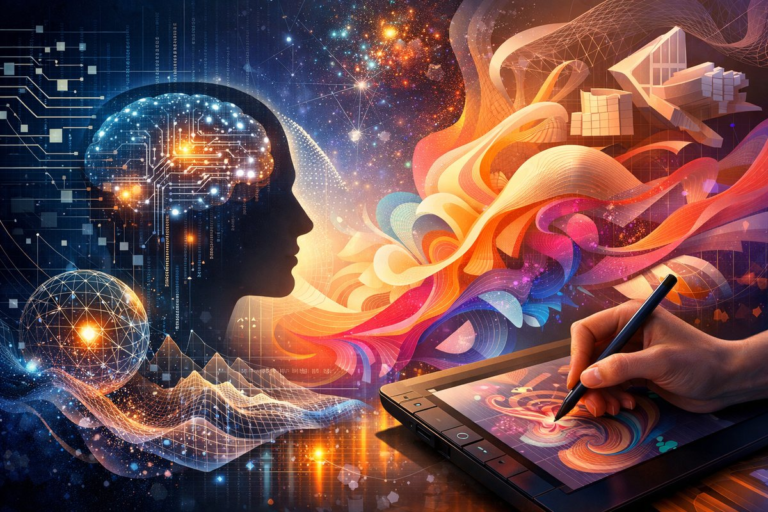
Looking ahead, the next frontier may lie in AI-driven generative responses that adapt in real time to audience behavior. Machine-learning models trained on environmental data-temperature shifts, wind patterns, crowd density-could compose evolving visual, auditory, and olfactory narratives without direct human intervention. At the same time, breakthroughs in biodegradable electronics promise circuits that decompose harmlessly, enabling ephemeral installations that leave no waste footprint.
As the boundaries between art, design, and sensory science continue to blur, one thing remains clear: audiences crave more than passive observation. We seek environments that invite our full presence-places where the gentle hum beneath our feet or the barely perceptible waft of jasmine can stir reflection, curiosity, and connection. In these dynamic, multisensory realms, art becomes less about objects on a wall and more about the living experiences we shape together.
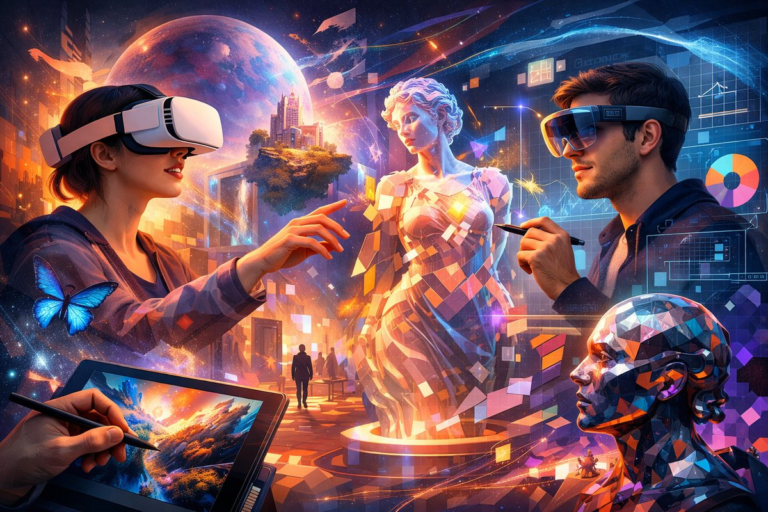
Whether you’re an artist intrigued by open-source hardware, a curator planning the next public installation, or simply a visitor drawn to immersive encounters, the landscape of visual expression is richer and more entangled than ever. By embracing interactive technology, sustainable materials, and cross-modal design, today’s creators are forging pathways to deeper emotional resonance-and inviting us all to sense the world in entirely new ways.