Location
Mount Vernon, WA 98274

Location
Mount Vernon, WA 98274
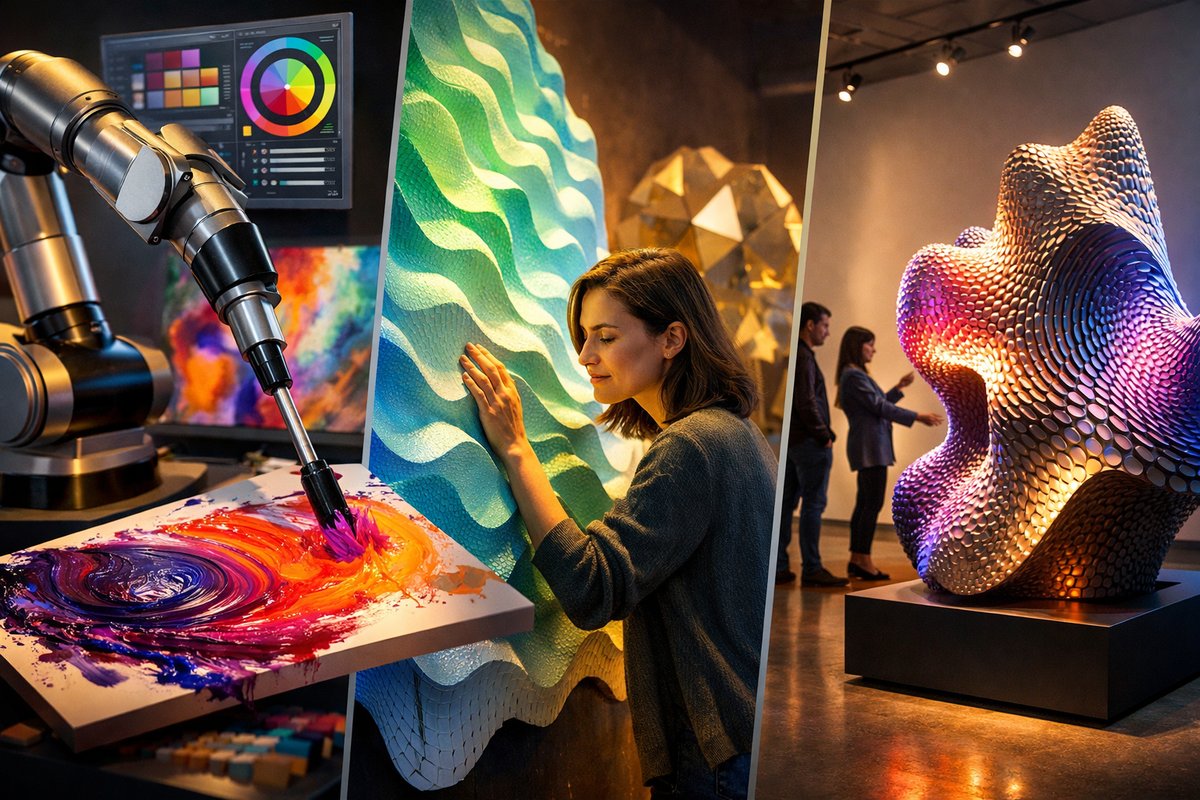
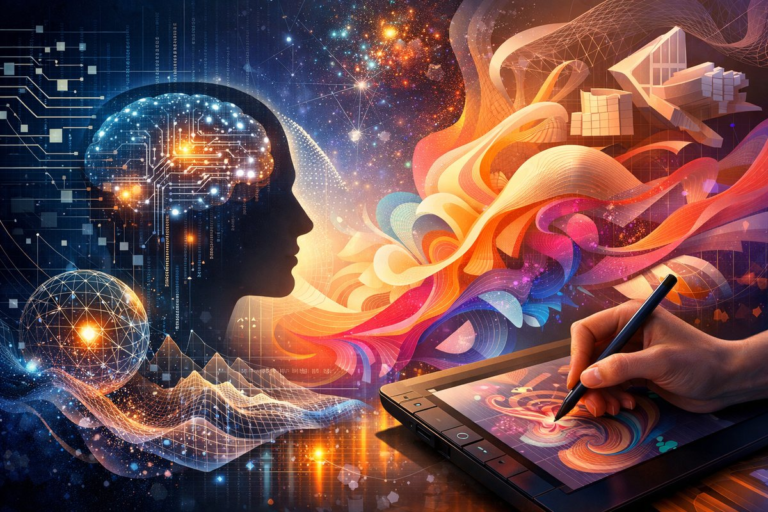
A new wave of art and design is emerging at the intersection of artificial intelligence and physical materials. From AI-driven pigment mixing to haptic feedback sculptures, creators are redefining how we experience texture, form, and interactivity in gallery spaces and public installations.
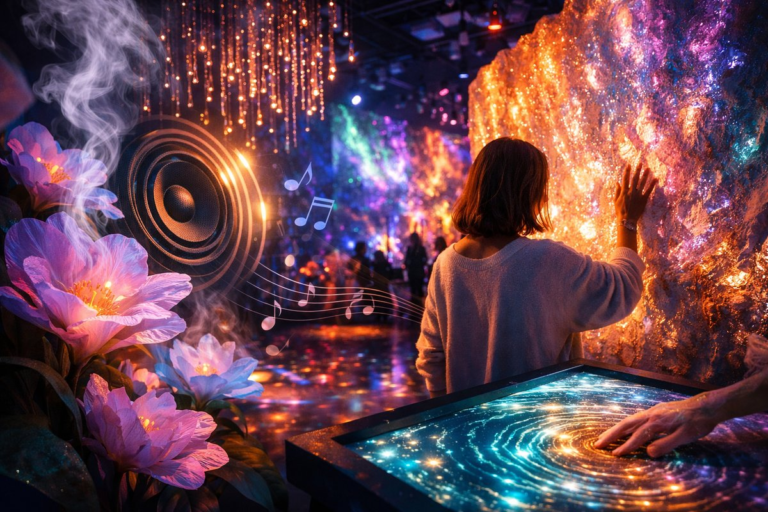
In a converted industrial warehouse beneath Berlin’s U-Bahnhof station, visitors recently encountered a series of sculptural forms that seemed to evolve before their eyes. Each piece resembled a living organism-smooth ridges, shifting contours, faint pulses of light-yet they were entirely crafted by a fusion of neural network algorithms and advanced fabrication techniques. This emerging genre, sometimes called “tactile neural canvases,” signals a turning point in how artists and designers collaborate with technology, blurring the lines between code and clay, silicon and silk.
Over the past twelve months, a wave of exhibitions and biennales across Europe, Asia, and North America have showcased installations that combine AI analysis of natural patterns with robotics, parametric modeling, and interactive sensors. In London’s newest design showcase, a ceramic wall was fitted with pressure sensors connected to a machine-learning model. Each time a visitor pressed on a tile, the system analyzed historical glaze recipes and environmental data-humidity, temperature, light level-and dynamically dispensed new pigment blends onto adjacent tiles. The result was a living mural that recorded both its surroundings and its audience, adapting colors and textures in real time.
Behind these breakthroughs are material scientists, code architects, and makers united by a shared curiosity: what happens when intelligence becomes tactile? Traditionally, digital art has lived on screens or projections; physical works were static, their forms locked in time. The tactile neural canvas movement marries the adaptability of AI with the sensory appeal of tangible media. Imagine clay that hardens in varying degrees based on audio inputs, metal rods that bend in response to human posture, or textiles woven by robotic looms guided by real-time emotional analysis.
One pioneering workshop in Tokyo demonstrated an AI-driven kiln. As artists loaded clay vessels into the chamber, temperature sensors fed data to a neural network trained on centuries of firing logs. The system adjusted ramp-up rates and peak temperatures to achieve unpredictable, one-of-a-kind glaze patterns. An errant spike in kiln humidity during one session produced a mesmerizing crystalline finish-an accidental triumph praised by curators for its uncanny beauty.
Meanwhile, in a coastal town in California, a collective of designers experimented with haptic feedback gloves connected to a VR environment. Participants sculpted virtual matter with their hands, feeling resistance, grain, and curvature as if touching real clay. Once satisfied, the digital molds were translated into CNC instructions for a large-scale milling machine. The end result was a series of monumental stone carvings that preserved the artist’s tactile gestures, even though no chisel ever touched the marble by human hand.
These hybrid pipelines-virtual sculpting leading to robotic fabrication-hint at a future where geographic distance dissolves. An artist in Buenos Aires could shape forms on a touchscreen in New York; a foundry in Munich could produce castings from data beamed across the internet. As 5G and edge computing infrastructure matures, latency falls to imperceptible levels. The physical and digital become extensions of one another, offering entirely new modes of creative collaboration.
Beyond the studio and gallery circuit, public installations are embracing similar ideas. In a recent project on a university campus in Singapore, a network of sensor-embedded benches responded to ambient noise and air quality. Each bench sprouted a cluster of lightweight polymer spines whose orientation and spacing shifted with crowd chatter and pollution levels. Strolling through the plaza felt like walking beneath a breathing organism, its forms expanding and contracting in sympathy with human presence.
Critics and theorists are already debating the implications. Some see a profound shift in the role of the artist: less as sole maker and more as curator of emergent systems. Others warn of overreliance on opaque algorithms that may produce aesthetically stunning results but mask the decisions driving them. Questions of authorship, authenticity, and sustainability rise to the fore. After all, programming a kiln to run hotter to achieve a certain glaze might yield unique patterns, but it also consumes more energy. Material researchers are responding with eco-friendly polymer composites and low-energy sintering techniques that align with broader sustainability goals.
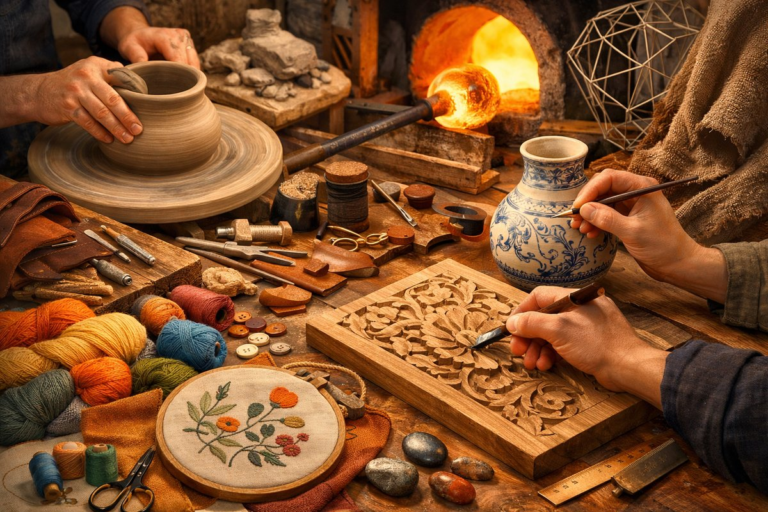
Educational institutions are catching up. Universities that once taught traditional drafting and stone carving now offer interdisciplinary degrees in computational design, smart materials engineering, and AI aesthetics. Students learn to code neural networks alongside woodworking. Workshops guide them through building custom sensor rigs from microcontroller boards, welding conductive threads into textile prototypes, and sourcing recycled plastics for 3D printing.
Entrepreneurs are taking notice, too. Several startups have developed off-the-shelf plugins that integrate popular 3D-modeling software with AI-powered material suggestion engines. Artists can now receive real-time recommendations-resins that achieve a desired translucency, pigments that self-adjust under UV light, or composite sheets that stiffen in response to sound. While these tools accelerate experimentation, they also raise the stakes for creative originality. If anyone can generate an infinite palette of algorithmically selected materials at the click of a button, how does one preserve the singular vision of the maker?
One response is to embrace the randomness intrinsic to AI processes. A recent installation at a digital arts festival in Montreal featured a suspended chandelier of hundreds of colored spheres. Each sphere contained a heat-sensitive gel and a tiny circuit board. As the crowd moved beneath, infrared cameras tracked motion and sent signals that warmed or cooled the gels, causing the spheres to morph and flutter. The result was never the same twice-a living kaleidoscope dictated by human interaction and the system’s own predictive adjustments.
Critics argue that true material innovation must also consider end-of-life scenarios. Some researchers are experimenting with biodegradable bio-inks for robotic drawing arms, while others weave sensors into fabrics that can be composted at the end of an exhibition. This convergence of AI, robotics, and sustainable material science underscores a broader ethos: curiosity married to responsibility.
As the movement grows, museums are commissioning residencies that pair artists with engineers and scientists. These collaborative workshops generate works that evolve over months, not just weekends. One recent residency near Geneva produced a grove of slender aluminum trunks embedded with microphones and pistons. At set intervals, the trunks emitted deep resonant tones and extended fine rods into the air-simulating the way trees sense wind and moisture. Visitors reported an almost meditative connection to the installation, marveling at how machine mimicry of natural rhythms could feel so organic and calming.
Of course, not every experiment yields a masterpiece. Some ventures succumb to technical glitches-sensors drift out of calibration, network outages halt robotic arms mid-gesture, or machine-learning models overfit to early data and resist further evolution. Yet these failures become teachable moments, fueling new iterations that refine algorithms and hardware alike.
Looking ahead, the next frontier may lie in sensory cross-pollination: translating sound into sculpture, taste into textiles, emotion into light. Imagine garments that shift texture when the wearer’s heart rate rises, or public fountains that sculpt jets of water based on ambient social media sentiment. These speculative concepts might seem fanciful, but prototypes already exist in research labs.
Ultimately, tactile neural canvases remind us that art and design are defined by process as much as product. When algorithms join hands with human intention, the result is neither purely digital nor solely physical-it is an emergent hybrid, alive with possibility. In a world increasingly mediated by screens and signals, there is profound resonance in creating works we can touch, feel, and inhabit. The challenge now is to navigate this new toolkit thoughtfully, ensuring that innovation remains grounded in curiosity, accessibility, and ecological stewardship.
In the next few years, expect to see more galleries dedicating entire wings to AI-enabled fabrication, more public art commissions that sense and respond in real time, and more maker spaces offering sensors and data science alongside clay and chisels. Tactile neural canvases are no longer an experimental footnote-they are a movement rewriting the rules of visual expression for the digital-material age.