Location
Mount Vernon, WA 98274

Location
Mount Vernon, WA 98274
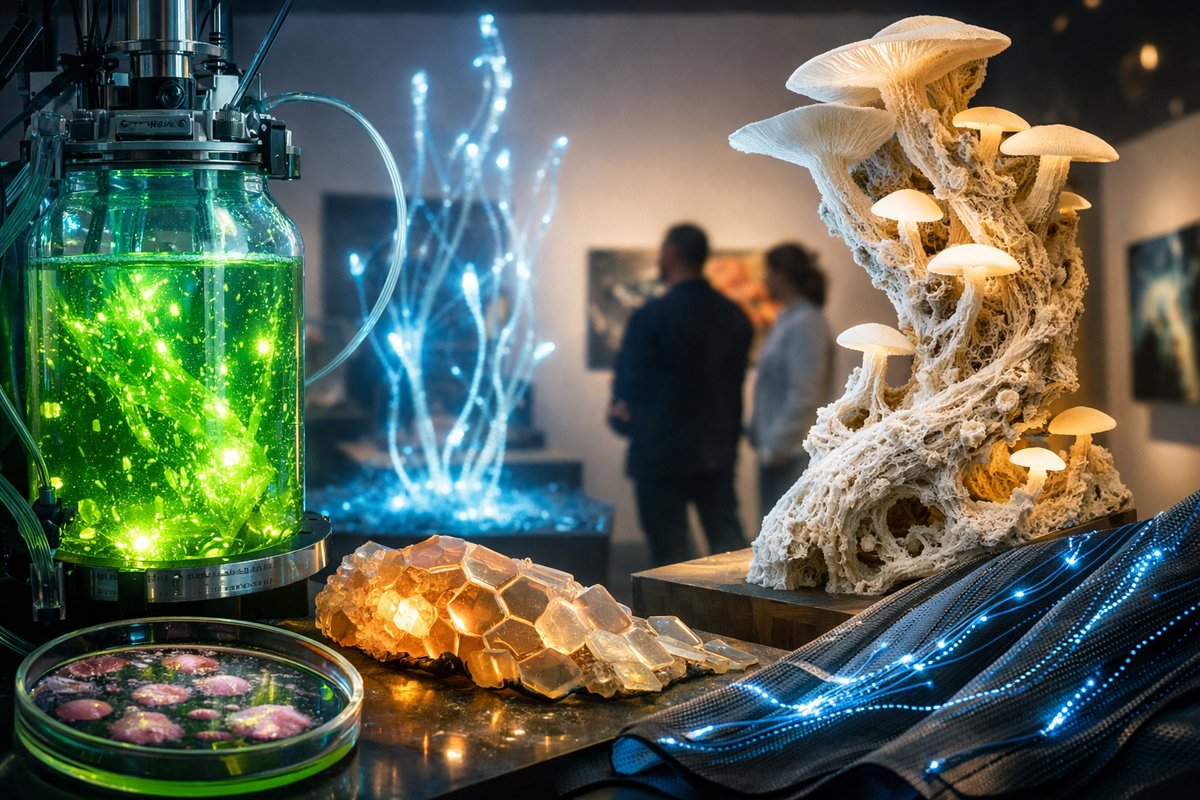
Frieze New York's latest edition unveiled a new wave of artworks built from living cells, bioluminescent algae, and self-assembling mycelium. Sensor-driven fabrics and recycled biopolymers are forging a deeper dialogue between nature, technology, and human emotion.
The spring edition of Frieze New York opened its doors to an audience hungry for art that moves beyond static forms and embraces materials in constant flux. Among the marquee pieces, visitors encountered sculptures that literally glowed in the dark, garments that pulse with breath-like rhythms, and architecture built from living fungal networks. In a festival that has long celebrated cutting-edge painting and sculpture, this year’s show highlighted artists and designers investigating the boundary between the animate and the inanimate.
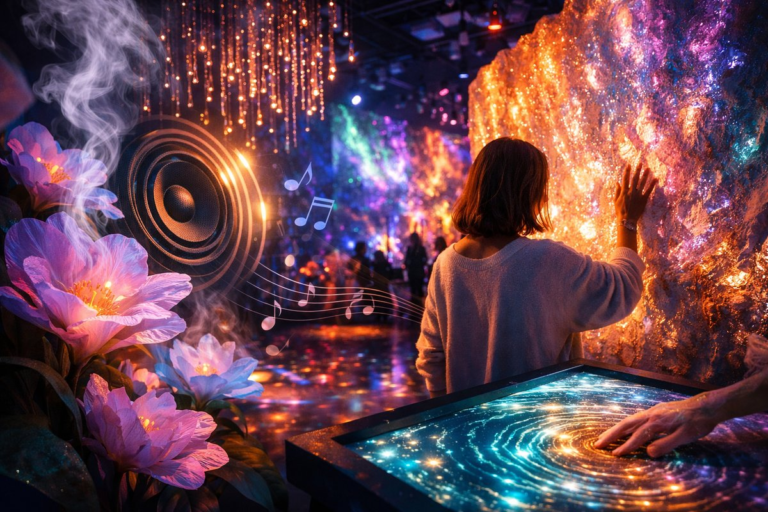
One of the most talked-about installations harnessed bioluminescent dinoflagellates-microalgae known for their marine glow-to create a sculptural basin that shifts from sapphire to emerald with each visitor’s touch. The algae are housed in transparent resin modules, arranged in a grid beneath an overhead canopy. As hands brush over sensors at the edges, gentle waves of phosphorescent color ripple across the surface. The effect is at once playful and contemplative: viewers find themselves both observers and participants, activated by living cells that respond to human proximity.
Elsewhere in the fair, designers showcased self-repairing “living concrete” infused with bacteria that precipitate calcium carbonate. A cracked wall panel gradually seals itself, illustrating a material intelligence that echoes the way bone heals in the human body. Developed in collaboration with a university lab in Northern California, the panels were mounted on an angled plinth so visitors could marvel at hairline fissures closing before their eyes. It’s a subtle demonstration of resilience, and a reminder that infrastructure, too, can aspire to a more circular ecology.
The gallery’s textile wing embraced sensor-driven fabrics that respond to breath, heartbeats, and ambient noise. One series of wearable art featured jackets embroidered with conductive thread connected to an on-board microcontroller. As the wearer’s heartbeat accelerates, tiny embedded LEDs flash in sync, making the body’s internal rhythms visible. Viewers standing nearby hear a soft, amplified pulse through concealed speakers, turning the wearer’s biological signature into a shared sonic experience. The work underscores an emotional intelligence in design-garments that don’t just clothe the body, but nod to the complexities of human physiology.
Sustainability took center stage with 3D-printed sculptures fashioned from recycled ocean plastics and bio-based filaments. A spiral tower of translucent cyan material rose three meters high, each layer printed from pelletized fishing nets collected off coastal shores. The resulting structure was both delicate and monumental, a physical monument to the possibilities and responsibilities of additive manufacturing. The artist behind the piece noted that by closing the loop on waste streams, design can become a tool for environmental storytelling.
Meanwhile, a series of interactive paintings used invisible ultraviolet inks that emerge only under handheld blacklight projectors. Visitors were invited to sweep the walls with portable LED torches, revealing hidden poems, diagrams, and ghostly figures. In that half-lit space, art becomes an act of discovery, and the audience is no longer passive. Every beam of light alters the canvas, reminding us that meaning can lie just beyond perception until the right tool is applied.
Not all works depended on high-tech apparatus. In a more low-fi corner, a living sculpture made of mycelium and agricultural waste grew organically over the course of the fair. Curators dampened the piece nightly with misting devices to maintain humidity, allowing fungal networks to expand across clay-coated branches. Visitors watched daily progress notes scribbled by the artist, tracking new strands weaving through straw and sawdust. The result was a hybrid of art, architecture, and ecology: a breathing pavilion that questioned the finality of the artistic object.
Across the hall, a collaboration between a New York design studio and a European biotech startup yielded a series of photoreactive pigments that shift hue under different wavelengths of light. Applied to ceramic tiles, the pigments transform artwork from fiery reds to cool violets as the lighting temperature changes. The technical precision involved-in pigment chemistry, kilning schedules, and LED calibration-reflects a growing trend: the confluence of lab-based research and gallery-ready aesthetics.
Audience response has been overwhelmingly positive, with many noting that the fair feels less like a market and more like a living ecosystem. Families linger at the game-like algae tanks, teenagers snap slow-motion videos of glowing walls, and designers photograph living concrete to tease future collaborations. It’s a testament to the way material innovation can electrify the imagination, inviting new questions about ethics, sustainability, and the role of the viewer in co-authoring the artwork.
Curators were intentional about weaving a narrative of hope and caution. In conversation panels, artists spoke about regenerative design practices-harvesting cellulose from discarded cotton clothing to spin new textiles, or using biopolymers derived from shellfish waste to cast sculptural forms. These experiments are rooted in real-world challenges: textile overproduction, plastic pollution, and the energy footprint of conventional manufacturing. By elevating these processes into gallery contexts, Frieze New York spotlights the creative potential in repair, reuse, and resourcefulness.
Behind the scenes, institutions like the MIT Media Lab’s Responsive Environments group and a leading Californian biomaterials research center have been consulting on prototypes. Their input ensures that the living installations remain safe, non-toxic, and ecologically sound. It also underscores a growing alliance between the laboratory and the gallery-fostering projects that can scale beyond art fairs into public spaces, architecture, and consumer products.
Looking ahead, this cross-pollination of disciplines points toward a future where design is less a top-down imposition and more a collaborative dialogue with materials. Whether in urban furniture that self-regulates temperature, facades that filter air with moss cultures, or playground surfaces that harvest kinetic energy, the seeds of tomorrow’s public realm are being planted on fair floors today.
As the weekend crowd swelled, the fair’s closing remarks invited reflection rather than applause. Speakers asked visitors to consider their own relationship with materiality: How might our homes, our wardrobes, our gadgets incorporate living or intelligent components? And at what point does design begin to require new vocabularies-ethical frameworks that account for sentience in cells or autonomy in connected devices?
In the end, Frieze New York 2024 may be best remembered not for a single masterpiece, but for a collective turning point: an acknowledgment that art and design are no longer confined to fixed forms. Instead, they have become alliances with materials that breathe, glow, adapt, and even heal. The gallery halls have become laboratories of imagination, reminding us that the next frontier of visual expression lies not on the canvas but in the living interplay between matter, technology, and human curiosity.