Location
Mount Vernon, WA 98274

Location
Mount Vernon, WA 98274
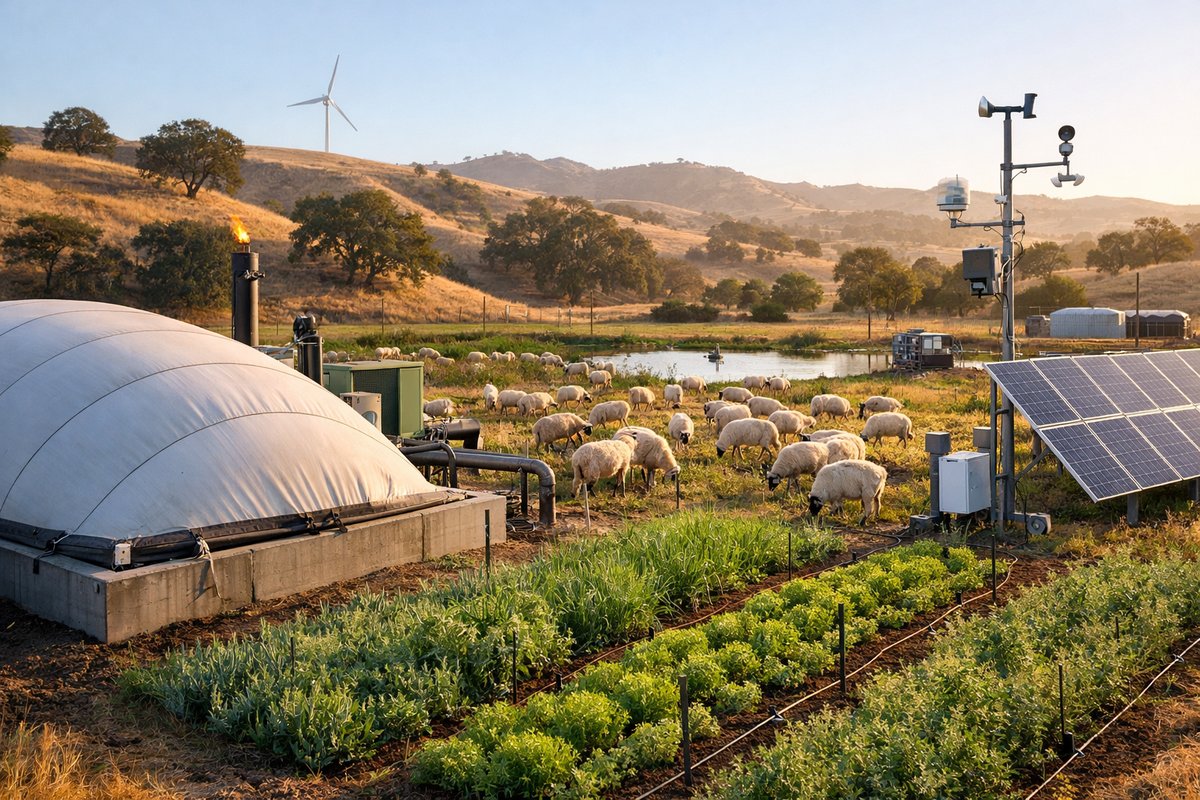
A Northern California sheep ranch has pioneered an integrated approach to reducing greenhouse gases, combining an on-farm methane digester with drought-tolerant fodder and smart water systems. Early results show a 70 percent cut in net emissions, a blueprint that could reshape regenerative livestock across arid regions.
On a rolling pasture just north of Sacramento, woolly Merino sheep graze beneath a patchwork of drought-resistant trees and perennial grasses. At first glance it resembles any small-scale ranch adapting to California’s hot, dry summers. Yet behind the fence line lies an experimental energy system that is rewriting the rules of livestock farming.
Over the past twelve months, the ranch has operated a modular anaerobic digester to convert sheep manure into biogas. This clean fuel now powers water pumps, barn lighting and a small heating loop for lambing stalls. The result: a measured 70 percent reduction in net carbon dioxide-equivalent emissions, rapid payback on energy costs and a replicable model for operations in other water-stressed regions.
“We needed a solution that addressed both our methane footprint and rising energy bills,” says a farm manager who asked not to be named. “By treating manure as a resource instead of a waste, we are closing loops that were once open to the atmosphere.”
Livestock methane contributes nearly 30 percent of global agricultural greenhouse gas emissions. Ruminants like sheep and cattle digest cellulose and release methane during fermentation in their guts. Traditional manure management practices let additional methane and nitrous oxide escape from storage lagoons or piled bedding.
The ranch’s digester is a 50-cubic-meter, thermophilic unit installed adjacent to the barnyard. Manure is scraped from pens into a slurry pit, then pumped into the sealed tank where naturally occurring microbes break it down. Gas is captured, scrubbed and piped to a bank of small-scale generators and pumps. Residual digestate is applied to fields as low-odor, nutrient-rich fertilizer.
Within six months, the project generated enough electricity to run three solar-assisted water pumps, meeting all irrigation needs for fodder plots of teff grass, sorghum and deep-rooted vetiver. These drought-tolerant species are planted in silvopasture alleys shaded by young walnut and oak trees, creating cooler microclimates and improving soil structure.
“Combining silvopasture with anaerobic digestion has compounding benefits,” explains an agroforestry advisor on the team. “The trees provide shade, reduce heat stress for the sheep and sequester carbon in their biomass. The digestate boosts tree growth without synthetic fertilizers.”
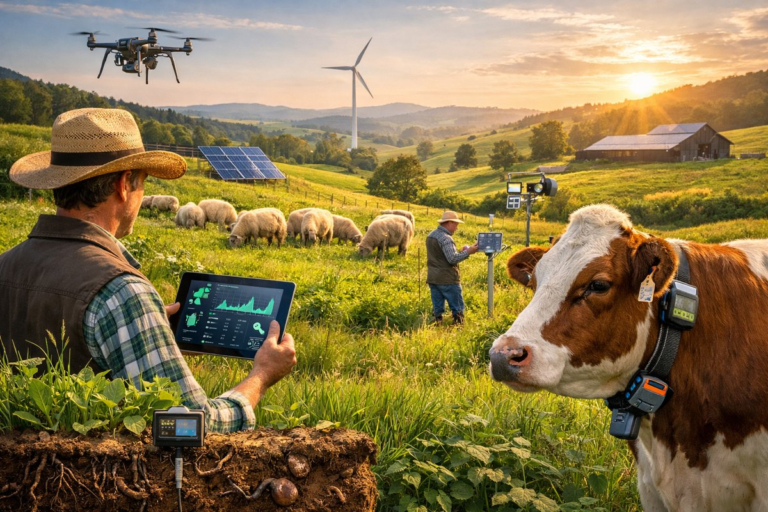
To further refine water use, the ranch installed wireless soil moisture probes at varying depths across fodder plots. Data streams into a farm dashboard driving a drip irrigation controller. Pumps run only when moisture dips below set thresholds, maximizing efficiency during California’s peak heat.
Rotational grazing complements the system. Electric net fencing sections off paddocks of 1 to 3 acres, moved daily so sheep graze uniformly and soils recover. This reduces parasite buildup and encourages deeper root growth in forage plants, which in turn improves carbon storage underground.
After the first grazing cycle, botanical surveys recorded a 20 percent increase in plant species diversity. Bird counts in silvopasture strips showed rising populations of pollinators and insect-eating species. Even small mammals have returned to the shelter of tree rows.
Energy data from the digester system demonstrate clear savings. Before installation, the ranch spent $1,800 per month on grid electricity and backup diesel generators during outages. Today those costs have fallen by 65 percent, with surplus biogas sold to a local greenhouse during low-use periods.
Beyond the numbers, the project has galvanized the local farming community. At a recent open-gate day, more than 50 ranchers and smallholders toured the site, hands-on workshops guiding attendees through digester operations, feedstock mixing ratios and safety protocols.
“It’s not just about technology,” notes a cooperative extension agent. “It’s about building trust that these systems are maintainable by average farmers, not just engineers.”
Still, challenges remain. Upfront capital for digester and pump systems ran near $200,000. Grant support and favorable loan programs covered half the cost, but many ranches will need tailored financing strategies. Training is intensive during the first year, and consistent feedstock quality is critical to avoid digester imbalances.
There is also work ahead to refine gas cleanup. Small amounts of hydrogen sulfide still slip through the scrubber, requiring periodic maintenance. In colder months, supplemental heat must be provided to maintain microbial activity in the digester, occasionally drawn from propane backup.
Yet the broader potential is clear. If even a fraction of the estimated 1.6 million sheep operations in the western United States adopted micro-digesters paired with drought-tolerant silvopasture, the sector could slash millions of tons of greenhouse gases annually. Similar principles apply to beef, goat and dairy systems across arid and temperate zones globally.
Policy makers are taking note. A recently proposed incentive program in California would reimburse farmers for up to 40 percent of biogas system costs, with additional payments tied to verified emissions reductions. Meanwhile, private sustainability certifications are evaluating protocols that reward carbon-neutral livestock products with premium pricing.
For the California ranch at the heart of this pilot, the next phase includes scaling the digester by 50 percent and planting an additional acre of alley cropping. Plans are in motion to integrate a small solar array to heat the digester directly, eliminating propane use entirely.
“We dreamed this up as a proof of concept,” the manager reflects. “Now it’s a living lab for rural innovation. If we can turn manure into energy, shade and cleaner water all at once, we’re flipping the script on traditional livestock impacts.”
Across dusty pens and sunlit fields, sheep continue their steady grazing. Underfoot, microbes work unseen in the digester. Above, young oaks reach skyward. On this ranch, every component feeds the next in a cycle of renewal-one that could redefine sustainable livestock for decades to come.