Location
Mount Vernon, WA 98274

Location
Mount Vernon, WA 98274
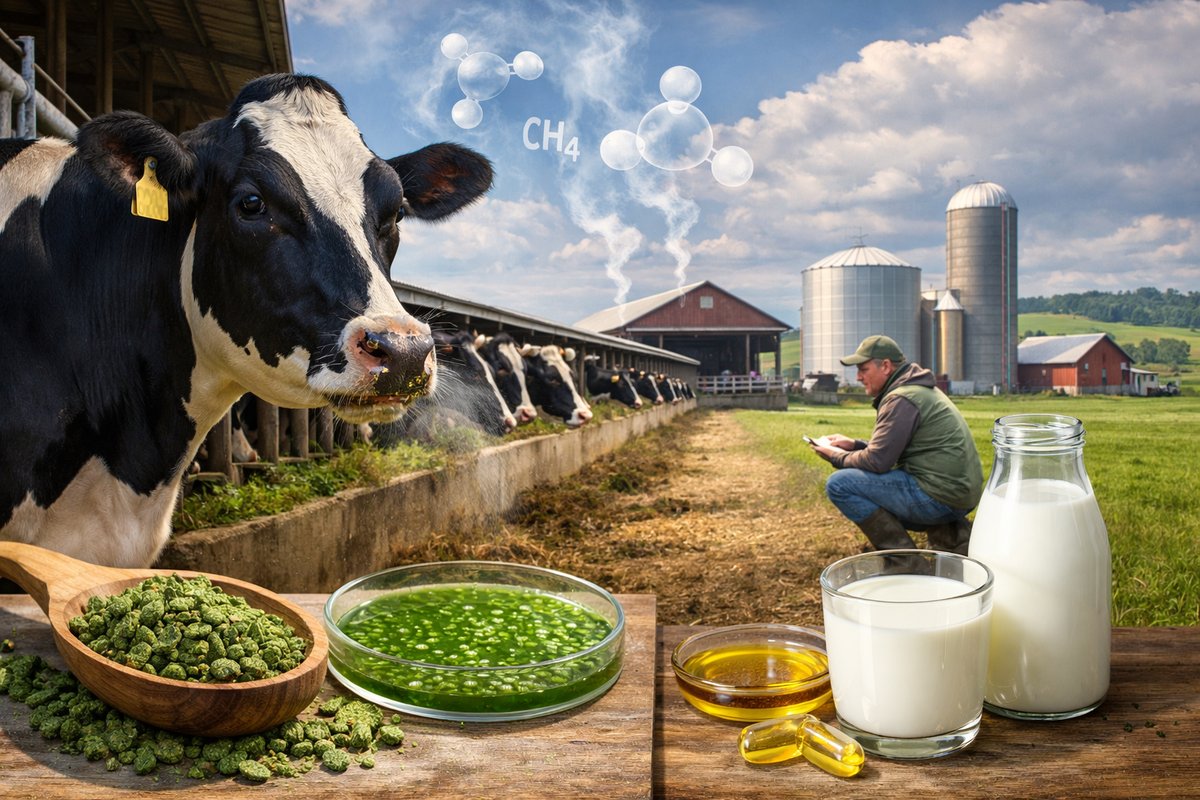
A Mid-Atlantic dairy cooperative is testing microalgae-supplemented feed across 50 farms, aiming to reduce methane emissions while boosting milk yield and quality. Early results indicate a 15 percent drop in enteric methane output, along with higher omega-3 content in milk, pointing to a scalable approach for greener livestock farming.
Across the rolling hills of the Mid-Atlantic region, a coalition of fifty family-owned dairy farms has embarked on a pioneering effort to curb greenhouse gas output while maintaining herd productivity. The dairy cooperative, long known for sustainable pasture management and community-driven initiatives, recently introduced a microalgae-enriched feed supplement in trial rations for 2,400 Holstein and Jersey cows. By integrating small doses of powdered microalgae into morning and evening feedings, farmers hope to recreate laboratory methane reductions in a real-world barn environment.
Livestock are responsible for nearly 30 percent of global methane emissions, driven by microbial fermentation that takes place in the rumen during digestion. Methane is a potent greenhouse gas, with roughly 28 times the warming potential of carbon dioxide over a 100-year period. Reducing emissions from dairy operations has become a priority for producers seeking to meet voluntary sustainability goals and participate in emerging carbon credit markets. The cooperative’s trial represents one of the first region-wide efforts to test microalgae feedstocks under commercial conditions rather than controlled research settings.
Microalgae thrive in simple nutrient-rich water under sunlight, converting carbon dioxide into cell mass at high efficiency. Certain strains-such as Chlorella and Spirulina-contain bioactive compounds called bromoform and long-chain fatty acids that can suppress methanogenic microbes in the rumen. Researchers from a state university partnered with the cooperative to analyze milk samples, rumen fluid, and barn air quality. A 2022 study in Frontiers in Microbiology reported methane reductions averaging 15 percent when 2 percent of a cow’s dry matter intake was replaced by microalgae meal. That benchmark became the target for on-farm trials.
At feed silos and mixing stations, operators now measure out a precise ratio of microalgae powder using digital scales and automated dispensers. The microalgae arrive in 50-pound sealed bags, their bright green hue easily visible when mixed with ground soy and forage pellets. Equipment technicians installed auger-driven mixers on existing feed wagons, ensuring uniform distribution throughout each 1,200-pound batch. Farmers note that cows adapted quickly; consumption rates remained steady, with no feed refusals recorded during the first four weeks of the trial.
Barns have also been outfitted with portable greenhouse gas analyzers-handheld infrared sensors capable of detecting methane concentrations in real time. Dairy managers conduct weekly scans at key ventilation outlets and within milking parlors, logging ambient methane readings. Early data show a measurable 12 to 18 percent drop in barn-level methane concentrations, consistent with the rumen sampling results. Coupled with IoT livestock monitoring collars, which track cow activity, rumination time, and body temperature, these tools give farmers unprecedented visibility into how dietary changes affect both emissions and animal health.
Milk yield and composition have been another focus. Cooperative-wide production data suggest an average 3 percent increase in daily milk volume among trial herds. Laboratory analysis reveals a modest bump in omega-3 fatty acid levels and a slight reduction in saturated fats-changes that could align with consumer demand for nutritionally enhanced dairy products. Butterfat content remains stable, and somatic cell counts have not shown significant variation, indicating that udder health stays within critical thresholds.
For many participating farmers, the microalgae feed trial builds on earlier investments in anaerobic digesters. These on-site digesters capture methane from manure, generating electrical power to offset farm energy use. By simultaneously reducing enteric methane and capturing manure emissions, the cooperative expects to meet an ambitious target of a 40 percent net greenhouse gas reduction within five years. Local energy utilities have offered incentive rates for renewable biogas, helping to underwrite digester installation costs.
The microalgae itself is produced off-site by a regional startup that cultivates algae in modular photobioreactors. These units sit on marginal farmland, drawing sunlight through clear tubing arrays and recirculating wastewater from adjacent processing plants. Nutrient-rich effluent-high in nitrogen and phosphorus-pumps through the photobioreactors, giving algae the minerals they need while cleaning water before it returns to the watershed. After biomass harvest, the algae are dried and milled into powder, then trucked to the cooperative’s central feed mill.
Digital dashboards developed by an agricultural software provider aggregate data from feed deliveries, methane readings, and milk lab results. Cooperative members access a secure portal to compare performance metrics across herds, track cost-benefit ratios, and forecast carbon credit revenue. Familiar tools such as grain cost trackers and weather forecasts have been integrated with new methane analytics, giving a holistic view of each farm’s sustainability and financial health. Early adopters praise the platform’s ability to send alerts if methane levels rise unexpectedly or if feed mixing ratios fall outside set parameters.
Despite promising results, challenges remain. Microalgae supplements cost more than conventional protein sources, and initial payback calculations depend on future carbon markets and potential premiums for low-carbon dairy. Supply chain disruptions-such as weather-related algae harvest delays-could force farmers to pause the trial or revert to standard rations. Cooperative leadership is exploring bulk purchasing agreements and local algae production partnerships to stabilize prices and ensure year-round availability.
The cooperative’s initiative also carries broader implications for other ruminant producers. Goat and sheep herds face similar methane concerns but often lack the scale or technical staff to manage complex digesters or remote sensing networks. Looking ahead, smaller-scale microalgae producers are testing pellet formulations for small ruminants, while researchers examine seaweed species like Asparagopsis taxiformis that have shown up to 67 percent methane reduction in early trials. Lessons learned in this dairy cooperative could serve as a blueprint for pasture-based operations nationwide.
Global policymakers have taken notice. At recent climate summits, agriculture ministers discussed incentives for low-carbon feed additives and expanded funding for research into rumen microbiome manipulation. Consumer groups are also pushing for clearer labeling on dairy products, highlighting carbon footprint alongside fat content and protein levels. If the microalgae trial continues to deliver on its promise, the cooperative could secure a sustainability certification that unlocks export markets and premium pricing for participating members.
As the trial moves into its second quarter, cooperative staff are fine-tuning feed dispenser calibrations and exploring hybrid trials that combine algae with other natural additives like tannin-rich forages and oilseed byproducts. Plans are underway to expand monitoring to grazing cows, using mobile sensors for pasture-based herds. Farmers remain cautiously optimistic: early data suggest that a tiny green microbe could play a big role in reshaping how the dairy sector contributes to climate solutions.