Location
Mount Vernon, WA 98274

Location
Mount Vernon, WA 98274
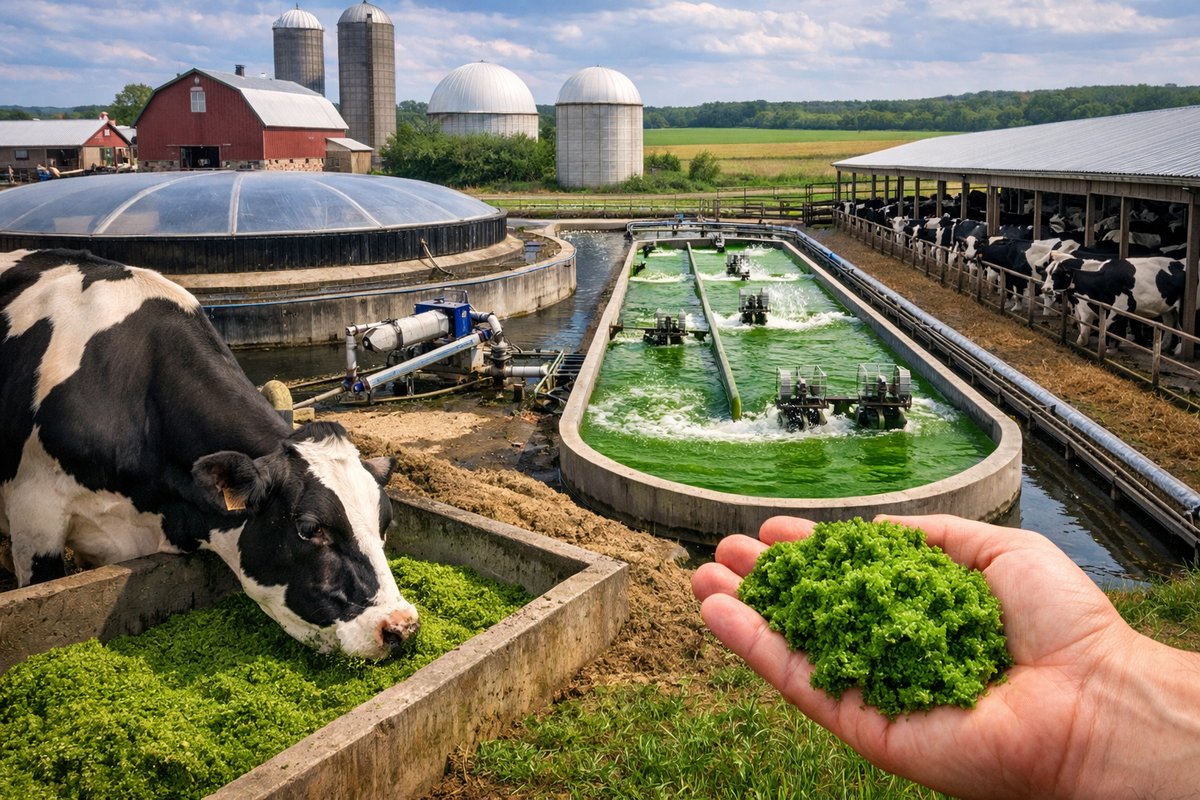
A family-run dairy operation in Wisconsin is pioneering a closed-loop system that recycles parlor wastewater into high-protein algae biomass for cattle feed. Early trials show potential reductions in feed bills and enteric methane emissions, hinting at a scalable model for sustainable livestock farming.
On a rolling farmstead outside of Green Bay, Wisconsin, dairy producer Evergreen Meadows is testing a radical approach to feed production: turning used milking parlor water into edible algae biomass. Faced with volatile feed prices and mounting pressure to reduce greenhouse gas emissions, the fifth-generation operation partnered with a state university research team to build a small photobioreactor next to its barnyard. There, nutrient-rich wastewater from the milking system becomes the growth medium for fast-growing algae strains. Once harvested, dried and milled, the algae is blended into the cows’ total mixed ration at rates of 3 to 5 percent by dry weight.
Farm manager Laura Jensen gestures toward a bank of slim, tubular reactors bathed in soft LED light. “This was just a pair of milk tanks a few months ago,” she says. Inside each tube, transparent walls hold a suspension of green algae that feed on leftover lactose and minerals. A gentle pulse of compressed air circulates the culture, while pH and temperature sensors-checked daily-keep conditions optimal. Every week, Jensen and her team harvest 20 gallons of wet slurry, which is then dewatered in a drum filter, oven-dried and milled into fine green flakes.
The idea of recycling wastewater into feed isn’t entirely new, but on-farm photobioreactors of this scale remain rare in the United States. Evergreen Meadows stands out for integrating the unit directly with its existing parlor plumbing-diverting rinse water and pre-cooler effluent into the algae system rather than sending it to the lagoon. University scientists are measuring nutrient retention, water savings and biomass yield, while a separate trial tracks methane emissions using portable respiration chambers on a cohort of 20 lactating cows.
Preliminary data suggest the algae-amended ration lowers methane output by up to 8 percent compared with a standard corn-soy diet, thanks to the seaweed-like cell wall compounds that shift rumen fermentation. The algae also supply essential amino acids and trace minerals, replacing a portion of purchased soybean meal and mineral premix. At current feed prices, Jensen estimates savings of $5 to $7 per cow each month-enough to recoup the reactor’s capital cost within three to five years if grants and low-interest loans are available.
“We’re excited by the numbers, but it’s not just about economics,” Jensen explains. “We knew feed costs would keep climbing, but we also wanted a way to close the loop on nutrients and protect our local waterways. Instead of hauling lagoon water off site, we’re putting those nutrients back into our herd’s diet.” The farm’s neighbors have noticed the change. “Our creek by the back gate used to turn murky green in summer,” says nearby landowner Carlos Ramirez. “This year it’s clear. I’t’s a quiet difference, but I’ve not seen any algae bloom downstream.”
Behind the scenes, the research team from the University of Wisconsin’s Department of Animal and Dairy Science is quantifying carbon sequestration, net energy use and water recycling benefits. Graduate student Priya Mehta is tracking how much nitrogen and phosphorus the system captures versus what would normally flow into the lagoon. “Early results show a 60 to 70 percent reduction in nutrient loadings to the lagoon,” Mehta says. “If this can be replicated at scale, it represents a real step forward for nutrient management plans in dairy regions.”
The algae strains chosen for the study-high in protein and low in lipid content-were originally isolated from natural lake samples. They tolerate higher nutrient loads and grow faster than traditional spirulina or chlorella varieties used in human supplements. To avoid any risk of off-flavors or toxins, the team conducts weekly tests for microcystins and ensures algal biomass meets dairy feed safety standards.
Still, challenges remain. The photobioreactor requires reliable electricity to power LEDs, blowers and pumps. Evergreen Meadows installed a small ground-mounted solar array to offset part of that load, but cloud-cover on winter days forces them to tap the grid. Maintenance of seals, tubing and filters takes labor-Jensen’s crew spends two mornings each week cleaning the reactor lines. And though the feed mill grinds the dried algae into powder without trouble, the high fiber content can gum up mixers if dosages exceed 5 percent.
There are regulatory questions, too. “Feeding on-farm cultured algae is still a gray area in many state feed laws,” notes agricultural attorney Robin Lewis. “Farmers need to work closely with their feed control officials to document safety and composition. Evergreen Meadows has been proactive, sharing lab results and protocols to secure an official feed additive registration.”
Despite these hurdles, interest is growing. At a recent regional field day, neighboring dairies toured the photobioreactor and asked detailed questions about reactor design, water treatment steps and feed blending rates. One visitor, a third-generation dairy cooperative manager, is exploring a larger demonstration unit capable of serving multiple farms in a watershed district. “There’s a sense that we’re on the cusp of something transformative,” says co-op board member Sheila Thornton. “If we can turn our poorest-quality water into feed, we shrink costs and safeguard our streams.”
Across the continent, similar experiments are underway in Europe and Australia, though most rely on open pond systems vulnerable to contamination. Indoor reactors like Evergreen’s offer tighter control and year-round production, albeit at a higher upfront price. The hope is that shared equipment models-where clusters of farms invest in a community reactor-can spread costs and accelerate adoption.
Looking ahead, the research group plans to test other co-products of algae, such as pigments or bioplastics precursors, that could provide additional farm income streams. Jensen envisions a future where the reactor sits alongside an on-farm processing line, producing not only feed but bio-fertilizer pellets, lipids for biodiesel and even raw materials for biodegradable packaging. “It began as a way to deal with wastewater,” she says. “But already I’m dreaming of the day we’re making dozens of different products from this little system.”
For now, the cows at Evergreen Meadows graze happily on pastures that no longer rely solely on external feed imports. Their manure still goes to the lagoon, but with fewer nutrients entering that system, Jensen expects the dampland restored along the creek corridor to rebound within a few years. “This farm has always adapted-my kids will run it someday, and I want them to have options,” she says, watching a group of heifers explore a fresh paddock. “If we can teach those animals to thrive on what we throw away, that feels like real stewardship. And that’s the story I want to leave behind.”